The Dung Beetle’s Economy#
In the Kalahari Desert, a beetle rolls a ball of elephant dung 50 times its weight. To human eyes, this is waste management. To the ecosystem, it’s currency transfer. The dung contains undigested seeds that will sprout where buried. It carries nitrogen, phosphorus, and carbon from elephant to soil to microbes to plants in continuous loop. There is no “away” in this system—only “elsewhere” and “later.”
This absence of waste categories distinguishes biological from human industrial metabolism. Since the Industrial Revolution, human economies have operated linearly: extract, produce, consume, discard. The World Bank estimates global waste generation will increase from 2.01 billion tonnes in 2016 to 3.40 billion tonnes by 2050—growth outpacing population. Meanwhile, natural systems have operated circular economies for billions of years. A fallen tree in an old-growth forest is 90% decomposed within a decade, its elements reincorporated. Nothing is discarded because everything is food.
The circularity gap represents different conceptions of value. Industrial systems value materials only during functional life, then pay to dispose. Biological systems value materials continuously, transforming them through successive stages. This installment examines how nature’s circular logic could transform human systems from degenerative to regenerative.
The Metabolism of Materials#
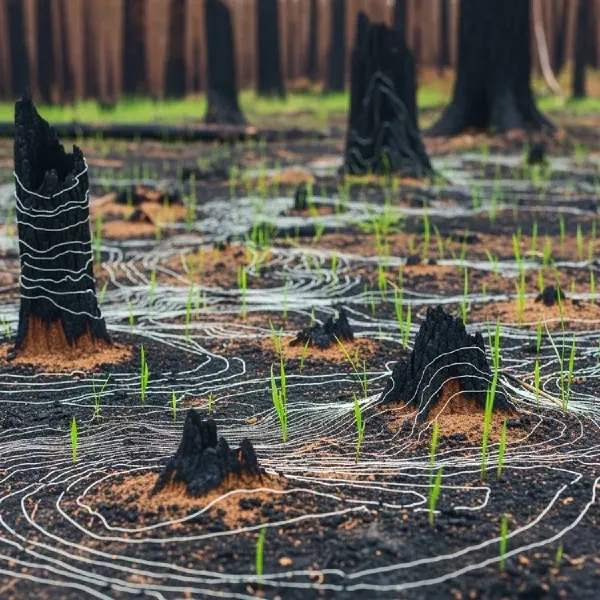
All biological systems operate under ecologist Robert Ulanowicz’s “law of conservation of biomass.” In mature ecosystems, approximately 90% of biomass is recycled annually through decomposition. Tropical rainforests exemplify tight cycling: nutrients from decaying leaves are absorbed within days. The forest floor isn’t a waste repository but a nutrient exchange surface where fungi trade minerals for plant sugars in mycorrhizal networks.
Human systems achieve no such circularity. The International Resource Panel estimates only 8.6% of the global economy is circular. Consequences are measurable: 91% of plastic isn’t recycled, 60% of clothing ends in incinerators or landfills within a year, electronic waste grows 21% in five years to 53.6 million metric tonnes annually. This linearity represents not just resource loss but system failure.
The circularity gap emerges from design philosophy. Biological products are designed for disassembly from inception. A leaf contains nutrients arranged in layers that decompose sequentially: sugars first (bacteria), cellulose next (fungi), lignin last (specialized decomposers). Each component has value at different timescales. Human products are designed for assembly efficiency, often using inseparable composites. A smartphone contains 60+ elements glued and laminated, making disassembly economically unviable.
Some industries learn from biological design for disassembly. Interface’s carpet tiles use hook-and-loop backing rather than adhesive, allowing replacement of worn sections. Philips’ “EasyEconomy” LED lights feature snap-together components separable in 30 seconds. Renault’s “Circular Factory” refurbishes vehicle parts using 80% less energy than new production. Each follows biological logic: design not for single life cycle but for multiple through easy separation.
The Chemistry of Compatibility#
Biological systems build with what green chemist John Warner calls “asymmetric molecules”—compounds with handedness that interact specifically with biological machinery. Proteins use left-handed amino acids; sugars use right-handed isomers. This specificity enables precise assembly and disassembly. Human industry often uses symmetrical, stable molecules that resist breakdown—polyethylene, polystyrene, PVC—creating Warner’s “legacy molecules” that persist because nothing recognizes them as food.
The difference has profound consequences. Of 350,000+ chemicals in commercial use, fewer than 5% have been thoroughly tested for health. Many—PFAS “forever chemicals,” brominated flame retardants—persist in environments and organisms, disrupting endocrine systems. These materials succeed commercially precisely because they resist degradation—the very property making them dangerous biologically.
Biomimetic chemistry seeks compatible materials. Interface’s “Proof Positive” carpet backing uses plant-based polymers decomposing without toxic residues. Adidas’ Futurecraft.Loop sneakers are made from single-material TPU that can be ground and reformed without quality loss. These materials follow biological principles: made from abundant elements (carbon, hydrogen, oxygen), using energy-efficient processes, breaking into harmless components.
The Cradle to Cradle Certified™ standard operationalizes these principles across five categories: material health, material reutilization, renewable energy, water stewardship, and social fairness. Products achieving certification demonstrate safe materials, design for disassembly, and renewable manufacturing. Like biological products, they’re designed not to be “less bad” but to be “more good”—contributing positively to cycles rather than merely reducing harm.
From Linear to Looped Systems#
In Kalundborg, Denmark, an industrial ecosystem has operated since the 1970s with “symbiosis.” A power plant supplies steam to a pharmaceutical factory, which supplies treated wastewater for cooling. The power plant’s fly ash goes to cement. Sulfur from refinery desulfurization becomes sulfuric acid. Waste heat warms fish farms. Like a natural ecosystem, each participant’s waste becomes another’s resource, reducing virgin material use by 20% and water consumption by 25%.
Industrial symbiosis represents human attempts to create circular systems at ecosystem scale. China’s eco-industrial parks now number over 60, with Tianjin Economic-Technological Development Area achieving 97% industrial water recycling through cascaded use. The barriers aren’t technical but organizational. Natural ecosystems develop symbiosis through co-evolution over millennia. Human industries must intentionally coordinate across corporate boundaries, regulations, and incentives.
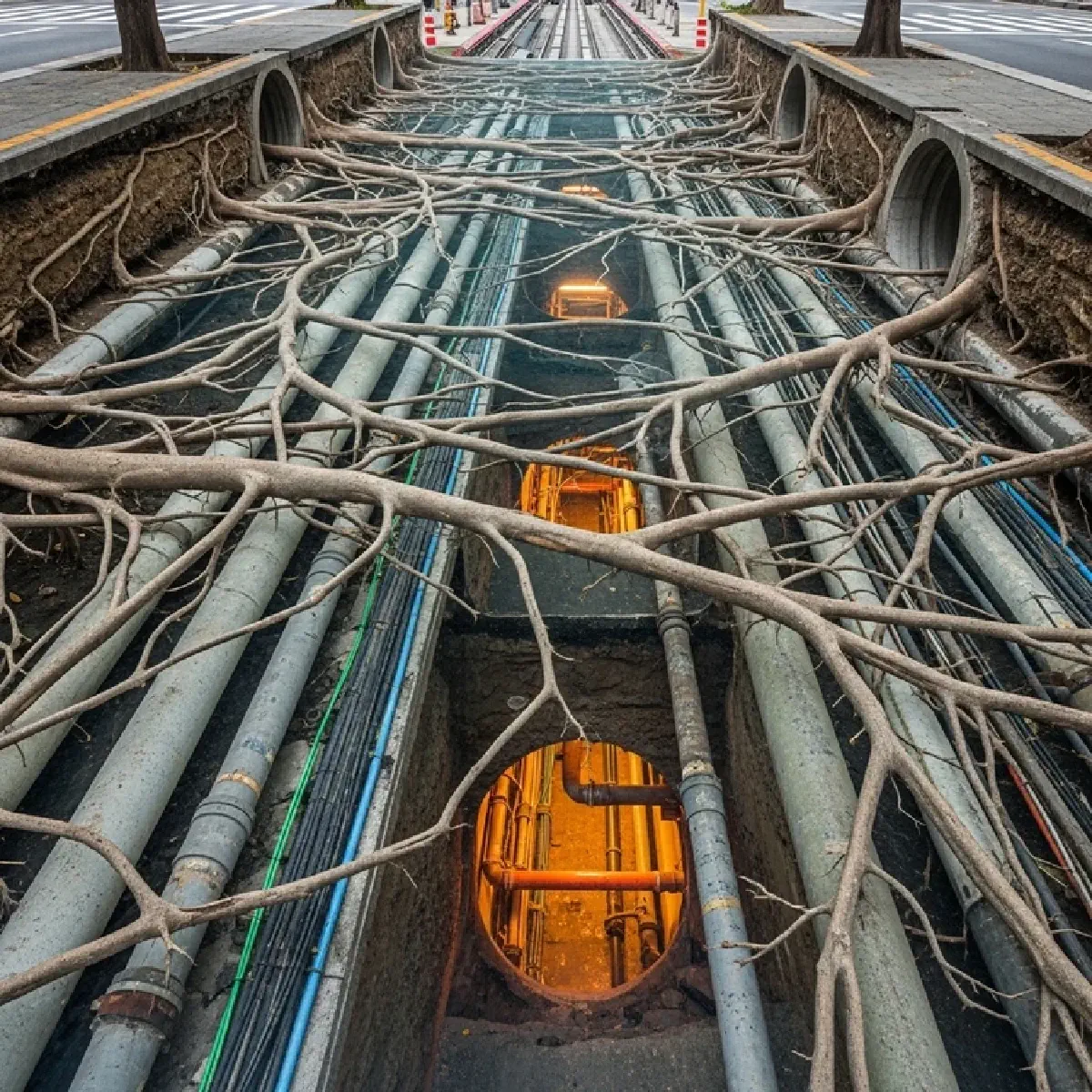
Digital platforms accelerate symbiosis. The “SYMSITES” platform in the UK matches companies with complementary waste and resource needs using AI. The “Circularity Exchange” in the Netherlands creates digital marketplaces for secondary materials. These platforms function like mycorrhizal networks in forests—connecting disparate organisms into exchange systems.
The service economy model decouples ownership from use. Philips’ “Light as a Service” provides illumination rather than light bulbs. Customers pay for lux-hours, and Philips maintains, upgrades, and remanufactures fixtures. Similarly, Michelin’s “Tires as a Service” charges per kilometer, with Michelin responsible for retreading, repair, and recycling. These models align incentives: producers benefit from durability and recoverability rather than planned obsolescence.
This mirrors biological relationships. Pollinators perform service (pollination) for nectar. Mycorrhizal fungi exchange nutrients for sugars. Service economy contracts create similar symbiosis: manufacturers maintain products to maximize material value across life cycles, and customers access functionality without ownership burdens.
The Ethics of Return#
Biological circularity operates on philosopher Aldo Leopold’s “land ethic”: “A thing is right when it tends to preserve the integrity, stability, and beauty of the biotic community.” Materials belong to the community of life, not individual organisms. Human property rights emphasize individual ownership with little responsibility after transfer.
Closing material loops requires new ethical frameworks. Extended Producer Responsibility laws in over 40 countries require manufacturers to manage products at end-of-life. The EU’s circular economy action plan includes “right to repair” legislation. These recognize responsibility doesn’t end at sale—it extends through material’s life cycle.
More fundamentally, circularity challenges growth-based economics. Biological systems grow to maturity, then maintain dynamic equilibrium. Human economies pursue endless growth on a finite planet—what ecological economist Herman Daly calls an “impossibility theorem.” Circular economy advocates propose “growth within cycles”—increasing wellbeing while maintaining flows within planetary boundaries.
The dung beetle rolling its ball knows nothing of these philosophical implications. It participates in the cycle it was born into. As human systems face resource constraints, climate disruption, and waste crises, we might learn from this participation. Not how to manage waste better, but how to design systems where waste cannot exist—where every output becomes input, where every end contains beginning, where “away” is replaced by “around again.” For in the circle lies not just efficiency, but continuity; not just sustainability, but perpetuity.