Key Insights
# Biological systems prioritize adequacy over perfection, finding solutions that work sufficiently well given constraints of energy, materials, and time. Failure in nature serves as information, triggering adaptation and regeneration rather than being avoided at all costs. Circular economies are the norm in biology, where waste becomes input, creating systems without disposal categories. Local adaptation to place-specific conditions produces resilient designs that work with rather than against environmental constraints. Complex order emerges from simple rules and local interactions, without centralized blueprints or top-down control. Adaptive capacity often trumps peak performance, with generalist strategies outperforming specialists in variable environments. Biomimicry has boundaries; not all biological solutions transfer to human contexts due to temporal, material, and ethical incompatibilities. References
# Benyus, J. M. (1997). Biomimicry: Innovation Inspired by Nature . HarperCollins. Bar-Yam, Y. (1997). Dynamics of Complex Systems . Addison-Wesley. Braungart, M., & McDonough, W. (2002). Cradle to Cradle: Remaking the Way We Make Things . North Point Press. Capra, F., & Luisi, P. L. (2014). The Systems View of Life: A Unifying Vision . Cambridge University Press. Dawkins, R. (1986). The Blind Watchmaker . W. W. Norton & Company. Holling, C. S. (2001). Understanding the Complexity of Economic, Ecological, and Social Systems. Ecosystems , 4(5), 390–405. Jackson, T. (2017). Prosperity Without Growth: Foundations for the Economy of Tomorrow (2nd ed.). Routledge. Kauffman, S. A. (1993). The Origins of Order: Self-Organization and Selection in Evolution . Oxford University Press. Levin, S. A. (1998). Ecosystems and the Biosphere as Complex Adaptive Systems. Ecosystems , 1(5), 431–436. Margulis, L., & Sagan, D. (1995). What Is Life? Simon & Schuster. Mitchell, M. (2009). Complexity: A Guided Tour . Oxford University Press. Odum, E. P. (1969). The Strategy of Ecosystem Development. Science , 164(3877), 262–270. Page, S. E. (2010). Diversity and Complexity . Princeton University Press. Perrow, C. (1999). Normal Accidents: Living with High-Risk Technologies . Princeton University Press. Prigogine, I., & Stengers, I. (1984). Order Out of Chaos: Man's New Dialogue with Nature . Bantam Books. Raworth, K. (2017). Doughnut Economics: Seven Ways to Think Like a 21st-Century Economist . Chelsea Green Publishing. Taleb, N. N. (2012). Antifragile: Things That Gain from Disorder . Random House. Walker, B., & Salt, D. (2006). Resilience Thinking: Sustaining Ecosystems and People in a Changing World . Island Press. Wilson, E. O. (1998). Consilience: The Unity of Knowledge . Alfred A. Knopf. Zuboff, S. (2019). The Age of Surveillance Capitalism: The Fight for a Human Future at the New Frontier of Power . PublicAffairs. All Analysis
Series
Single Posts
4 August 2019 · 1665 words · 8 mins
Exploring the boundaries and limitations of biomimicry as a design methodology.
3 August 2019 · 1412 words · 7 mins
Examining the trade-off between peak performance and adaptive capacity in biological and human systems.
2 August 2019 · 1501 words · 8 mins
Understanding how complex order emerges from simple rules in biological systems.
1 August 2019 · 1176 words · 6 mins
Exploring how biological systems adapt to local conditions using available materials.
31 July 2019 · 1178 words · 6 mins
Examining how biological systems operate in circular economies without waste categories.
30 July 2019 · 1197 words · 6 mins
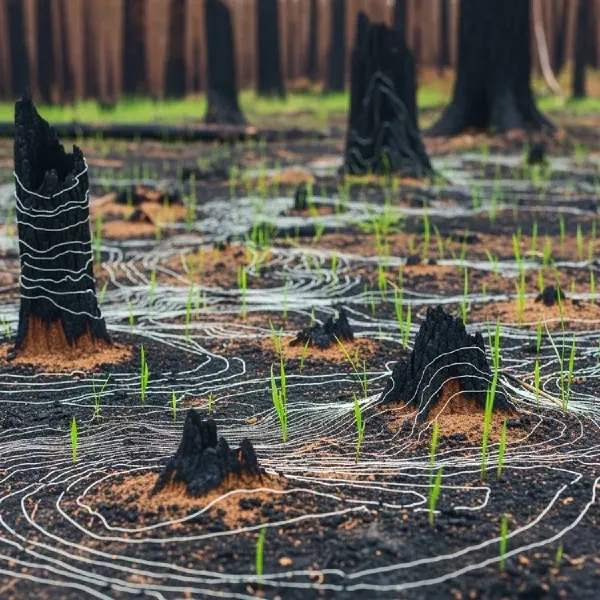
Exploring how biological systems treat failure as feedback for adaptation rather than something to avoid.
29 July 2019 · 1338 words · 7 mins
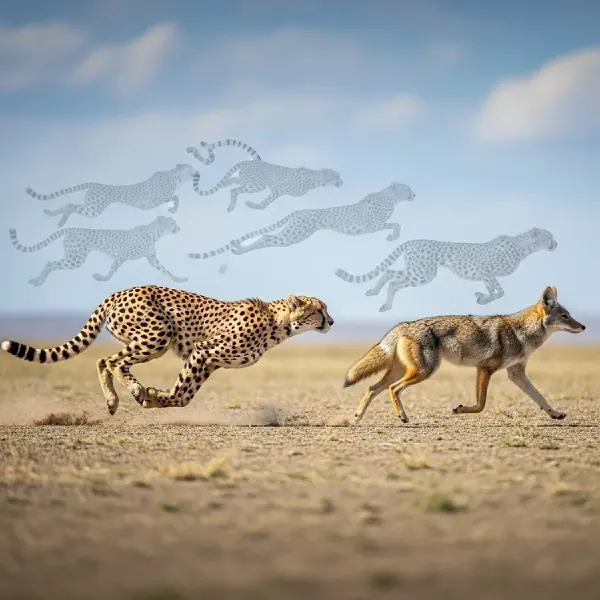
Exploring how biological systems prioritize adequacy across multiple constraints over single-variable optimization.