
Sustainability and Future
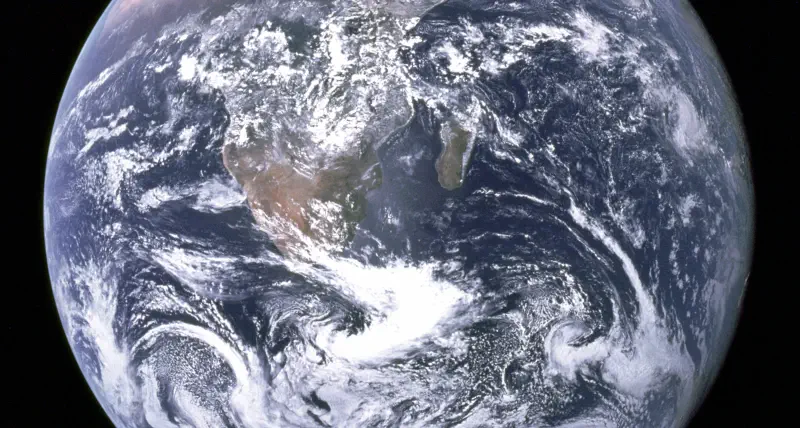
Sustainable systems require more than good intentions: they demand rigorous science, sound economics, and design that works within planetary limits. This category covers climate mechanisms, nature-inspired engineering, circular economy principles, energy transition, and the political realities of who bears the costs and who captures the gains.
Series & Articles#
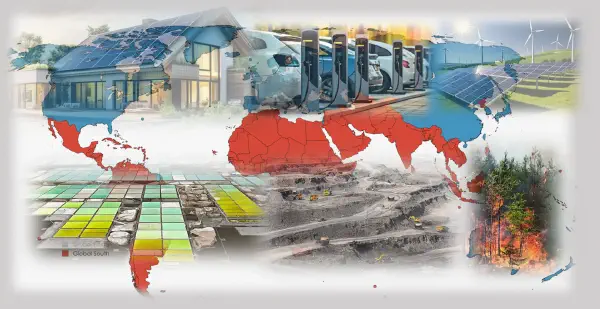
The Green Colonialism: How the Clean Energy Transition is Plundering the Global South
·3757 words·18 mins
The global shift toward a post-carbon economy is functionally a new phase of imperialism, where the ecological costs of renewable energy are externalized onto the Global South. This analysis examines the historical parallels between fossil fuel extraction and the emerging mineral economy, revealing how the 'green transition' reproduces colonial dependencies while exacerbating environmental destruction. We explore the devastating material demands of technologies like electric vehicles and batteries, the weaponization of lithium and rare earth minerals in geopolitical conflicts, and the systematic silencing of indigenous and marginalized communities whose lands are sacrificed for the sake of planetary salvation.
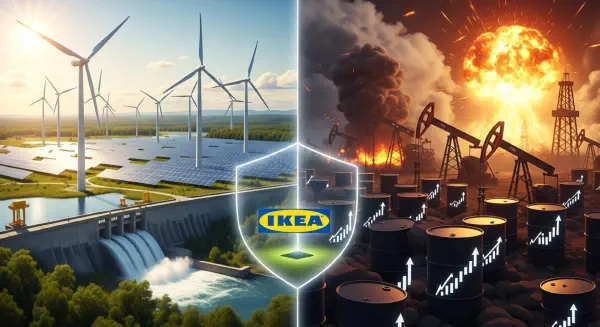
The Big Flat Bill: How IKEA Turned an Energy Crisis into a Competitive Moat
·2549 words·12 mins
IKEA's strategic investment in renewable energy has insulated it from global energy shocks, turning a potential crisis into a competitive advantage. This case study explores the timeline, economics, and strategic implications of IKEA's energy transition.

The Entropic Mirage: Unmasking the Lithium Loop
·390 words·2 mins
A critical exploration of the green energy transition's hidden costs, examining how lithium mining perpetuates colonial extraction while claiming sustainability.

The Parasite or the Steward? Reckoning with Humanity's Planetary Role
·307 words·2 mins
This series traces how human activities have altered the planet's systems, and whether we can still choose to become its steward.

The Thermodynamics of Civilization
·363 words·2 mins
A three-part series examining civilization through the lens of physics, tracing how energy transitions power societal leaps and how accumulated waste precipitates systemic collapse.

The Scarcity Paradox: Lithium and the Ethics of Abundance
·258 words·2 mins
A series exploring the lithium scarcity paradox, from extraction challenges to circular economy solutions and geopolitical implications.
The Uninsurable Future: Climate Risk and the Collapse of Property Insurance
·355 words·2 mins
How the climate change is affecting property insurance markets, leading to soaring premiums and widespread nonrenewals.

The Contested Circle: A Critical Roadmap to the Circular Economy
·345 words·2 mins
A critical examination of the circular economy's promises, challenges, and systemic implications, exploring the transition from linear consumption to regenerative resource loops.
The Nuclear Accounting
·934 words·5 mins
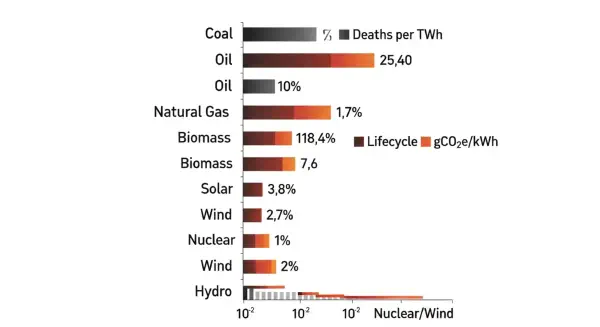
No energy source generates more fear per kilojoule produced or kills fewer people per terawatt-hour generated. The nuclear accounting problem is a problem of denominator confusion: the rare but vivid accidents receive the scrutiny that the continuous and ordinary deaths from air pollution do not. The Lifetime Risk-Adjusted Carbon Score compares every major electricity source on a common basis and the result inverts the conventional hierarchy of fear.

Carbon Illusion
·178 words·1 min
The line where climate ambition clashes with ecological reality in Brazil’s savannah.
The Density Dividend
·837 words·4 mins
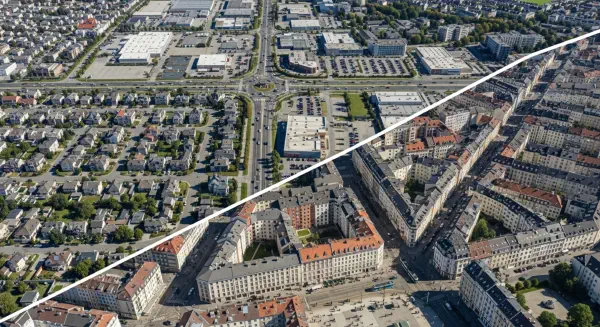
Most climate policy focuses on what we burn. The Density Dividend examines where we live — and demonstrates that the layout of cities generates carbon obligations that technology cannot easily fix. The Urban Carbon Leverage Factor reveals the structural carbon cost of urban form choices made decades before any car was manufactured or any power plant was built.

The Concentrated Green: Power, Paradox, and the New Energy Order
·346 words·2 mins
A critical analysis of how the green energy transition is creating new forms of concentrated power across minerals, technology, capital, geopolitics, and social inequality.
The Plastic Externality
·958 words·5 mins
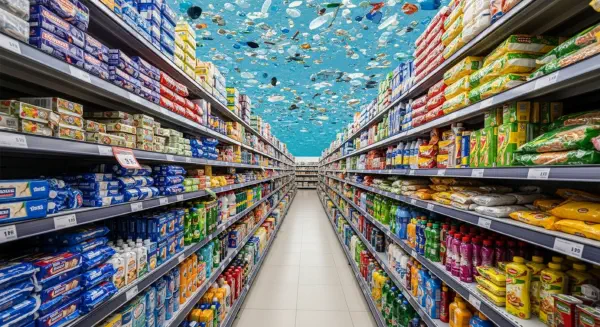
Every tonne of plastic produced carries environmental and health costs that no producer has ever paid. The Plastic Cost Coverage Ratio compares what producers actually pay to the full external cost their production imposes on the environment and on human health — consistently between 0.01 and 0.05, meaning plastic producers capture less than five cents in environmental liability for every dollar of damage their products create.
The Ocean Economy
·939 words·5 mins
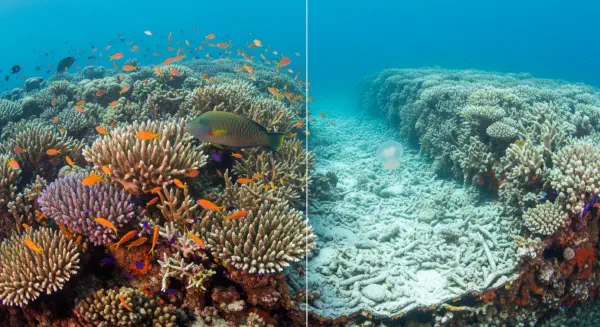
The ocean generates more economic value annually than it extracts — but it earns its revenue in services that go unpriced while its losses are recorded in fish landings and mineral royalties. The Marine Extraction Ratio compares what we take from the ocean to what the ocean generates for us, and reveals why the accounting gap is the engine of overfishing, acidification, and the now-imminent expansion of deep-sea mining.

The Biodiversity Budget
·931 words·5 mins
More than half of global GDP depends on nature. The annual public and private investment in protecting that nature is measured in tens of billions. The ratio between what the economy extracts from biodiversity-supplied services and what it invests in their maintenance defines the Ecosystem Dependency Ratio — and the number reveals that the global economy runs a biodiversity subsidy at a leverage ratio that would make any corporate finance officer blanch.

The Seven Pillars of Modern Reality
·197 words·1 min
Modernity rests on the monumental flows of energy, goods, and data, creating a paradox of scale.

The Soil Bank
·798 words·4 mins
Topsoil is civilisation's most critical non-renewable resource — taking 200 to 1,000 years to form per centimetre and eroding at 10 to 100 times that rate under industrial agriculture. The Soil Capital Depletion Rate quantifies how fast we are spending this inheritance, and why the arithmetic threatens food security on a timescale that planning institutions consistently ignore.
The Geoengineering Ledger
·1070 words·6 mins
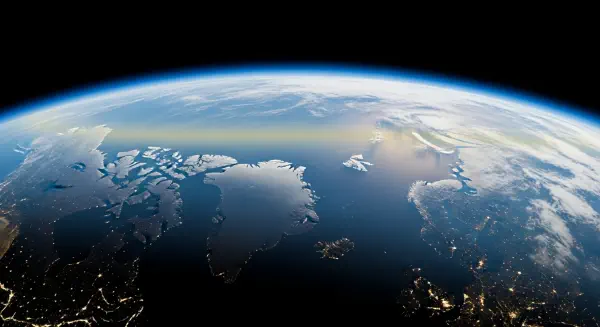
Proposed deliberate climate interventions — principally stratospheric aerosol injection — would modify the atmosphere intentionally, at scale, with substantial but unequally distributed climate effects. The Intervention Leverage Index measures the ratio of cooling benefit per unit of aerosol deployed against the probability of adverse regional precipitation disruption — and reveals why the most effective emergency lever humanity possesses is also the most politically ungovernable.

The Water Ledger
·669 words·4 mins
Freshwater is the binding physical constraint on food production, population geography, and geopolitical stability — yet most of it is priced at zero, measured poorly, and allocated by nineteenth-century law. The Water Productivity Gap quantifies how far below maximum efficiency the world operates, and what the gap means for a planet of 10 billion.
Development Delusions: The Uncomfortable Truths of the $200 Billion Foreign Aid Industry
·192 words·1 min
Exposing the uncomfortable truths about the billion foreign aid industry - why it persists, who benefits, and what might actually work.
The Arithmetic of Decarburization: A Hard Look at the Energy Revolution
·155 words·1 min
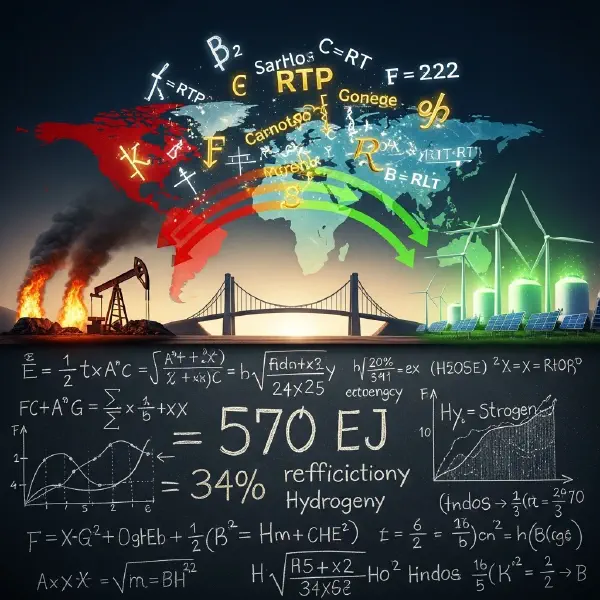
A quantitative series on replacing fossil fuels with green electricity and green hydrogen — production, storage, and application.

Hunger is Man-Made: The Political Economy of Food Scarcity
·153 words·1 min
Exploring how inequality, colonialism, and corporate control have engineered hunger despite global abundance. A critical examination of why the world's poor starve in a world of plenty.
The Arithmetic of Sustainability
·159 words·1 min
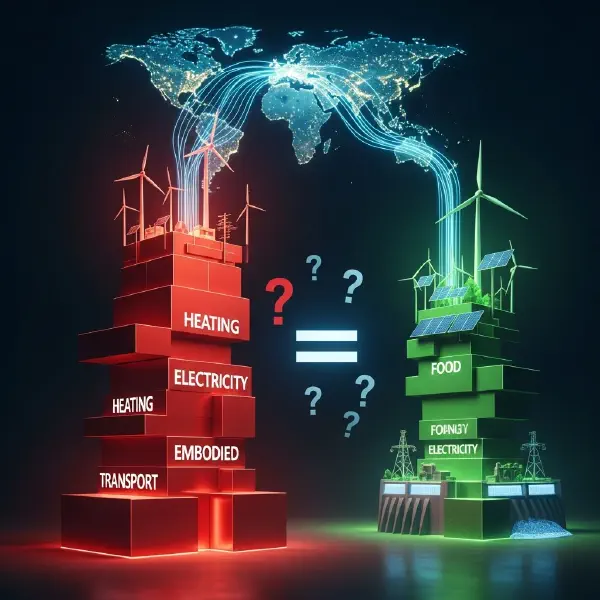
A numbers-based exploration of sustainable energy challenges—quantifying consumption, solutions, and viable paths to deep emissions reductions.

The Entropy Audit: Designing for a Sustainable Future
·234 words·2 mins
A comprehensive examination of material life-cycles, embodied energy, and circular economy principles for sustainable design.

Adaptive Futures: Resilience Architectures in a Chaotic World
·264 words·2 mins
A seven-part exploration of how to design systems that thrive in uncertainty, from modular cities to regenerative economics.

The Adaptive Archive: Design Lessons from Living Systems
·399 words·2 mins
A seven-part exploration of biomimicry principles and their implications for human design, from optimization under constraint to the limits of biological analogy.

The Tectonic Clock: Catastrophes Shaping Our Future
·251 words·2 mins
This series traces how economies absorb, adapt, and evolve through 'development blocks' where technologies and logistics create new worlds, but policy shapes their direction and social impact.

Hothouse, Ice, and Impact: The Triple Threat to Global Technological Society
·1614 words·8 mins
Human civilization flourishes in a geological accident of relative calm, but faces three existential threats: tectonic disasters, climate chaos, and cosmic impacts. This analysis explores why Earth's dynamism makes technological society profoundly fragile and argues for interstellar expansion.