Key Takeaways
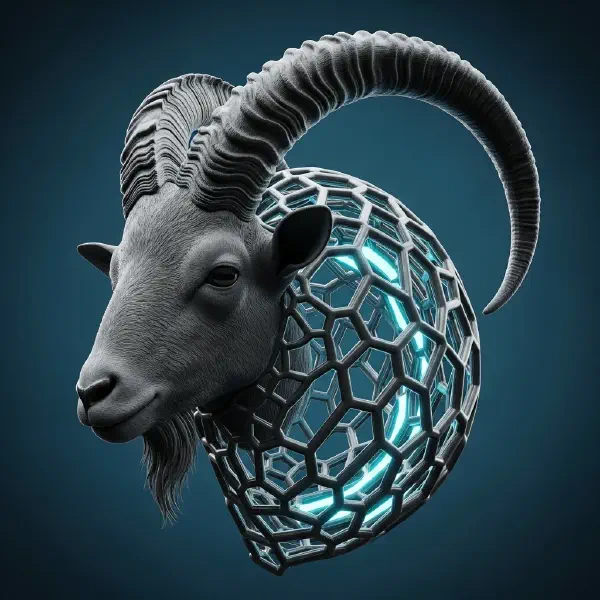
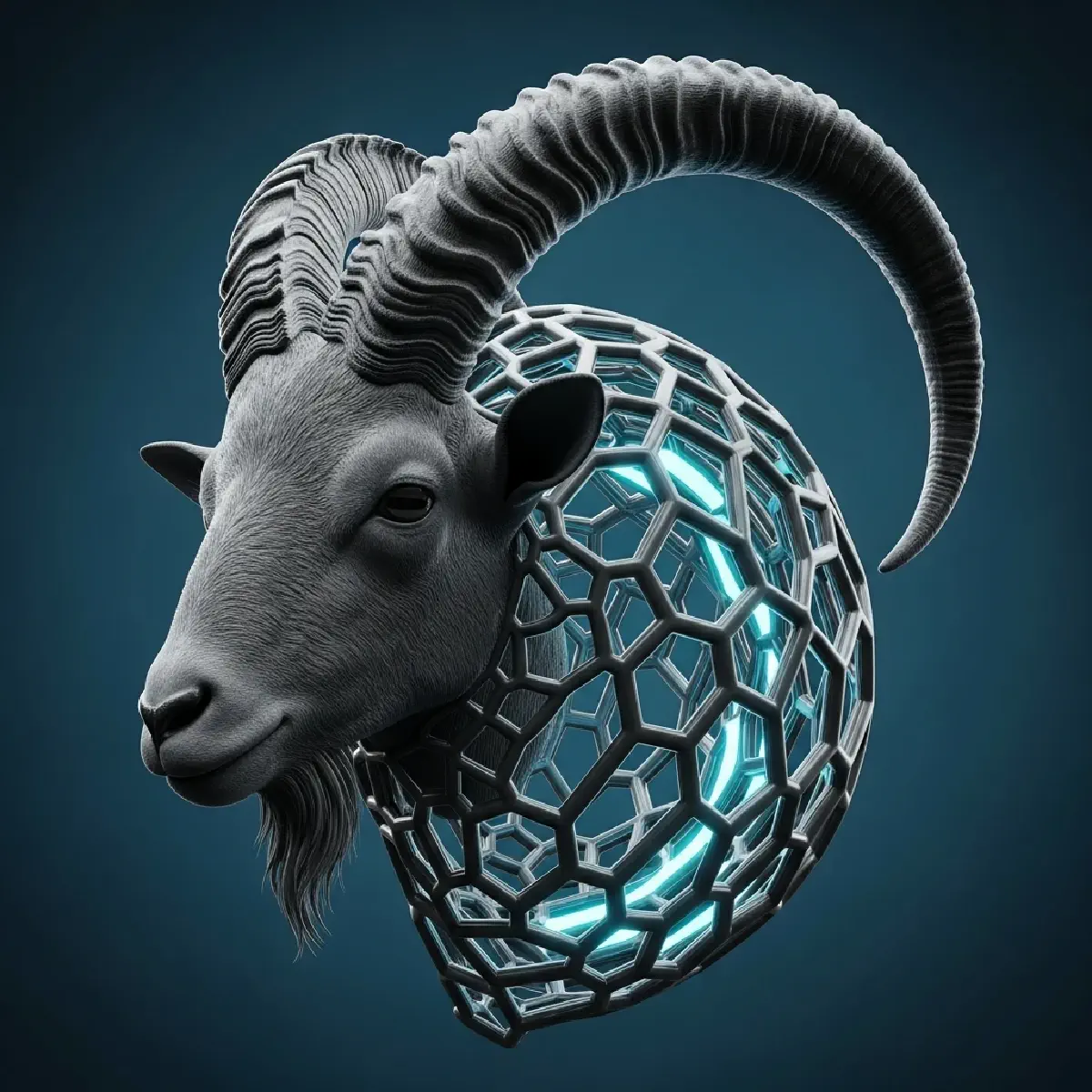
- Biomimetic Inspiration: The goat's skull, with its intricate sinus structure, serves as a model for developing reusable energy-absorbing systems that can withstand repeated high-impact forces.
- Reusable Buffering Systems: Traditional metallic energy absorbers are single-use; the goat-inspired designs offer a pathway to "infinite" buffering systems that maintain performance after multiple impacts.
- Negative Stiffness Mechanism: The dual-coupling beam design mimics the goat's sinus structure, achieving a constant-force response through the interaction of buckling inclined beams and vertical supports.
- Advanced Manufacturing: Selective Laser Melting (SLM) enables the creation of complex geometries necessary for these biomimetic structures, allowing for precise control over material properties and performance.
- Multi-Directional Protection: The integration of buckling-induced metallic meta-lattices enhances impact resistance across various loading conditions, making them suitable for aerospace and military applications.
The high-altitude plateaus of the world witness a brutal, percussive ritual: the head-to-head combat of rival male goats. These collisions generate impact forces exceeding 3,400 Newtons, with decelerations occurring in under 300 milliseconds. Yet, the intracranial organs of these animals remain largely unaffected by the immense kinetic energy of these repeated strikes. This biological paradox exists because of the evolution of the frontal sinus system, a complex lattice of thin bony struts and outer walls that deform cooperatively to store and dissipate strain energy. For engineers, this natural mechanism offers more than just an anatomical curiosity; it provides a blueprint for a new class of “infinite” buffering systems. Unlike traditional metallic energy absorbers that are destroyed after a single use, these bio-inspired systems achieve high-efficiency protection and total reusability. By translating the goat’s survival strategy into artificial structures, we are moving beyond the era of sacrificial components into a future of resilient, intelligent systems.
The Mandate for Reusable Resilience#
The modern engineering landscape faces a severe challenge: protecting sensitive equipment from high-frequency shock and repeated impact loads without adding prohibitive weight. In aerospace, for example, the landing of electric vertical take-off and landing (eVTOL) aircraft requires structures that can dissipate collision energy through progressive failure within extremely narrow subfloor spaces. Traditionally, this was achieved through the plastic deformation of thin-walled metal tubes, which serve as excellent energy absorbers but are fundamentally “one-shot” devices. Once the metal buckles or folds into a permanent state, the protection is exhausted, necessitating a costly and labor-intensive replacement of the entire system.
This design philosophy is increasingly untenable in the context of rapid deployment military logistics or space-based hardware, where maintenance is impossible. The mandate has shifted toward mechanical metamaterials—structures that derive their properties from their geometric arrangement rather than their base material. By utilizing mechanisms like negative stiffness and buckling-induced meta-lattices, researchers are now crafting structures that can “reset” themselves after an impact. This transition from material-dependent protection to geometry-driven resilience represents the next frontier in the safety of human systems and high-value technology.
The Mechanics of the Dual-Coupling Beam#
The core innovation in bio-inspired buffering is the Goat Sinus-Inspired Biomimetic (GSIB) structure, which replicates the dual-functionality of the goat’s skull. The artificial structure consists of a set of parallel inclined beams representing the sinus outer walls and vertical support beams mimicking the internal bony struts. Under compressive loading, the inclined cantilever beams buckle, which introduces a “negative stiffness” effect that counteracts the positive stiffness of the vertical supports. This interaction creates a long-stroke “constant-force” response, where the structure provides a steady level of resistance regardless of the loading displacement.
This constant-force characteristic is the holy grail of impact engineering because it maximizes energy absorption while minimizing the peak force transmitted to the protected equipment. In a standard negative stiffness structure, the response is often marred by uneven stress distribution and bending-dominated deformation. The GSIB overcomes this by using the vertical struts to enhance overall stiffness, allowing the system to achieve a plateau stress that is 246.07% higher than traditional negative stiffness designs. Because the deformation is driven by buckling rather than plastic fracture, the structure can recover to 94.3% of its original dimensions after the load is removed. This allows the system to endure a sequence of impacts while maintaining identical acceleration and reaction force responses.
The interdisciplinary Crucible of SLM and Anatomy#
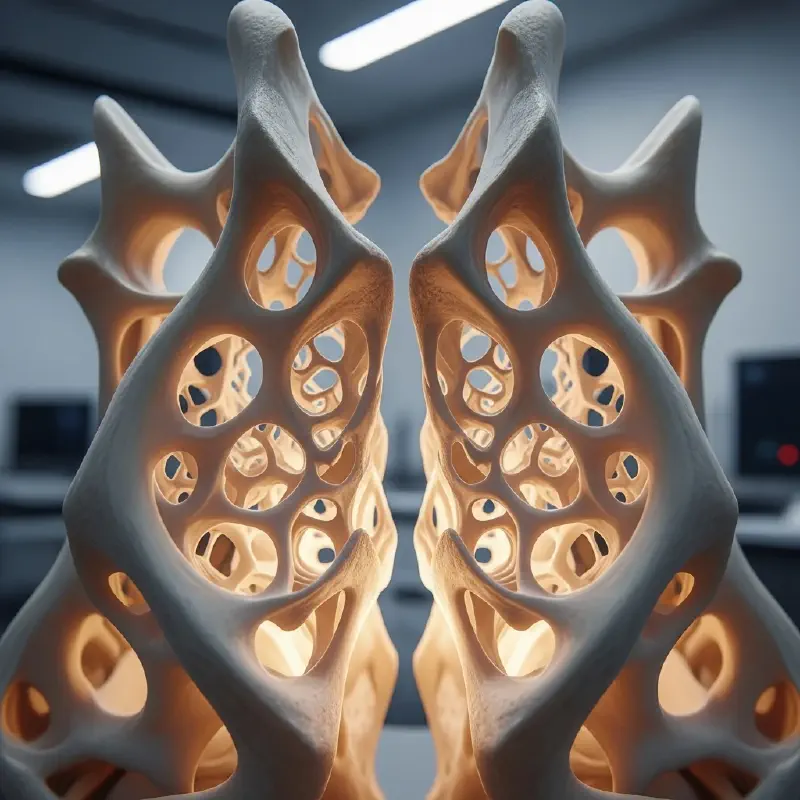
Bridging the gap between the soft evolution of biology and the hard reality of engineering requires two critical, interdisciplinary tools: Selective Laser Melting (SLM) 3D printing and nonlinear finite element analysis. Traditional manufacturing methods struggle with the geometric complexity of a 3D-double-arrow auxetic (DAA) core or a multi-layer meta-lattice. However, SLM technology allows for the precise sintering of high-strength alloys, such as Ti-6Al-4V or 316L stainless steel, directly from digital models. This enables the creation of lattice-walled tubes where the thinnest part of the strut—typically 0.352 mm in diameter—can be controlled to ensure predictable failure and energy absorption.
The complexity of these structures introduces “parasitic effects” that must be modeled with extreme precision to ensure real-world reliability. For instance, when designing concave polygonal CFRP tubes for eVTOL aircraft, engineers must account for the transition from a stable splaying mode to an unstable global bending mode under oblique loads. While these tubes offer a 20% higher Specific Energy Absorption (SEA) than square tubes under axial loads, their performance drops by 16% when hit at a 15-degree angle. The solution, paradoxically, comes from yet another system: the implementation of inward and outward “crusher plugs” that act as mechanical triggers to stabilize the failure mechanism. This synthesis of material science and mechanical architecture ensures that the protection remains effective across the unpredictable loading conditions of a battlefield or crash site.
The Cascade of Multi-Directional Protection#
The consequences of these advancements extend far beyond the laboratory, creating a ripple effect across high-stakes industries. In the realm of electromagnetic buffering, the use of segmented inner tubes and air-gaps reduces the difficulty of machining thin-walled long pipes while significantly improving the stability of the damping process. By optimizing the “fullness” of the resistance-force curve through interval uncertain optimization, researchers have achieved a 91.98% improvement in the stability of the buffering process under intensive impact loads. This ensures that sensitive internal components, such as those in a neutron beam generator, are protected from the vibration and demagnetization effects caused by high-velocity impacts.
Furthermore, the integration of Buckling-Induced Metallic Meta-lattice Structures (BIMS) introduces a unique “negative Poisson’s ratio” effect. When these lattices are compressed in one direction, they contract transversely, transforming their internal square cells into triangular cells—a statically determinate structure that increases the crushing force just as the impact reaches its peak. This geometric transformation results in an 80.03% reduction in the initial peak force, effectively smoothing out the violent jolt of a sudden impact. These systems are now being integrated into vehicle underbelly protection, where they outperform equivalent masses of solid steel by disrupting incident shock waves and reflecting energy away from the crew compartment.
The Future of Living Lattices#
The evolution of energy-absorbing systems is clear: we are moving away from brute-force mass and toward intelligent, geometry-informed resilience. The GSIB structure demonstrates that we can achieve a broader vibration isolation bandwidth—isolating frequencies above 11.72 Hz—while supporting loads 240 times the structure’s own weight. This makes such systems ideal for the next generation of photolithography equipment, satellite navigation, and medical devices that must operate in high-shock environments. The ability to print these structures with “white PA 66” polyamide or high-performance titanium alloy ensures they are lightweight, cost-effective, and mass-producible.
The “So what?” of this research lies in its potential to change the fundamental economics of safety. By creating structures that do not need to be replaced after every minor collision or hard landing, we can significantly reduce the lifecycle costs of aerospace and defense infrastructure. Moreover, these systems provide a higher ceiling for human safety, using the same energy-management strategies that have allowed goats to strike each other with full force for millennia. As we continue to refine the programmable design of these lattices—adjusting beam thickness and vertical spacing to find the optimal configuration—we are not just mimicking nature; we are perfecting it. The buffering systems of tomorrow will not just absorb energy; they will intelligently navigate it, providing a stable foundation for the high-velocity world we are building.
References#
- Bae, J.-Y., Hwang, I. S., & Kang, Y. (2023). Measurement of alumina film induced ablation of internal insulator in solid rocket environment. Defence Technology, 29, 181–192. https://doi.org/10.1016/j.dt.2023.03.007
- Cai, S., Feng, J., Xu, H., Liu, K., Li, Z.-x., & Wu, Z.-l. (2020). Strain concentration caused by the closed end contributes to cartridge case failure at the bottom. Defence Technology, 16(6), 1151–1159. https://doi.org/10.1016/j.dt.2020.01.006
- Dong, J.-h., Wang, Y.-j., Jin, F.-n., & Fan, H.-l. (2022). Crushing behaviors of buckling-induced metallic meta-lattice structures. Defence Technology, 18(8), 1301–1310. https://doi.org/10.1016/j.dt.2021.07.014
- Feng, G.-z., Wang, J., Li, X.-y., Xiao, L.-j., & Song, W.-d. (2022). Mechanical behavior of Ti–6Al–4V lattice-walled tubes under uniaxial compression. Defence Technology, 18(7), 1124–1138. https://doi.org/10.1016/j.dt.2021.05.012
- Fu, J., Liu, Q., Liu, X., & Zhang, Y. (2025). Crashworthiness design of concave polygonal CFRP tubes for eVTOL applications under multi-angle compression loading. Defence Technology, S2214914725002004. https://doi.org/10.1016/j.dt.2025.06.016
- Lan, X.-k., Huang, Q., Zhou, T., & Feng, S.-s. (2020). Optimal design of a novel cylindrical sandwich panel with double arrow auxetic core under air blast loading. Defence Technology, 16(3), 617–626. https://doi.org/10.1016/j.dt.2019.09.010
- Li, Z.-x., Yang, G.-l., Xu, F.-j., & Wang, L.-q. (2021). Interval uncertain optimization for damping fluctuation of a segmented electromagnetic buffer under intensive impact load. Defence Technology, 17(3), 884–897. https://doi.org/10.1016/j.dt.2020.05.018
- Schunck, T., Eckenfels, D., & Sinniger, L. (2023). Blast disruption using 3D grids/perforated plates for vehicle protection. Defence Technology, 25, 60–68. https://doi.org/10.1016/j.dt.2022.10.005
- Xiang, X., Shao, D., Zhang, X., Sharif, U., Ha, N. S., Xiang, L., Zhang, J., & Yi, J. (2024). Sandwich structures with tapered tubes as core: A quasi-static investigation. Defence Technology, 33, 447–462. https://doi.org/10.1016/j.dt.2023.07.011
- Yang, L., Zhou, C., Sun, H., & Liu, C. (2025). Analysis of a bio-inspired constant-force buffering device with dual coupling beams. Defence Technology, S2214914725002016. https://doi.org/10.1016/j.dt.2025.06.018