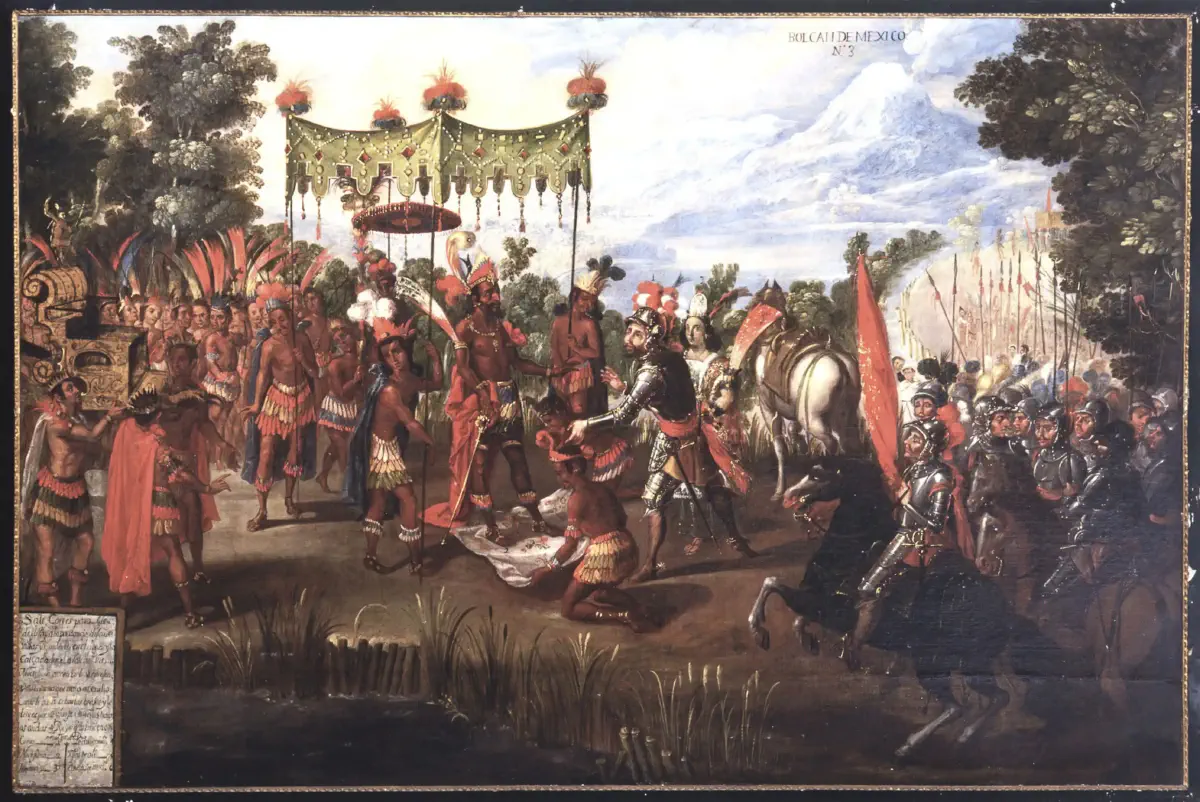
On 16th November 1532, Francisco Pizarro's force of 168 men met the Inca emperor Atahualpa at Cajamarca. Atahualpa arrived with thousands of attendants; Pizarro had arranged an ambush. Within hours, the emperor was captive. He agreed to fill one room with gold and two with silver in exchange for his freedom. The Spanish collected the ransom, worth millions in today's terms, and strangled him anyway. They then marched to Cusco, stripped the Temple of the Sun of its gold sheathing, and began dividing up the Inca population among themselves. The encomienda system, by which the Crown granted a conquistador the right to extract labour and tribute from a specified group of indigenous people, translated a military conquest into an economic institution. That institution would shape the economic trajectory of an entire continent for the next five centuries.
The divergence in colonial institutions between Latin America and North America explains much of the divergence in economic outcomes that persists today. Understanding how it happened requires examining both what the Spanish built and why the English, despite initial attempts to replicate it, could not. The gap between Boston and La Paz is not a gap in natural endowments, in cultural inheritance, or in the quality of economic advice received by their respective governments. It is a gap produced by five centuries of institutional divergence that began on a specific afternoon in November 1532 and was confirmed by thousands of subsequent political choices.
The Spanish Blueprint#
The encomienda began in Spain as an instrument of the Reconquista and mutated in the Americas into something far more comprehensive. An encomendero received not land but people: a specified population of indigenous inhabitants who owed him labour and tribute. The Crown justified the arrangement as an exchange: the encomendero would Christianise his charges and they would work for him. In practice, it was coerced labour with theological decoration.
The mita, adapted from an Inca institution by Viceroy Francisco de Toledo in the 1570s, was even more systematic. Toledo identified a catchment area of roughly 200,000 square miles across the central Andes. Within that area, one-seventh of all adult males were required each year to work in the silver mines of Potosí. At its height in 1650, Potosí was one of the largest cities in the world, with a population of 160,000, sustained almost entirely by the forced extraction of silver from a mountain that was, quite literally, being eaten from the inside. The mita endured until 1825.
The persistence of the mita's economic legacy is measurable. The economist Melissa Dell's research, drawing on the precise administrative boundary of the mita catchment area, found that communities just inside the boundary consume about a third less today than comparable communities just outside it, controlling for geography, ethnicity, and other variables. Five centuries after its imposition, the colonial labour draft is still visible in household consumption data.
The repartimiento de mercancías extended the logic of extraction further: Spanish officials forced indigenous people to purchase goods at prices the official set, often goods they did not want or could not use. This was not trade. It was a tax disguised as a transaction, generating revenue for the Spanish elite while destroying the purchasing power of the indigenous population. The overall system created an economy in which the principal incentive structure pointed toward compliance and away from innovation, risk-taking, or productive investment.
Why Jamestown Differed#
When the English Virginia Company sent its first settlers to Jamestown in 1607, the plan was broadly similar to what the Spanish had done in Mexico and Peru: find a local ruler, co-opt him, and use him to extract tribute and labour from the population. The plan failed. The Powhatan Confederacy was not the Inca Empire. There were no cities to capture, no accumulated gold to seize, and the indigenous population was too sparse and too mobile to be corralled into labour gangs.
Captain John Smith's contribution to American history was his recognition of this failure. After two disastrous years of settlers searching for gold while starving, Smith wrote to the Virginia Company asking not for more goldsmiths but for "carpenters, husbandmen, gardeners, fishermen, blacksmiths." The Company ignored him.
The decisive shift came not from wisdom but from desperation. The Virginia Company's "Lawes Divine, Morall and Martiall," which subjected settlers to near-martial law and threatened death for minor infractions, generated a problem the Spanish had not faced. Indigenous people in the Andes could not easily escape to an unpopulated frontier; settlers in Virginia could, and frequently did, choosing to live among the indigenous population rather than submit to the Company's conditions. Faced with mass desertion and a collapsing workforce, the Company had to offer incentives.
In 1618 it introduced the headright system: fifty acres per settler, fifty more per family member brought across. In 1619 it created a General Assembly, giving male settlers a voice in the laws governing them. It was, in a modest and imperfect form, the beginning of democratic government in North America. Not because the Virginia Company's directors were enlightened, but because the balance of power between settlers and management made coercion unsustainable.
The Persistence of the Past#
The different colonial origins of Latin American and North American institutions did not determine the present in a simple mechanical way. They created tendencies: toward extractive politics in Latin America, toward more inclusive politics in North America, with significant variations within each.
Mexico's extraordinary political instability in the nineteenth century, with 52 presidents in 43 years and the same institutional logic as the colonial encomienda, was the direct inheritance of a system that had concentrated power in narrow hands for three centuries. Antonio López de Santa Ana, who served as Mexico's president eleven times between 1833 and 1855, embodied this inheritance. His governments did not fail because he was ignorant of sound economics. They failed because the institutional environment he operated in rewarded political manoeuvre and the extraction of rents, not productive investment. The banking system that emerged under Porfirio Díaz mirrored the colonial logic: by 1910, two banks controlled 60 per cent of Mexican banking assets, lending primarily to political allies of the regime.
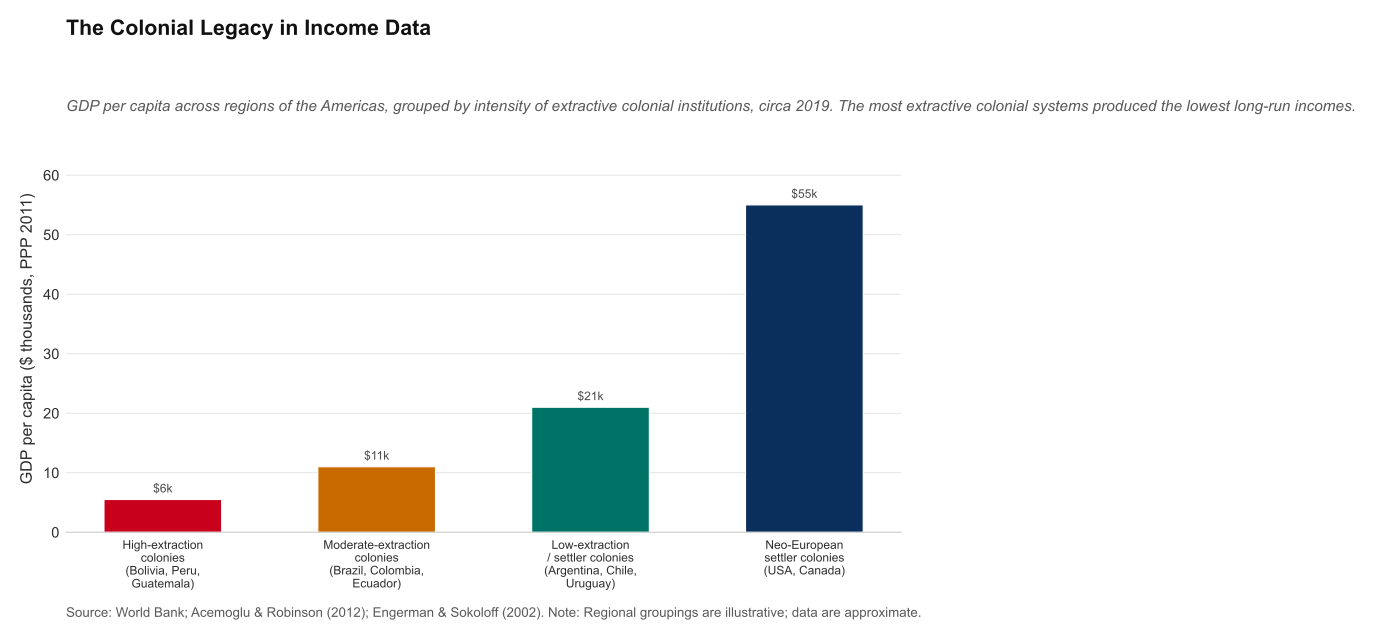
The contrast with the United States is sharp enough to constitute a natural experiment in its own right. Both countries were former British and Spanish colonies, respectively, operating in similar geographic conditions, drawing on similar global technologies. In 1820, their per capita incomes were roughly comparable. By 1910, the United States was several times richer than Mexico. By 2010, it was roughly six to seven times richer. The divergence was not caused by Americans working harder, or by some cultural trait unique to Anglo-Saxon settlers. It was caused by the different institutional trajectories established in the colonial period.
The Reversal Explained#
The reversal of fortune, discussed in the first post of this series, now has an explanation. The territories that were most densely populated and most institutionally sophisticated before 1492 were the most attractive targets for the most intensive colonial extraction: they had large labour forces to conscript, existing tribute-collection systems to repurpose, and accumulated wealth to plunder. The territories with sparse populations and no accumulated gold attracted a different kind of colonisation: settlers who, unable to find a local population to exploit, had to build institutions that protected their own rights.
Economists Stanley Engerman and Kenneth Sokoloff documented this pattern with rigour. Factor endowments, they argued, shaped colonial institutions. In the sugar colonies of the Caribbean and the silver mines of the Andes, the economics of scale and the availability of coerceable labour favoured highly unequal institutions with a small elite extracting from a large controlled workforce. In the wheat-farming and cattle-ranching regions of North America and the southern cone of South America, the economics of scale were less extreme and the labour supply less easily coerced. The result was less unequal institutions with broader property rights.
Those initial institutional differences then reproduced themselves over time. In Latin America, the colonial elite used its political control to maintain land monopolies, restrict access to education, and suppress the development of competitive banking systems. In North America, the combination of broad property rights and competitive political institutions created incentives for states to invest in public education and infrastructure, because a politically influential middle class demanded them.
graph LR
    A[Dense indigenous population\nor plantation crops] --> B[Extractive colonial institutions\nEncomienda, mita, slavery]
    B --> C[Political power concentrated\nin small colonial elite]
    C --> D[Land monopoly, restricted\ncredit, no public education]
    D --> E[Persistent poverty\nand inequality]

    F[Sparse indigenous population\nor temperate agriculture] --> G[Inclusive colonial institutions\nHeadright, assembly]
    G --> H[Broader political participation\namong settlers]
    H --> I[Competitive credit, public\nschools, property rights]
    I --> J[Sustained economic growth]

    style B fill:#C8001C,color:#ffffff
    style G fill:#007367,color:#ffffff
    style E fill:#C8001C,color:#ffffff
    style J fill:#2E6645,color:#ffffff
From Colony to Republic#
Independence, when it came to Latin America in the early nineteenth century, did not fundamentally alter the institutional inheritance of colonialism. The colonial-era elite, largely creole landowners and merchants, replaced the Spanish colonial administrators and preserved the extractive economic institutions that had benefited them. The indigenous and mestizo populations gained formal citizenship but rarely gained access to land, credit, or political representation. The abolition of the encomienda and mita did not dismantle the economic structures those institutions had created.
This is the meaning of path dependence: not that the past determines the present mechanically, but that institutional arrangements, once established, tend to reproduce themselves because those who benefit from them use their political power to preserve them. The great landlords of nineteenth-century Peru and Bolivia had every incentive to maintain the restrictions on indigenous land rights that had been in place since the colonial period. The small banking elites of Mexico had every incentive to prevent the development of a competitive financial system that would erode their margins. Institutional change requires not just the recognition that current arrangements are inefficient but the political power to overcome those who benefit from the inefficiency. That political power rarely materialises spontaneously.
The contrast with the United States, to be sure, should not be romanticised. Slavery was an extractive institution of the most extreme kind, and its legacy shaped American economic and political life long after its formal abolition. The post-Civil War reconstruction of the South saw the re-creation of extractive institutions, in the form of sharecropping, convict leasing, and systematic disenfranchisement of black citizens, that persisted until the civil rights era of the 1960s. The story of how the American South eventually escaped those institutions, and what that required, is the subject of the sixth post in this series.
The map of former colonial extraction is still, in its broad outlines, the map of poverty. That is not because the colonial period determined everything. It is because the institutions it installed created elites with the capacity and the motive to perpetuate themselves. The encomienda is gone. Its children govern still.
Next in the series: When Prosperity Closes Its Doors: Venice, Rome, and the Political Logic of Creative Destruction's Enemies