On 10th November 1990, the Mexican government announced the winner of its auction to privatise Telmex, the national telephone monopoly. The winning bidder was Carlos Slim, whose Grupo Carso had not submitted the highest offer. The discrepancy did not attract legal challenge. Slim arranged to pay for the shares using the dividends the company itself generated, a feat of circular finance that required, above all, the right relationship with the right officials. Within a decade, he had expanded the monopoly into mobile telephony and cable, making him one of the wealthiest people in the world. The economic model he deployed bore no resemblance to what had made Bill Gates wealthy. Gates had built a company. Slim had captured a state concession. The difference is not temperamental or cultural. It is institutional.
The contrast between Slim and Gates is not merely a biographical curiosity. It is the core argument of Acemoglu and Robinson's framework, compressed into a single comparison. Inclusive economic institutions, of the kind that allowed Gates to start a company and defend its intellectual property in federal court, generate prosperity by rewarding productive effort. Extractive institutions, of the kind that handed Slim a monopoly through political connection, generate wealth for those at the centre while redistributing it upwards and suppressing the incentives that would otherwise produce broad growth. The distinction between these two institutional types, and the political logic that determines which one prevails, explains why some nations prosper and others fail.
What Institutions Are#
Institutions are not buildings or bureaucracies. They are the rules, formal and informal, that structure human behaviour: property rights, contract law, electoral systems, and the informal norms that determine whether those formal rules are actually followed. Economic institutions set the incentives for economic activity; political institutions determine who controls those economic institutions and how.
This distinction matters because economic and political institutions are interdependent. A society can have excellent property rights law on paper and still suffer from endemic insecurity of property if the judicial system serves those who appoint the judges. The Soviet Union had a constitution that guaranteed freedom of speech. What determined actual freedom of speech was the political system that enforced, or declined to enforce, the constitutional text.
When economists talk about "getting incentives right," they are usually talking about economic institutions: prices, taxes, subsidies, and regulations. What they often miss is that economic institutions are the outcome of political processes, and political processes are shaped by political institutions. To ask why countries adopt damaging economic policies is ultimately to ask who benefits from them. The answer to that question requires understanding political institutions: who has power, how they acquired it, and what they can do with it.
The Logic of Extraction#
Extractive institutions are not accidents. They follow a logic. An elite that controls the state can set economic rules that transfer wealth from the rest of society to itself. This is profitable. It generates political resources that can be used to maintain control. It also generates opposition, which must be suppressed. The resulting system is stable, not because everyone endorses it, but because those who endorse it are armed.
What extractive institutions cannot do is sustain economic growth over the long run. The reason is creative destruction. Joseph Schumpeter, the Austrian economist, coined the term to describe the process by which new technologies and firms displace old ones: the automobile displaces the blacksmith; the smartphone destroys the camera industry; the online retailer hollows out the high street. For a society as a whole, this process is the engine of rising living standards. For the displaced industries and workers, it is threatening. For a ruling elite that derives its position from control of existing industries and technologies, it is existential.
Emperor Vespasian of Rome was approached in the first century AD by an inventor who had designed a device for transporting heavy stone columns cheaply. The Emperor declined to use it, reportedly saying: "How will it be possible for me to feed the populace?" The populace had to be kept employed moving columns by hand, to prevent them from becoming dangerous. He was not ignorant of the efficiency gain. He was correctly calculating that efficiency, in this case, threatened the political order that sustained him. This is the logic of extraction, and it appears in every age and on every continent where rulers have faced the same calculation.
The Anatomy of Inclusiveness#
Inclusive economic institutions share several features. They enforce property rights broadly, not just for the politically connected. They maintain a rule of law that applies to everyone, including those in power. They sustain relatively competitive markets, so that new entrants can challenge incumbents without needing political permission. They provide public services — education, infrastructure, basic health — that allow a wide range of people to participate productively in economic life.
Inclusive political institutions share analogous features. They distribute political power broadly enough that no single individual or narrow group can dominate the state and redirect it entirely toward its own enrichment. They create constraints on executive action through elections, judicial review, legislative oversight, and press freedom. They maintain some degree of political pluralism so that those harmed by a policy have a realistic means of challenging it.
The connection between the two is not coincidental. Inclusive economic institutions create a middle class with property to protect and incentives to demand reliable legal institutions. Those legal institutions in turn protect the property that sustains them. Inclusive political institutions prevent any single group from capturing the state and dismantling the economic institutions that produce broadly shared growth. The result is a virtuous circle in which inclusive institutions reinforce each other.
graph TD
    A[Inclusive political institutions] --> B[Broad distribution of political power]
    B --> C[Competitive, rule-governed economic institutions]
    C --> D[Investment, innovation, rising incomes]
    D --> E[Growing middle class with stake in the order]
    E --> A
    style A fill:#0A2F5C,color:#ffffff
    style C fill:#007367,color:#ffffff
    style D fill:#2E6645,color:#ffffff
    style E fill:#C96A00,color:#ffffff
Why Extractive Growth Hits a Ceiling#
Every elite would, all else being equal, like to encourage as much growth as possible, because more output means more to extract. Extractive institutions that have achieved at least a minimal degree of political centralisation often do generate some growth. The Soviet Union grew rapidly from 1929 to 1970. The Ottoman Empire, the Ming dynasty, and numerous African kingdoms generated periods of expansion under extractive political control.
The problem, always, is that this growth cannot be sustained. Two mechanisms guarantee its eventual collapse.
The first is innovation. Sustained long-run growth requires the continuous introduction of new technologies and new organisational forms. But innovation is inseparable from creative destruction: the displacement of existing firms, industries, and their associated political interests. Because the elites dominating extractive institutions fear creative destruction, they resist it. Growth that germinates under extractive institutions will eventually be choked off when it threatens the political foundations of the system.
The second is instability. The ability of those who dominate extractive institutions to extract great wealth from the rest of society makes political power enormously valuable and therefore worth fighting for. Civil wars, coups, factional conflict over the right to extract: these are the characteristic pathologies of extractive systems. They destroy capital, frighten investors, and periodically set societies back to near zero. Sierra Leone is a laboratory example: the country's diamond wealth, controlled by a succession of predatory elites, produced not development but a decade-long civil war in which children were turned into soldiers.
The Measurement Problem#
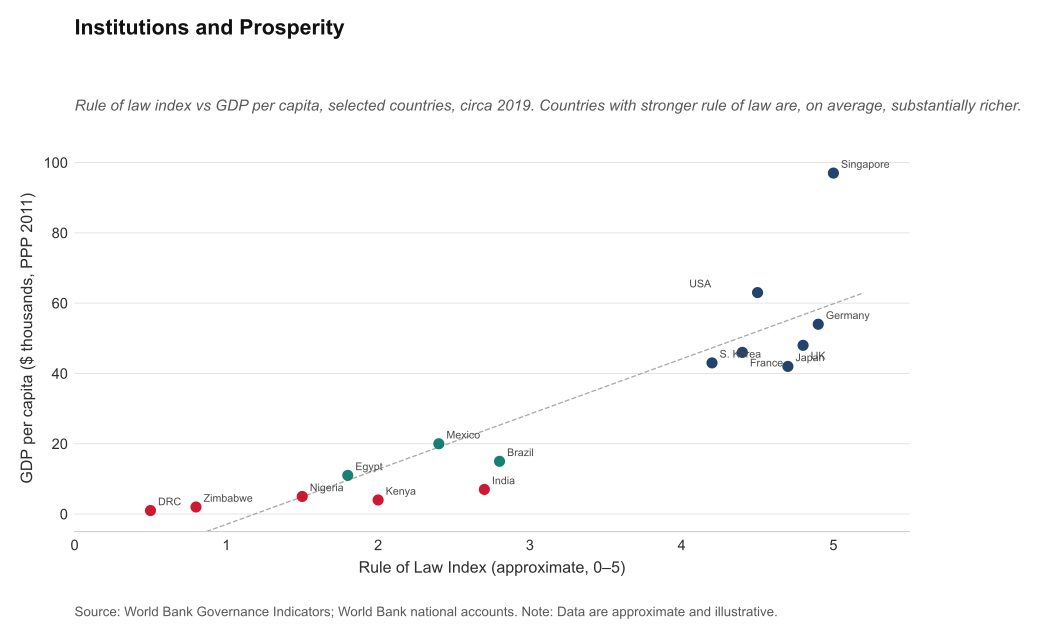
Measuring institutions is harder than measuring rainfall or years of schooling. But proxies exist. The Polity Index, maintained by political scientists, scores countries on a scale from fully autocratic to fully democratic. The World Bank's governance indicators capture property rights, rule of law, and corruption. Cross-national studies using these measures consistently find a strong positive relationship between institutional quality and per capita income. Countries that score well on measures of property rights, constraints on executive power, and judicial independence are, almost without exception, wealthier than countries that score poorly.
The relationship is not purely mechanical. Wealth also helps maintain good institutions: prosperous middle classes are better positioned to defend their property rights, and richer states can fund more capable courts and bureaucracies. But historical evidence strongly suggests that the causation runs primarily from institutions to income rather than the reverse. The societies that first built inclusive institutions, in north-western Europe and their offshoots, grew rich over time. Those that failed to build them, or had them dismantled, stayed poor or fell back.
The comparison between the United States and Mexico at the turn of the twentieth century is instructive. In 1910, the United States had approximately 27,864 banks actively competing for deposits and lending commercially. Mexico had 42 banks, of which two controlled 60 per cent of the country's banking assets, and both were closely allied with the regime of Porfirio Díaz. A Mexican entrepreneur without connections to the inner circle of the Díaz government could not obtain credit. An American entrepreneur could walk into any of thousands of competing banks and make the case for a loan on its commercial merits. The institutional difference produced the economic difference. It was not a natural fact. It was a political arrangement.
The Iron Law of Oligarchy#
The political scientist Robert Michels, writing in 1911 about socialist political parties, identified what he called the iron law of oligarchy: the tendency of any organisation, however democratically intended, to develop a ruling elite that uses its institutional control to perpetuate its own power. The law applies with equal force to states. Revolutions that topple extractive regimes frequently install new extractive regimes rather than inclusive ones, because the mechanisms of extraction are intact and the temptation to use them is irresistible.
This tendency does not make institutional reform impossible. But it explains why reform is rare and difficult, and why the history of poor countries is so often the history of one extractive elite replacing another. The conditions under which reform actually occurs, when critical junctures align with broad coalitions and pre-existing inclusive elements in institutions, will be the subject of the later posts in this series.
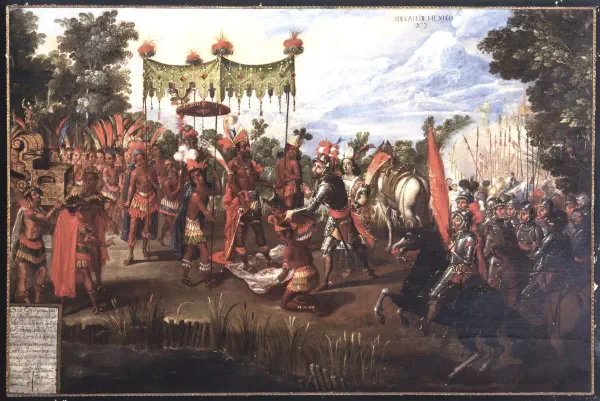
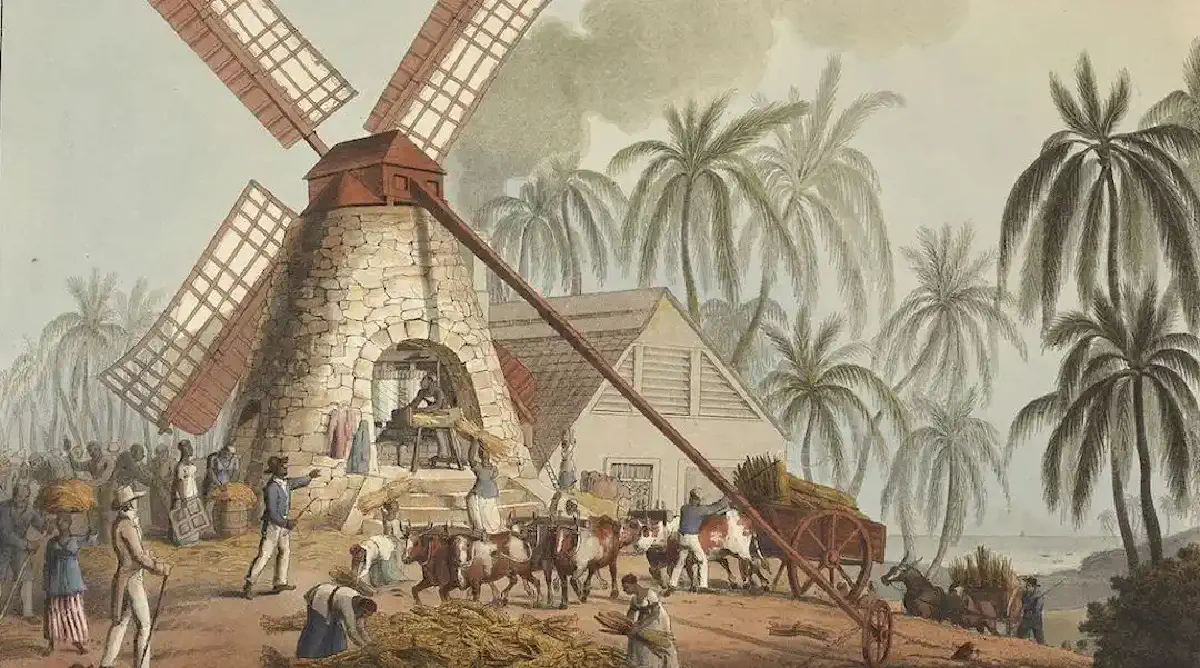
The immediate question is how extractive institutions first became entrenched in the places where they are most deeply embedded. For most of the developing world, the answer begins with colonialism, and specifically with the choices made by European colonists in the Americas.
The most important fact about Carlos Slim's fortune is not its size but the mechanism of its assembly: built not by producing something the world lacked, but by restricting access to something it already had. That mechanism, elevated to national policy, is the architecture of failure.
Next in the series: The Encomienda's Children: How Colonial Institutions Shaped the Americas