The fence that divides Nogales is not architecturally distinguished. It is a strip of steel mesh running through the middle of what is, in every physical sense, the same city. On the northern side, in Arizona, the average household earns about $30,000 a year. Children are enrolled in school. Roads are paved. On the southern side, in Sonora, household income is roughly a third of that. Many teenagers have left school. The road to certain neighbourhoods deteriorates quickly. The populations on both sides share ancestry; they listen to the same music, eat variations of the same food, and in many cases share relatives. The climate is identical. The topography is continuous. The only difference is the political jurisdiction under which each half of the city operates. And yet that single difference produces divergences in health, education, income, and opportunity that compound across generations.
Nogales is the world inequality problem reduced to a thought experiment. Hold everything constant except the political institutions, and watch the outcomes diverge. Daron Acemoglu and James Robinson's Why Nations Fail, published in 2012, uses this observation as the entry point for a comprehensive argument: that the prosperity of nations is explained neither by their geography, nor by the cultural traits of their populations, nor by the quality of advice their rulers receive, but by their institutions. The rules that structure economic incentives and the political arrangements that determine who sets those rules explain far more than anything else. This series examines that argument across six posts, from the Spanish conquest of the Americas to the economic reforms of Deng Xiaoping. The first task is to clear the field. Three competing explanations for world inequality have dominated academic debate. All three fail.
The Tropical Trap#
The geography hypothesis has the virtue of simplicity. Tropical climates are hostile to labour productivity, the argument runs; tropical soils are thin and easily eroded; and tropical diseases, above all malaria, ravage the workforces of equatorial nations. Jeffrey Sachs of Columbia University has given this argument its most rigorous modern form. Jared Diamond's more ambitious Guns, Germs, and Steel offers a deeper version, tracing the origins of intercontinental inequality to differential endowments of domesticable plants and animals, which determined where agriculture first took root and thus where civilisation first advanced.
The problem with these theories is not that geography plays no role in human history. It evidently does. The problem is that it cannot explain the patterns of poverty and prosperity we observe today.
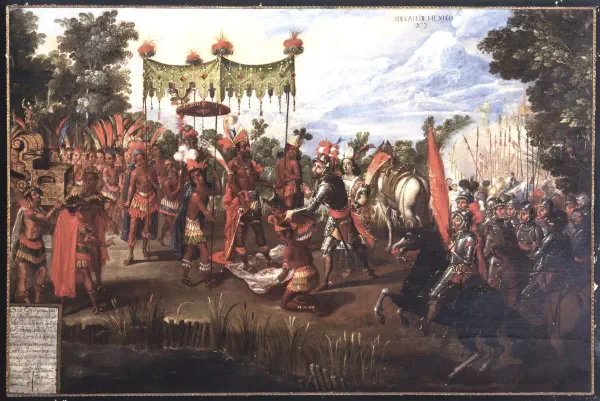
Consider the Americas before 1492. The wealthiest and most technologically sophisticated civilisations in the Western Hemisphere sat squarely within the tropics: the Aztecs in central Mexico, the Incas in the Andes, the Maya in Mesoamerica. The areas that are now the United States and Canada were, by comparison, sparsely settled and technologically simple. If geography determined prosperity, the tropics of the New World should be richer today than the temperate north. They are not. The ranking has been completely reversed. This reversal of fortune happened not because the climate changed but because of the way European colonists organised the societies they encountered or created.
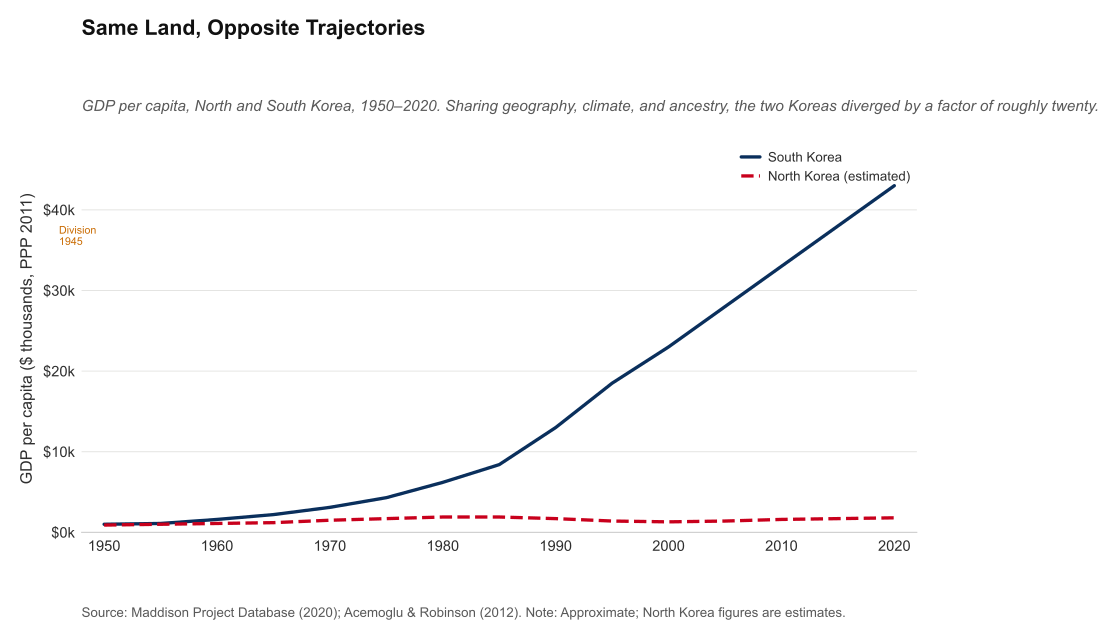
The Korean peninsula offers the most controlled natural experiment available against the geography hypothesis. North and South Korea share geography, climate, and ancestry. Until the division of 1945, they shared language, culture, and economic conditions. Their post-war trajectories diverged sharply. By the early 2020s, South Korea's gross domestic product per person was roughly twenty times that of the North. The geography is identical on both sides of the 38th parallel. The institutions are not.
Diamond's thesis, powerful on the question of pre-modern inequality between continents, also runs into trouble when applied to within-continent differences, which constitute the bulk of the inequality visible in the world today. It cannot explain why England and not Moldova produced the Industrial Revolution; why Taiwan grew and the Philippines did not; or why, within Latin America, the countries that inherited the most intensive colonial labour coercion remain the poorest. Geography sets some of the parameters of economic life. It does not determine its direction.
The Culture Fallacy#
The culture hypothesis has an equally distinguished lineage. Max Weber argued in 1905 that the Protestant Reformation, by sanctifying industrious labour and individual accountability before God, provided the psychological foundation for capitalist accumulation. More recent versions point to trust, cooperation, and social capital: the informal networks and shared norms that lower the cost of economic exchange.
There is something in this. Societies where people distrust strangers face real transaction costs; they cannot easily organise firms, enforce contracts informally, or coordinate on public goods. But the argument that culture is the primary driver of prosperity collapses when held against the evidence.
Consider the Mexican state of Chihuahua. Surveys consistently show that Mexicans trust strangers less than Americans do. It would be easy to read that difference as a cultural constant. Yet the same people, once they have crossed the Rio Grande and been subject to American institutions for a generation, show dramatically higher levels of interpersonal trust and economic participation. The cultural difference is real. But it is an outcome of institutional divergence, not a cause of it. Where states cannot provide reliable justice, where property is insecure, and where contracts are enforced by political connections rather than law, trust rationally contracts.
North and South Korea again make the point with blunt force. The two populations were culturally indistinguishable in 1945. They shared a Confucian heritage that some theorists once invoked to explain East Asian economic stagnation and later, embarrassingly, to explain East Asian economic success. After seven decades of radically different political institutions, North Koreans borrow state-issued coats to wear when visiting relatives in the South; South Koreans are among the world's most internationally competitive workers. The culture theory's flexibility, its ability to explain both stagnation and dynamism using the same cultural variable, is the most revealing sign of its weakness.
The Ignorance Excuse#
The third explanation, the one most favoured among economists and development institutions, is in some respects the most frustrating. The ignorance hypothesis holds that poor countries are poor because their rulers do not know what policies would make them rich; if only they received better advice, or better technical assistance, prosperity would follow.
Tony Killick's account of Ghana under Kwame Nkrumah offers a direct refutation. Killick, a British economist advising the Nkrumah government, documented projects of staggering inefficiency: a footwear factory sited hundreds of miles from the leather supply; a mango-canning plant in a region that grew no mangoes, with planned output exceeding total world demand for the product. Nkrumah, Killick concluded, was not ignorant of sound economic principles. He had been advised by Nobel laureate Sir Arthur Lewis. The projects were adopted not because anyone believed they were efficient, but because they were useful political instruments: they generated jobs, contracts, and patronage for groups whose support Nkrumah needed to maintain his government.
The case of Ghana's next democratic leader, Kofi Busia, is if anything more instructive. Busia, governing in 1971, faced a balance-of-payments crisis and signed an agreement with the International Monetary Fund that included a sharp devaluation of the cedi. He understood the economic logic. He also understood the political logic: the immediate effect of devaluation would be to raise prices for urban consumers who formed his core political constituency. His calculation proved correct. Within weeks, the military, led by Lieutenant Colonel Ignatius Acheampong, overthrew him and reversed the devaluation.
The obstacle to sound economic policy in Ghana was not ignorance. It was the incentive structure created by political institutions that made predatory populism more survivable than prudent reform. Busia was not a fool. He was a politician operating in an environment where the consequences of good economics were immediately visible and politically lethal, while the consequences of bad economics accumulated slowly and distributed their costs widely.
The Reversal of Fortune#
The clearest evidence against all three standard explanations is what economists call the reversal of fortune: the systematic inversion, over the past five centuries, of the relative prosperity of societies that were rich and poor before European colonisation.
In 1500, the densely populated and politically sophisticated civilisations of the Americas, South Asia, and parts of sub-Saharan Africa were, by most measures, more prosperous than the relatively sparse and technologically simple societies of what would become the settler colonies of North America, Australia, and New Zealand. Today, the relationship is almost perfectly reversed. The former colonies of dense, institutionally sophisticated pre-colonial societies are poor; the former colonies of sparse, hunter-gatherer or simple agricultural societies are rich.
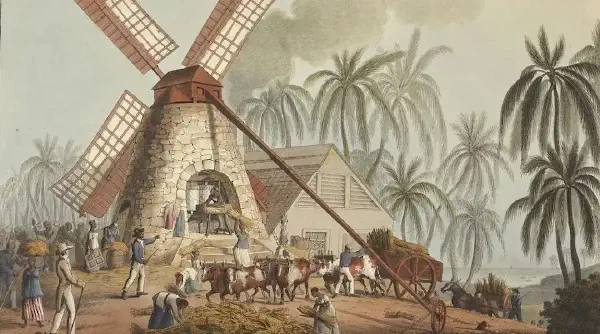
Geography cannot explain this: the same territories that were rich in 1500 are poor today. Culture cannot explain this: the pre-colonial populations have not changed their fundamental cognitive or social traits. Ignorance cannot explain this: the reversal correlates not with access to better economic advice but with the type of institutions European colonists installed in each territory. Where they found dense, exploitable populations, they built extractive institutions: forced labour, land confiscation, tribute systems. Where they could not exploit the local population, or where disease killed it off entirely, they installed themselves and demanded inclusive institutions that would protect their own property rights.
One Answer#
Each of the three failed theories captures something real. Geography does shape disease environments and agricultural possibilities. Culture and social capital do affect economic performance, even if they are largely endogenous to institutional history. Ignorance of sound policy does sometimes lead to bad outcomes. But none of these is the primary explanation for why some nations are rich and others are not.
The primary explanation starts with politics: with who holds power, how they acquired it, how they exercise it, and what institutions they have built or inherited to govern economic life. A theory of world inequality that ignores these questions, as most economic advice still does, will consistently misdiagnose the problem and therefore consistently fail to treat it.
The next post examines what institutions are, how they shape economic incentives, and why the distinction between inclusive and extractive institutions is the most useful analytical tool available for understanding the origins of prosperity.
Three centuries of geographical determinism, cultural essentialism, and technocratic optimism have all produced variants of the same comforting conclusion: that poverty is the product of circumstances beyond political control. It is a consoling doctrine, particularly for those whose political choices have produced it.
Next in the series: Extracted and Excluded: Inclusive and Extractive Institutions and Why They Matter