Rigged from Birth: Why Institutions Determine the Fate of Nations
Summary#
The gap between a rich nation and a poor one is not primarily a matter of geography, culture, or the quality of economic advice its leaders receive. It is a matter of institutions: the rules, formal and informal, that determine who can participate in economic life, who can keep what they earn, and who can challenge those in power. Nations fail economically when their institutions are designed to extract resources from the many for the benefit of the few. They prosper when their institutions distribute opportunity broadly and constrain the power of any single group to rig the rules. That argument, developed in systematic historical detail by Daron Acemoglu and James Robinson in Why Nations Fail (2012), is the subject of this series.
The series traces the argument through five centuries of evidence: from the Spanish conquest of the Americas to the desegregation of the American South, from the Glorious Revolution of 1688 to the economic reforms of Deng Xiaoping. Each post examines a different dimension of the core claim. The sequence moves from diagnosis to mechanism to consequence to hope, ending with the question that presses hardest on the contemporary world: can the trap be escaped?
Introduction to the Series#
The six posts trace an arc from the failure of standard explanations to the conditions under which extractive institutions can be reformed:
- The Wrong Suspects — Geography, culture, and ignorance have taken the blame for global poverty. The evidence exonerates all three.
- Extracted and Excluded — Inclusive and extractive institutions: what they are, why the distinction matters, and why elites consistently prefer extraction.
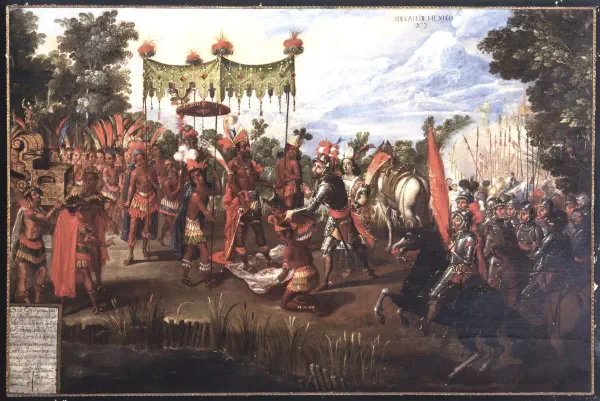
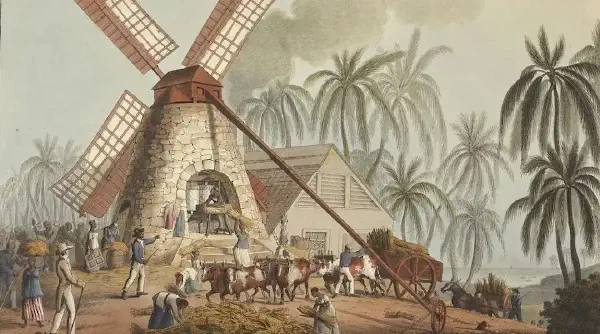
- The Encomienda's Children — How Spanish colonialism seeded persistent inequality across the Americas, and why the Jamestown experiment followed a different path.
- When Prosperity Closes Its Doors — Venice, Rome, and the Maya: how inclusive institutions collapse, and the political logic of creative destruction's enemies.
- The Revolution That Paid Off — England's Glorious Revolution of 1688 as the institutional precondition for the Industrial Revolution, and why absolutist states blocked the same transformation.
- Breaking the Mold — Botswana, China, and the American South: how vicious circles can be broken, and what conditions make that possible.
Key Insights#
- The primary explanation for world inequality is political. Geography, culture, and technical ignorance each capture something real, but none can explain the patterns of poverty and prosperity visible today. The two halves of Nogales, the two Koreas, and the two Germanys are natural experiments that leave geography and culture as residuals. Only political institutions vary across those divides.
- Extractive institutions are not accidents; they are policies. Elites design economic rules to transfer wealth from the many to the few, and they use their political control to maintain those rules. The damage this does to growth is not a side-effect the elite fails to notice. It is a cost they accept in exchange for the security that coercion provides.
- Creative destruction is the engine of prosperity and the enemy of extractive elites. Innovation displaces existing industries, firms, and the political arrangements that depend on them. Rulers with a stake in the existing order therefore suppress it. This is not ignorance. It is rational behaviour from a narrow political calculus.
- Inclusive and extractive institutions self-reinforce. Inclusive institutions create broad coalitions with a stake in maintaining them; extractive ones concentrate resources in the hands of those best positioned to preserve them. Both tendencies produce path dependence: the institutional trajectory of a society at any given moment reflects its institutional history, often reaching back centuries.
- Critical junctures are necessary but not sufficient for institutional change. Major shocks, war, plague, technological revolution, colonial independence, can disrupt the vicious circle and create space for inclusive reform. But without pre-existing inclusive elements in institutions or a broad coalition capable of channelling the shock, critical junctures typically produce a new extractive elite rather than a reformed system.
- History is not destiny. Botswana, China after 1978, and the American South after desegregation demonstrate that extractive institutions can be reformed, even after long histories of extraction. The conditions for such reform are demanding and often depend on contingent factors, including the decisions of particular individuals, but they are not structurally impossible.
References#
- Acemoglu, D., & Robinson, J. A. (2012). Why nations fail: The origins of power, prosperity, and poverty. Crown Publishers.
- Dell, M. (2010). The persistent effects of Peru's mining mita. Econometrica, 78(6), 1863–1903.
- Diamond, J. (1997). Guns, germs, and steel: The fates of human societies. W. W. Norton.
- Engerman, S. L., & Sokoloff, K. L. (2002). Factor endowments, inequality, and paths of development among New World economies. Economia, 3(1), 41–109.
- Killick, T. (1978). Development economics in action: A study of economic policies in Ghana. Heinemann.
- Maddison Project Database (2020). Historical GDP per capita estimates. University of Groningen.
- MacLeod, C. (1988). Inventing the industrial revolution: The English patent system, 1660–1800. Cambridge University Press.
- North, D. C. (1990). Institutions, institutional change and economic performance. Cambridge University Press.
- Schapera, I. (1956). Government and politics in tribal societies. Watts.
- Weber, M. (1905). The Protestant ethic and the spirit of capitalism. (T. Parsons, Trans.). Scribner.