When Violence Stops Feeling Violent#
The most consequential shift in a violent system is not escalation. It is normalization. Once cruelty becomes familiar, it loses its capacity to alarm. What initially shocks begins to reassure. Predictability replaces horror.
Humans adapt rapidly to repeated exposure. This is a strength in benign environments and a liability in malignant ones. When violence is publicly endorsed, repeated, and applauded, the nervous system recalibrates. Moral revulsion fades. Indifference takes its place.
At that point, cruelty no longer signals danger. It signals order. The crowd no longer asks why this is happening but how well it is being done. Applause follows competence, not justice.
This is the moment when self-preservation quietly fails.
Desensitization as a Behavioral Trap#
Desensitization is often misunderstood as emotional numbness. In reality, it is cognitive reclassification. Acts once labeled “unacceptable” are relabeled “normal,” “necessary,” or “inevitable.” This relabeling reduces internal conflict and social friction.
Cheering accelerates this process. Public approval collapses private doubt. Individuals take cues from the emotional tone of the group. If others appear calm—or enthusiastic—alarm feels inappropriate. Fear is reinterpreted as immaturity.
The danger is not that people become cruel. It is that they stop recognizing cruelty as a signal of risk. Violence becomes environmental noise. Once that happens, people lose the instinct to withdraw, resist, or set boundaries.
In behavioral terms, the alarm system is disabled.
Cruelty as Identity#
When violence is normalized long enough, it stops being an action and becomes an identity. Societies begin to define themselves through toughness, ruthlessness, and the capacity to inflict harm. Cruelty is reframed as strength.
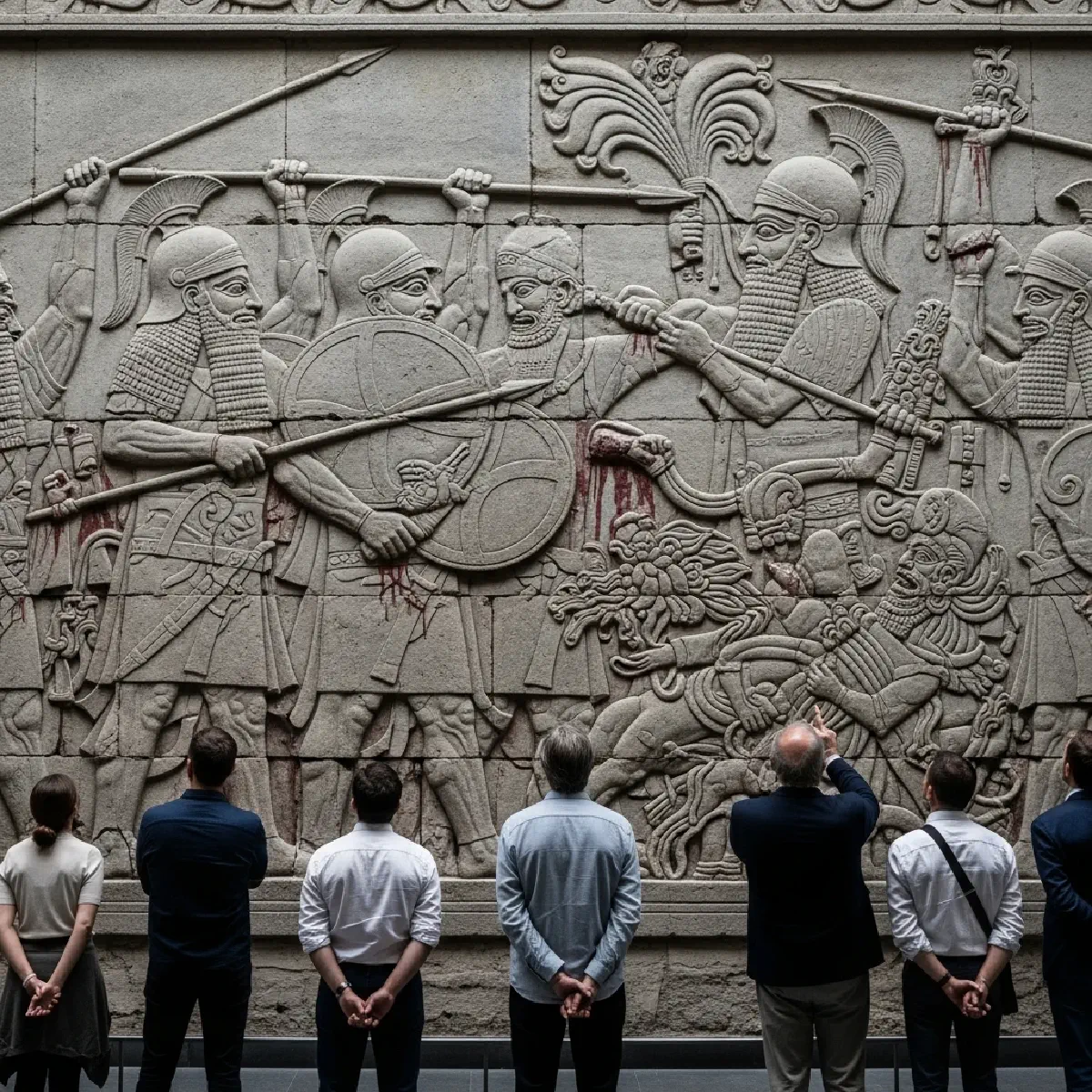
In the Assyrian Empire, extreme punishments were not hidden excesses. They were identity markers. Reliefs depicted flaying, mass execution, and terror as symbols of order and legitimacy. To admire them was to affirm belonging.
At this stage, opposing cruelty is no longer disagreement. It is betrayal. Moral restraint is recast as weakness. Those who hesitate are suspect. The crowd polices itself more efficiently than authority ever could.
Once cruelty is identity, self-protection erodes further. To object to violence is to object to oneself.
The Collapse of Moral Feedback#
Healthy systems rely on feedback. Excess triggers resistance. Harm triggers correction. Normalized cruelty destroys this mechanism. Applause replaces feedback with reinforcement.
When harm is praised, there is no internal signal telling power it has gone too far. There is only encouragement to continue. Escalation becomes rational, even expected.
At the individual level, people lose the ability to evaluate danger accurately. They confuse intensity with control. A more violent system feels stronger, not riskier. This miscalculation persists until violence becomes indiscriminate.
By the time cruelty turns inward, the population has already argued—through its applause—that cruelty is acceptable. The system simply applies its own logic consistently.
Why Moral Self-Preservation Matters#
Moral boundaries are not abstract ideals. They are functional survival tools. They limit escalation. They preserve distinctions. They create friction that slows violence before it spreads.
Cheering dismantles these boundaries. It signals that escalation is tolerated. It trains both rulers and crowds to expect more.
When violence finally reaches those who applauded, it does not feel like betrayal. It feels like fate. The language to call it wrong has already been surrendered.
This is the deepest cost of normalized cruelty. It does not just kill bodies. It kills the instincts that might have prevented killing.
Self-preservation fails not because people wanted destruction, but because they helped build a world where destruction felt ordinary.