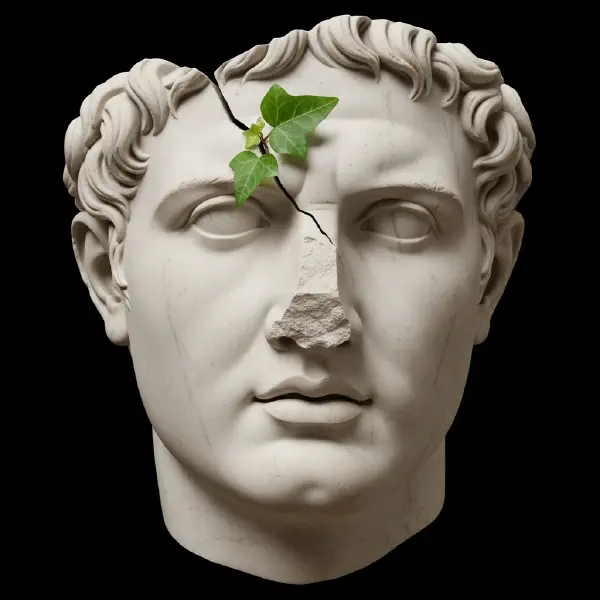
IN THE FINAL YEARS OF HIS LIFE, the philosopher Derek Parfit worked on a manuscript that he knew he would not finish. He had spent decades thinking about questions of identity, ethics, and the nature of value. But the question that consumed him at the end was simple: what makes a life worth living? Not what makes it happy, or successful, or admirable, but what makes it good—good in the sense that, looking back, one can say it was worth having lived.
Parfit died in 2017, the manuscript unfinished. But the question he asked is the question that haunts every attempt to understand value. We have spent this series tracing the architecture of value across domains: its prehistory in gift economies, its philosophical quarrels, its manufacture through price, its expression in status and authenticity, its contradictions in luxury and art, its transformation in the attention economy, its moral limits. But all of these are, in the end, preliminaries to a deeper question: what is it to value well?
The Casio F-91W and the Rolex Submariner have served as our companions through this inquiry. They have been more than examples; they have been lenses through which to see different logics of value. The Casio represents value as function: it tells time accurately, durably, inexpensively. The Rolex represents value as signal: it communicates status, heritage, belonging. Both are legitimate. Both answer to real human needs. But they point to different answers to the question of what a good life requires.
This final article does not attempt to settle the quarrel between them. It attempts to hold the quarrel in view, to ask what it means to live well in a world where value is so often manufactured, so often distorted, so often detached from the things that finally matter. The answer will not be found in a watch. But it may be found, in part, in the way we choose between them.
The Two Economies#
We live in two economies simultaneously. The first is the economy of use. In this economy, things are valued for what they do. A watch tells time. A house provides shelter. A car provides transportation. A friend provides companionship. The economy of use is the economy of necessity, of function, of the material conditions of life. It is the economy that the Casio serves.
The second is the economy of meaning. In this economy, things are valued for what they signify. A watch signals status. A house signals class. A car signals identity. A friend signals belonging. The economy of meaning is the economy of desire, of identity, of the social world we inhabit. It is the economy that the Rolex serves.
Neither economy is reducible to the other. The person who lives entirely in the economy of use is missing something essential about human life: the need for meaning, for connection, for the stories that give shape to existence. The person who lives entirely in the economy of meaning is missing something essential as well: the grounding in reality, the satisfaction of competence, the simple pleasure of a thing that does what it is supposed to do.
The wisdom of a life lies partly in the ability to move between these economies, to know when to value something for what it does and when to value it for what it says. The Casio is a watch. The Rolex is a watch and a signal. To see both is to see clearly. To confuse them is to lose one’s bearings.
The Philosophers on Value#
The philosophers who have thought most deeply about value have tended to agree on one thing: value is not reducible to price. They have disagreed, often violently, about what value consists in. But they have agreed that to live well is to value well—and that valuing well requires discernment, discipline, and a certain kind of attention.
Aristotle, in the “Nicomachean Ethics,” argued that the good life is the life of virtuous activity. Virtue, for Aristotle, was not a matter of following rules but of perceiving correctly: seeing what the situation requires, what the mean between excess and deficiency is, what the flourishing of a human being demands. The virtuous person, Aristotle thought, values things in the right way, to the right degree, for the right reasons. He values friendship more than pleasure, contemplation more than wealth, the exercise of reason more than the accumulation of goods. The Casio and the Rolex, from this perspective, are not themselves objects of virtue or vice. But the way one chooses between them reveals something about one’s character.
The Stoics, who followed Aristotle by several centuries, took a more radical view. They argued that the only thing that is truly valuable is virtue: the quality of one’s character, the integrity of one’s will. External goods—wealth, health, status, even life itself—are “indifferents.” They are not bad, but they are not good in the way that virtue is good. The Stoic who wears a Casio does so not because she disdains luxury but because she understands that the watch is not the point. The Stoic who wears a Rolex does so not because she desires status but because she understands that the watch is a preferred indifferent—nice to have but not constitutive of the good life. The Stoic is free from the anxiety of status competition because she has relocated her sense of value from external goods to internal ones.
The Utilitarians, who emerged in the 19th century, offered a different account. For Jeremy Bentham and John Stuart Mill, value is a matter of pleasure and pain. The good life is the life that maximizes pleasure and minimizes pain. This seems, at first glance, to favor the Casio: it tells time as well as the Rolex, at a fraction of the cost, leaving more resources for other pleasures. But Mill famously argued that some pleasures are higher than others—that the pleasure of reading poetry is of a different order than the pleasure of playing pushpin. The Rolex, as an object of beauty and history, might offer a higher pleasure than the Casio. The Utilitarian must weigh, not simply count.
The Existentialists, in the 20th century, shifted the terms of the debate. For Jean-Paul Sartre and Simone de Beauvoir, value is not discovered but created. We choose what to value, and in choosing, we create ourselves. The person who values the Rolex is not making a mistake; she is making a choice about who she wants to be. The person who values the Casio is making a different choice. Neither is objectively correct. The only mistake is to pretend that one’s values are dictated by something outside oneself—by God, by nature, by the market. To value authentically, for the existentialist, is to own one’s choices, to accept responsibility for them, to live without excuses.
These philosophical traditions do not give us a formula for choosing between the Casio and the Rolex. But they give us resources for thinking about the choice. They remind us that value is not simply a matter of price. They remind us that how we value reveals who we are. And they remind us that the question of value is not a question about objects but a question about lives.
The Attention of the Soul#
Simone Weil, the French philosopher and mystic, wrote that attention is the rarest and purest form of generosity. To attend to something—to give it one’s full, undivided awareness—is to acknowledge its reality, its existence, its claim on us. Weil thought that attention was the highest human faculty, the capacity that makes possible both knowledge and love.
Weil’s insight has relevance to the question of value. In a world that constantly solicits our attention, that monetizes it, that turns it into a commodity, the capacity to attend to what matters is a form of resistance. The attention economy is built on the fragmentation of attention. The platforms profit from distraction. To attend, in Weil’s sense, is to refuse that logic. It is to choose what deserves one’s awareness and to give it freely.
The Casio and the Rolex make different demands on attention. The Casio demands almost none. It is there when you need it, silent when you do not. The Rolex, by contrast, demands attention. It invites contemplation: the sweep of the second hand, the weight of the case, the history it represents. This is not a defect; it is a feature. A beautiful object, attentively made, deserves attentive consideration. The question is whether the attention it receives is genuine or merely the performance of attention.
Weil’s insight also applies to the broader question of value. To value well is to attend well: to see what is truly there, to discriminate between the genuine and the simulated, to give one’s awareness to what merits it. The person who values the Rolex for its beauty, its engineering, its history is attending to something real. The person who values it for its price, its status, its ability to impress is attending to something else. The watch is the same. The attention is different.
The Problem of Price#
The difficulty of valuing well in the modern world is that price is so often a distraction. Price is not value, but it presents itself as value. It is the most visible, the most measurable, the most easily communicated form of worth. And it has a tendency to colonize the imagination, to make us think that what is expensive is valuable and what is cheap is not.
This is the trap that the luxury industry exploits. The high price of a Rolex is not a barrier to its appreciation; it is a signal that the watch is worth appreciating. The price tells the buyer that this is something special, something rare, something that deserves attention. The price creates the perception that it then claims only to reflect.
The Casio, by its low price, avoids this trap. But it also avoids the attention that price can summon. A $20 watch is not taken seriously. It is not examined, contemplated, appreciated. It is used. There is something to be said for use, for the quiet satisfaction of a thing that does its job without demanding attention. But there is also something to be said for appreciation, for the deliberate attention that a beautiful object can command.
The problem, then, is not price itself but the confusion between price and value. The person who buys a Rolex because it is expensive is confused. The person who buys a Casio because it is cheap is equally confused, though perhaps less harmfully so. The person who buys a Rolex because she loves its beauty, its history, its engineering is not confused. The person who buys a Casio because it tells time accurately and durably is not confused. The difference is not in the object but in the relationship to it.
The Value of a Life#
We have spent this series asking about the value of things. But the question that finally matters is the value of a life. What makes a life worth living? What makes it good, not merely successful or happy or admired? The answer cannot be found in a watch. But the way one thinks about watches may reveal something about how one thinks about life.
The person who values the Casio for its functionality, its honesty, its refusal to perform—such a person may be drawn to a life of competence, of doing things well, of finding satisfaction in the work of the hands and the mind. The person who values the Rolex for its beauty, its history, its capacity to connect past and future—such a person may be drawn to a life of appreciation, of cultivating taste, of attending to what is fine and rare. The person who values the Rolex for its price, its status, its ability to impress—such a person may be drawn to a life of competition, of signaling, of measuring worth by the gaze of others.
These are not judgments; they are tendencies. No one is reducible to their choice of watch. But the choice is not trivial either. It is a small decision that participates in a larger pattern of decisions, a way of being in the world that is expressed in countless small acts of valuation.
The philosophers who have thought most deeply about the value of a life have tended to converge on a few themes. The good life, they have said, involves meaningful work: work that engages one’s capacities, that produces something of value, that connects one to others. It involves loving relationships: relationships of mutual recognition, of care, of shared attention. It involves growth: the development of one’s capacities over time, the sense of becoming more fully oneself. It involves contribution: the sense that one’s life has made a difference, that one has left the world slightly better than one found it. And it involves appreciation: the capacity to take pleasure in what is good, to attend to what is beautiful, to be grateful for what one has been given.
These are the things that are truly valuable. They are not bought or sold. They are not measured by price. They are not signaled by watches. They are lived.
The Casio and the Rolex, Again#
We return, at the end, to where we began. The Casio F-91W tells time. It does so accurately, durably, inexpensively. It is a triumph of engineering, a democratization of a technology that was once expensive and exclusive. It is honest about what it is. It makes no claims to heritage or craftsmanship. It does not ask to be admired. It simply works.
The Rolex Submariner tells time as well, though less accurately. It does so in a way that is beautiful, that connects to a history of watchmaking, that signals status and taste. It is a triumph of marketing, a masterpiece of perceived value. It claims a heritage that is partly manufactured, a craftsmanship that is partly performed. It asks to be admired. It works as a signal.
The choice between them is not a choice between true value and false value. It is a choice between different ways of being in the world. The Casio represents one set of values: functionality, honesty, simplicity. The Rolex represents another: beauty, heritage, aspiration. Neither is wrong. Neither is complete. A life that valued only functionality would be impoverished. A life that valued only beauty would be unmoored. A life that valued only status would be hollow.
The task of a life is to find the balance, to know when to value function and when to value meaning, to distinguish the signal from the self, to attend to what truly matters. The task is not to choose between the Casio and the Rolex but to understand what each represents, to see the architecture of value that surrounds them, and to decide, with awareness, what one wants one’s values to be.
The Last Question#
We began this series with a distinction: perceived value versus true value. The Casio, we said, tells accurate time at a fraction of the price. The Rolex, we said, tells a story at a price that reflects the story’s power. The distinction has guided us through ten articles, from the prehistory of value to the attention economy, from the philosophers’ quarrel to the moral limits of markets. It has served us well.
But perhaps it is time to complicate it. Perhaps there is no “true value” apart from perceived value. Perhaps the distinction is itself a product of the machinery we have been examining. The Casio is not more truly valuable than the Rolex; it is valuable in a different way. The Rolex is not less truly valuable than the Casio; it is valuable in a way that the Casio is not. Value is not a property of objects; it is a relation between objects and valuing subjects. And valuing subjects are complex, contradictory, capable of appreciating both utility and beauty, both honesty and aspiration, both the simple and the fine.
The question, then, is not whether the Casio or the Rolex is more valuable. The question is how to value well in a world that constantly confuses value with price, meaning with signal, worth with status. The answer is not to retreat from the world of value, not to pretend that signals do not matter, not to deny the human need for meaning and recognition. The answer is to see clearly, to attend carefully, to choose deliberately. It is to know that a watch is a watch, and also that a watch is never only a watch.
The ancient philosophers had a word for the kind of knowledge that is also a way of life: phronesis, practical wisdom. It is the capacity to perceive what a situation requires, to discern what is truly valuable, to act in a way that is both rational and good. It is not a formula. It cannot be taught in the way that mathematics or engineering can be taught. It is acquired through practice, through reflection, through the slow work of living.
The Casio and the Rolex will remain. They will continue to be manufactured, marketed, purchased, worn. They will continue to represent different logics of value. And the people who wear them will continue to make choices, conscious and unconscious, about what they value and why. The architecture of value will continue to operate, to manufacture perception, to shape desire. It is the air we breathe.
But we are not merely its products. We are also its critics, its interpreters, its occasional resisters. We can ask why we want what we want. We can ask whether the signals we send are the signals we intend. We can ask whether the things we value are the things that make our lives worth living. These questions do not free us from the architecture of value. But they allow us to inhabit it with awareness. And awareness, in the end, may be the only freedom we have.
This is the tenth and final article in a series on the architecture of value. The author thanks the readers who have accompanied this inquiry from the prehistory of value to the measure of a life, and invites them to continue asking—in their own lives, with their own choices—the question that began it all: what is truly valuable?
For the mathematically minded, an additional post, part 11 has been added where A Mathematical Model of Perceived Value is presented