
The Inconvenient Math of Mortality: Ethical Decisions on Life, Death, and Intergenerational Justice
Key Insights#
- The Prisoner of Choice: How time-inconsistent selves undermine living wills and autonomy
- Physicians as Arbiters: The conflict between compassion and the Hippocratic Oath
- Longevity’s Hidden Tax: Intergenerational justice in an aging society
- The Economic Calculus of Cruelty: Psychological distancing and ethical evasion
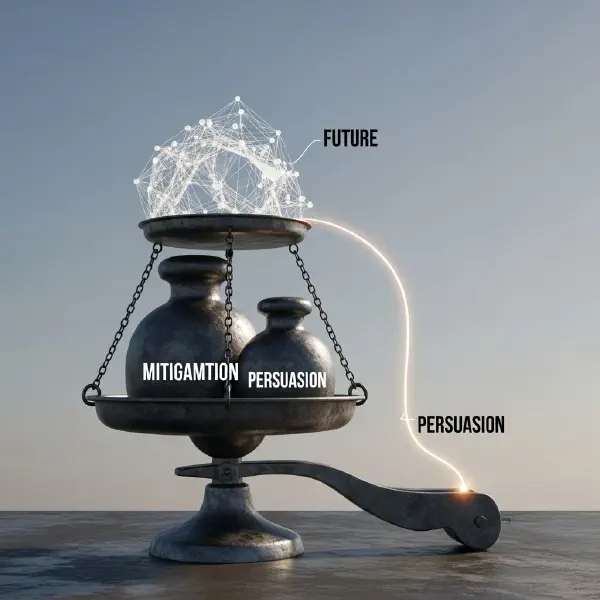
- Climate Risk and Persuasion: The poverty of persuasion in motivating action for future generations
Each post builds from individual conflicts outward to global, intergenerational challenges.
References#
- Harris, J. (1985). The value of life: An introduction to medical ethics. Routledge.
- Kahneman, D. (2011). Thinking, fast and slow. Farrar, Straus and Giroux.
- Lee, L. W. (2008). Compassion and the Hippocratic Oath. Journal of Socio-Economics, 37(5), 1724–1728.
- Lee, L. W. (2010). The Oregon Paradox. Journal of Socio-Economics, 39(2), 204–208.
- Lee, L. W. (2011). Behavioral bioethics: Notes of a behavioral economist. Journal of Socio-Economics, 40(3), 368–372.
- Lee, L. W. (2011). International justice in elder care: The long run. Public Health Ethics, 4(3), 292–296.
- Luce, R. D., & Raiffa, H. (1957). Games and decisions. Wiley.
- Parfit, D. (1984). Reasons and persons. Oxford University Press.
- Singer, P. (1993). Practical ethics (2nd ed.). Cambridge University Press.
- Thaler, R. H., & Sunstein, C. R. (2008). Nudge: Improving decisions about health, wealth, and happiness. Yale University Press.