
The biological roots of retention#
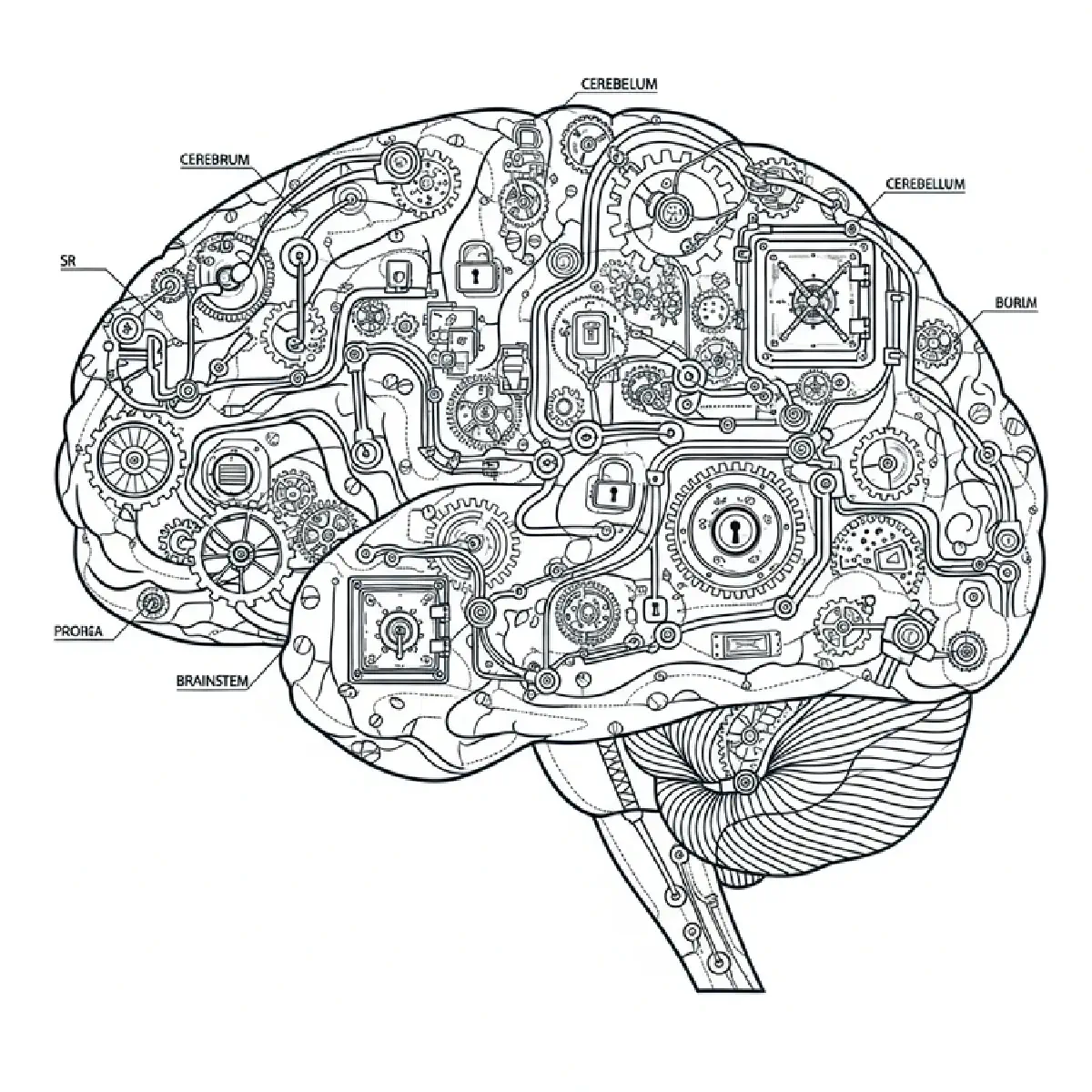
Few thinkers have delved as deeply into the irrational foundations of wealth as Sigmund Freud, who linked financial behavior to our earliest biological developments. In 1908, Freud introduced the concept of the “anal character,” suggesting that our relationship with money begins in the nursery during toilet training. He observed that children often perceive their waste as a “gift” or a possession of high value, marking their first experience with ownership and retention. This early conflict between the child’s desire to keep and the parent’s demand to let go creates a psychological template for adult financial management. When this stage is marked by trauma or excessive control, it can manifest as an adult obsession with saving or an inability to spend. Thus, the vault we build around our wealth may actually be a sanctuary for our earliest anxieties.
The Freudian Vault#
Our adult financial habits are often a displaced manifestation of early childhood developmental conflicts and behavioral conditioning. This matters because it suggests that “frugality” or “extravagance” are not just economic choices, but deeply ingrained personality traits. By recognizing the psychoanalytic and behavioral roots of these tendencies, we can begin to address why some people are driven to hoard while others are driven to spend compulsively.
The Mechanism of Early Training#
The Foundations of Retention#
The psychoanalytic perspective posits that the “anal stage” is the foundation of money psychology. During this period, the child experiences pleasure through the retention of feces, which becomes psychologically interchangeable with the concept of “treasure” or “gold”. This biological process is reinforced by social interaction; a parent’s praise for a child’s self-control acts as positive reinforcement. Conversely, harsh punishment during this phase can lead to “anal fixation,” resulting in a personality characterized by orderliness, parsimony, and obstinacy. In this framework, the act of saving money is a symbolic adult version of the childhood act of retention, providing a sense of mastery over one’s own environment.
Behavioral vs. Psychoanalytic Friction#
While Freud focused on the subconscious, B.F. Skinner and the behavioral school viewed money as an “operant conditioned” tool. Behavioral psychology suggests that we learn the value of money through a series of rewards and punishments. Money itself has no biological value; it is a “secondary reinforcer” that we associate with “primary reinforcers” like food and shelter. This creates a friction between the deep, symbolic meaning of money and its functional, learned use. Some individuals develop a “functional autonomy” for money, where the pursuit of the coin becomes an end in itself, independent of the goods it can actually buy. This behavioral loop explains why the desire for money often persists long after a person’s material needs have been met.
Ripple Effects on Adult Character#
These early psychological foundations branch out into distinct adult money types. The “compulsive saver” uses money as a shield against a world they perceive as dangerous, often denying themselves basic comforts to maintain their “vault”. On the other end of the spectrum, the “bargain hunter” derives psychological satisfaction from outsmarting the system, treating every transaction as a battle of wits. There is also the “fanatical collector,” who hoards physical objects to compensate for a sense of internal emptiness or childhood deprivation. Each of these characters is acting out a script written in their earliest years, using money as the primary medium of expression.
Beyond the Freudian Vault#
Understanding the childhood of capital allows us to see that our financial accounts are often balance sheets of our emotional history. We have moved from a biological need for control to a social need for accumulation, yet the underlying mechanisms remain remarkably consistent. Money acts as a bridge between our internal world of fantasy and the external world of reality. It is not merely a tool for trade but a vessel for our personalities. Recognizing these roots is the first step toward a healthier relationship with wealth—one that is driven by conscious choice rather than subconscious compulsion. In the next part of this series, we will examine how these internal drives project outward, turning money into a proxy for power, love, and freedom in our social lives.