
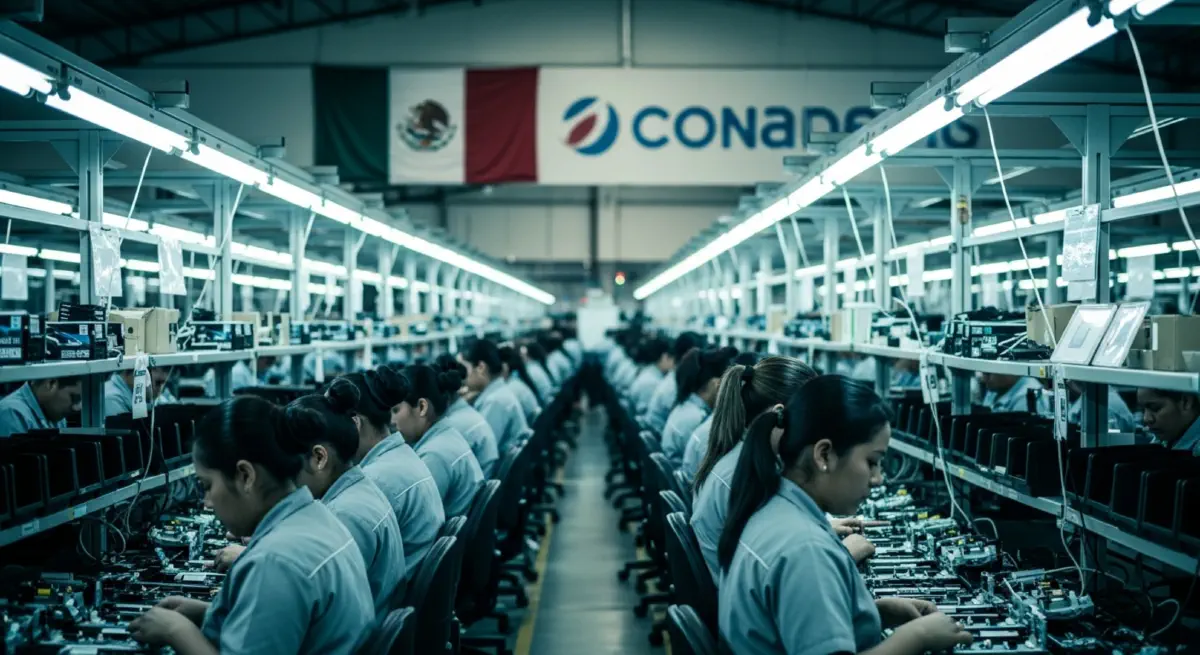
If the colonial plantation was the original extraction machine, Mexico’s IMMEX (Industria Manufacturera, Maquiladora y de Servicios de Exportación) program is its most sophisticated 21st‑century descendant. Launched in 2006 as a successor to the earlier maquiladora scheme, IMMEX now encompasses over 3,000 plants, employs more than 1 million workers, and accounts for roughly half of Mexico’s exports. Yet the economic structure remains eerily familiar: foreign ownership, low wages, minimal local value‑added, and a legal framework designed to repatriate profits rather than reinvest them.
The Enclave Economy, Perfected#
The IMMEX program allows foreign companies to import raw materials and components duty‑free, provided that the finished goods are exported. In practice, this creates a “shelter” economy: the Mexican plant is often a mere assembly station, with no brand, no R&D, and no strategic decision‑making. The parent company (typically a US, Japanese, or German multinational) retains all intellectual property, controls the supply chain, and captures the vast majority of the value.
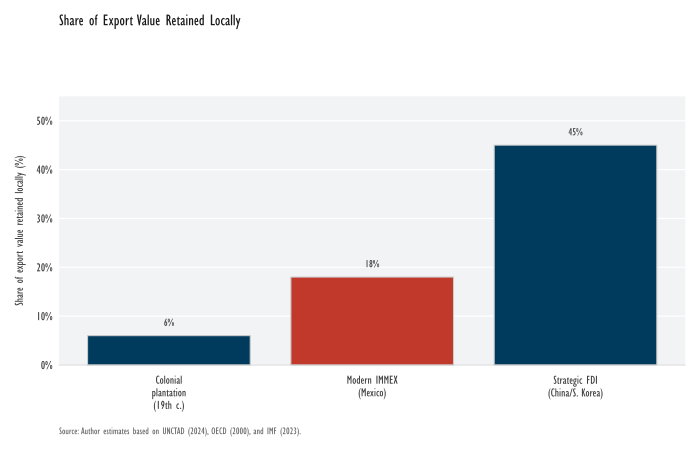
How much value actually stays in Mexico? Empirical studies of maquiladora‑type operations suggest that only about 18% of the export value remains in the host country after accounting for imported inputs, profit repatriation, and royalties. This is a striking improvement over the colonial 6% – but it is still an extraction economy, not a development engine. Contrast this with China’s strategic FDI regime (discussed in Part IV), which forced joint ventures and local content requirements, raising local retention to an estimated 45% for advanced manufacturing.
Wages as the Competitive Weapon#
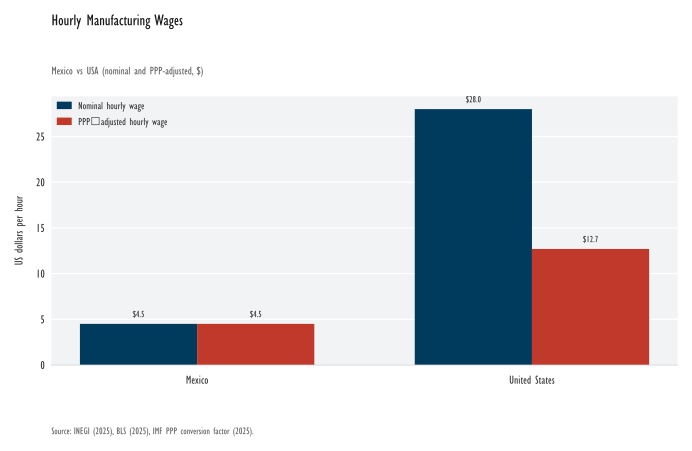
The IMMEX model’s primary lure for foreign investors is labour cost. As shown in Part I, the hourly manufacturing wage in Mexico is **US$4.50**, compared to US$28.00 in the United States. This gap is not a natural endowment; it is actively maintained by Mexican labour policies that restrict unionisation, allow flexible hiring and firing, and keep minimum wage increases below productivity growth. The result is a permanent wage advantage that foreign investors capture as higher profits.
But the gap is even more revealing when adjusted for purchasing power. A Mexican worker earning $4.50 per hour can buy about $4.50 worth of local goods. A US worker earning $28.00 would need to spend $12.70 to buy the same basket of goods in Mexico (the PPP adjustment). Yet the US worker keeps the remaining $15.30 as pure surplus – which is why US‑based multinationals can pay Mexican workers a fifth of the nominal wage and still see their Mexican operations as highly profitable.
Profit Repatriation: The Silent Drain#
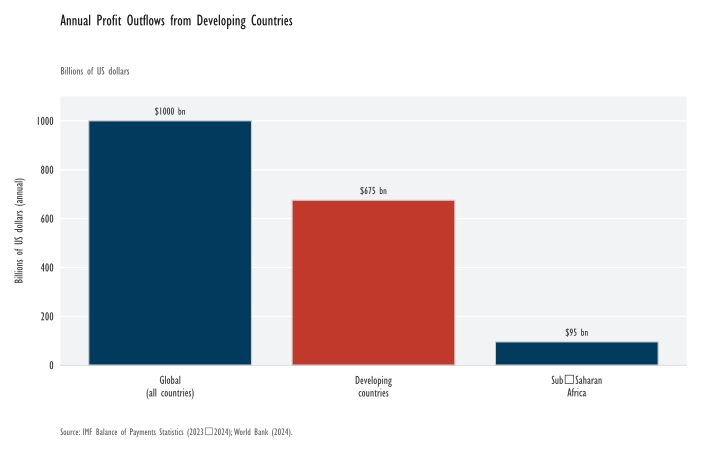
Because IMMEX plants are legally structured as subsidiaries or shelter operations, their profits are routinely transferred back to the parent company via dividends, management fees, royalties, and transfer pricing. Mexico’s balance of payments records these outflows as “primary income” debits. Globally, developing countries lose an estimated $675 billion annually to profit repatriation – money that could otherwise be reinvested in local infrastructure, education, or technology.
Mexico is a prime example. In 2023‑2024, profit repatriation from the maquila sector alone exceeded $15 billion per year, equivalent to nearly half of the country’s total FDI inflows. This means that for every dollar of new FDI entering Mexico, about fifty cents immediately flows back out as profit. The net contribution to the Mexican economy is reduced to wages (which are spent locally) and a modest corporate tax take (often waived through tax holidays).
The Human Cost: Low Wages Across the Global South#
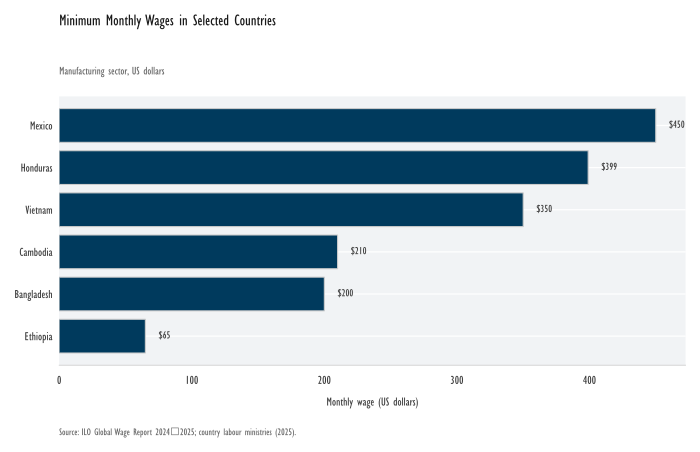
Mexico is not alone in keeping wages low to attract FDI. Across Asia and Africa, a race to the bottom has produced strikingly low monthly wages for manufacturing workers. Figure 4 compares minimum monthly wages in several major FDI host countries. Ethiopia’s textile workers earn just $65 per month; Bangladesh’s garment workers earn $200; Cambodia’s factory workers earn $210; Vietnam’s workers earn $350; and Mexico’s maquiladora workers earn $450 – still far below the US equivalent of over $4,000 per month.
These low wages are not a sign of low productivity; they are a sign of weak bargaining power and policy choices that prioritise investor returns over worker welfare.
The Trap of Tax Holidays#
To attract FDI, countries also offer generous tax holidays. Figure 5 (to be introduced in Part III) shows that longer tax holidays are inversely correlated with wage levels – the lowest‑wage countries offer the longest tax breaks, further reducing the fiscal contribution of foreign firms. Sri Lanka’s Colombo Port City offers a 25‑year tax holiday; Cambodia offers 9 years; Ethiopia offers 7 years; Vietnam offers 4 years. During these periods, the host country receives almost no corporate tax revenue, while the foreign investor enjoys a risk‑free, low‑cost, low‑tax environment.
Conclusion: A Replicable Model of Extraction#
The IMMEX program is not an accident or a temporary arrangement. It is a carefully designed policy framework that maximises the interests of foreign capital while leaving Mexico with shallow industrialisation, suppressed wages, and a persistent trade deficit in high‑technology goods. It is the modern plantation – efficient, legal, and devastating to long‑term development.
But not all countries have accepted this model. In Part III, we will examine how Vietnam, Bangladesh, Cambodia, Ethiopia, and others have replicated the IMMEX blueprint – and how a few have begun to escape it.
Next: Part III – The Global Reach: Vietnam, Bangladesh, Cambodia, and Beyond