Choice architecture
The Architect’s Dilemma: Inevitable Influence#
Influence is inherent to design; whether we intend it or not, the environment in which choices are presented fundamentally shapes human decisions. A choice architect—anyone responsible for organizing the context in which people decide—cannot create a neutral environment,. Even seemingly arbitrary choices, such as the order in which food is presented in a school cafeteria, will significantly influence outcomes, like whether students choose apples or brownies,. This inevitability of influence is the core dilemma: since design is inescapable, the question becomes whether that design should be intentional and directed toward improving welfare.
Behavioral economics
Nudge theory
Thaler & Sunstein
From Coercion to Choice: Defining Ethical Paternalism#
The central argument for directed design rests on the observation that Humans, unlike the perfectly rational “Econs” of classic theory, routinely make predictable mistakes and fail to act in their own best interests,. These mistakes flourish in contexts lacking experience, information, or prompt feedback, such as saving for retirement or choosing complex health plans. Therefore, it is legitimate for choice architects—whether in government or the private sector—to intentionally steer choices in directions that will make lives longer, healthier, and better.
This approach is termed libertarian paternalism because it is fundamentally “liberty-preserving”. It favors intervention that is deliberately weak, soft, and nonintrusive. A genuine nudge is defined as any aspect of the choice architecture that alters behavior predictably without forbidding any options or significantly changing economic incentives. Unlike mandates or fines, a nudge must be easy and cheap to avoid.
Behavioral psychology
Kahneman & Tversky
Decision design
The Calculus of Consent: Transparency and Intent#
The Tools of Intentional Design#
Ethical nudging leverages human fallibility to guide individuals toward the choices they would have made if they possessed complete information, unlimited cognitive ability, and perfect self-control. The success of these interventions often hinges on simple psychological levers:
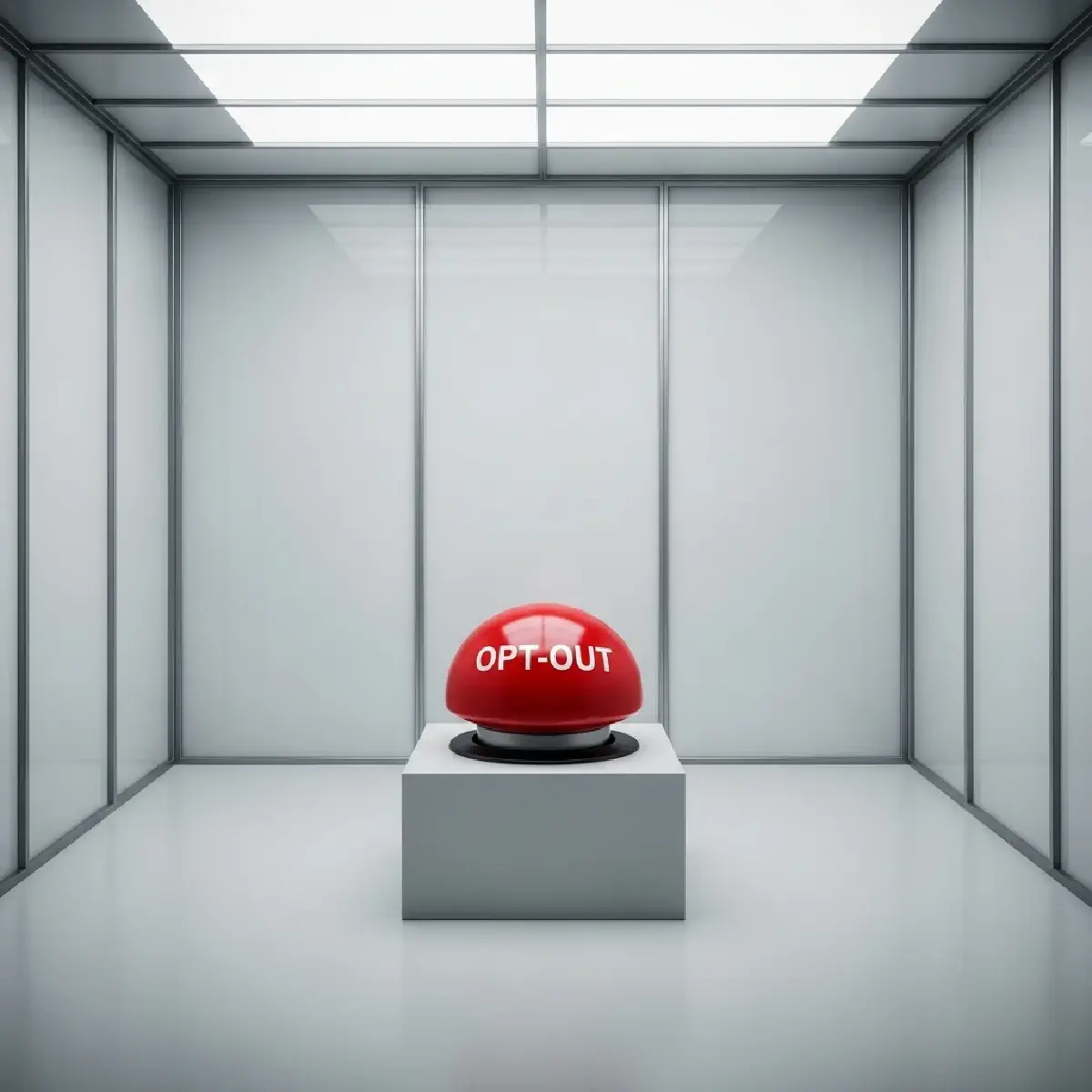
- Defaults: The path of least resistance is highly effective, as people exhibit a strong status quo bias (inertia),. Setting an opt-out default, such as automatic enrollment in a retirement plan, can dramatically increase participation rates,.
- Salience and Framing: Nudges exploit the fact that Humans respond not just to objective incentives, but to the presentation of information. Framing a statement in terms of loss (e.g., “you will lose $350”) is often more effective than framing it in terms of gain (“you will save $350”) due to loss aversion,.
- Curation and Simplification: When facing complex choices, people adopt simplifying strategies. Ethical design requires curation—winnowing down choices to a manageable size, especially when choices are complex and high-stakes, like mortgage selection.
Sunstein
Zuboff
Behavioral control
The Crucible of Context: When Influence Turns Dark#
The same powerful tools used for welfare enhancement can be weaponized for exploitation. This conversion happens when the design intent shifts from serving the chooser to serving the choice architect’s profit,.
Sludge defines any design friction intentionally imposed to make it harder for people to achieve an outcome that would benefit them. Unlike a transparent nudge, sludge operates by obscuring options and increasing the cost of making rational choices. Examples include excessively long and confusing forms, making the unsubscribe process significantly harder than the sign-up process, or shrouding attributes like hidden fees or rebate conditions. In many markets, such as credit cards and retail banking, more money is often made by catering to human frailties than by eliminating them,.
Furthermore, surveillance capitalism explicitly leverages behavioral biases to achieve “guaranteed outcomes”. The system employs techniques like tuning, herding, and conditioning to shape behavior toward specific, profitable outcomes, effectively turning individuals into objects for others’ commercial benefit.
Ethical design
Manipulation critique
The Publicity Principle and Ethical Safeguards#
The ethical dilemma is resolved through transparency, embodied by the publicity principle. This principle requires that no choice architect should adopt a policy or practice that she is unwilling to publicly defend.
- Nudges for Good: When nudges are used ethically, they are entirely transparent (e.g., warnings, reminders, defaults). Moreover, disclosing the reason for the nudge (e.g., automatically enrolling people because experts think it is a wise choice) can actually increase its effectiveness by conveying valuable information.
- Combating Manipulation: The ethical critique of nudging is that it might be manipulative, failing to respect people’s capacity for rational deliberation. Techniques such as subliminal messaging are rejected because they operate outside conscious awareness and violate the publicity principle,. Transparency is the necessary condition to ensure respect for individuals and to hold architects accountable for the consequences of their designs.
Sovereignty Through Transparency#
Retirement savings
Ethical oversight
The utility of nudges is clear: they are indispensable tools for addressing collective problems like climate change and individual financial security. The power of defaults, for example, is demonstrably massive, with opt-out registration programs for retirement savings or organ donation registries significantly boosting participation,. However, the ethical use of influence demands continuous vigilance, particularly against the self-serving interests of private institutions motivated by profit,. By upholding the publicity principle and insisting that the purpose and mechanism of influence are made transparent, society can preserve the democratic ideal—that the individual maintains freedom of choice and the right to rational deliberation, even when surrounded by powerful, intentional nudges,.