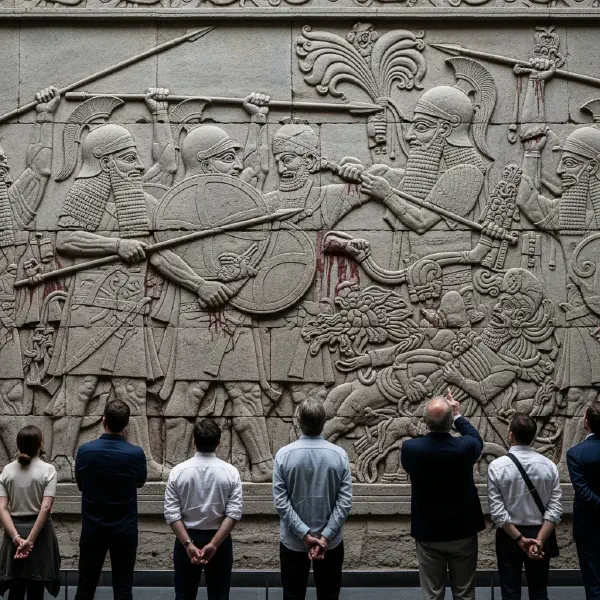
The Fiction of Standing Outside#
Neutrality presents itself as absence. No position taken. No side chosen. No risk assumed. It claims to exist above conflict, untouched by consequence. This self-image is powerful because it feels clean. It promises moral insulation without moral labor.
In reality, neutrality is not empty space. It is a stance with effects. In any system already in motion, refusing to intervene does not pause outcomes. It allows them to proceed unchallenged. The claim of standing outside is therefore false. One is always standing somewhere. The only question is where.
Neutrality is attractive precisely because it avoids confrontation with this fact. It converts participation into invisibility.
How Neutrality Becomes Functional#
Neutrality persists because it works. Not ethically, but operationally. It allows institutions and individuals to function within harmful systems without experiencing themselves as contributors. It reduces friction. It preserves access. It minimizes exposure.
This makes neutrality a technology, not a virtue. It is a repeatable method for maintaining position while avoiding responsibility. Once recognized as such, its prevalence becomes intelligible.
Technologies spread when they are efficient. Neutrality is efficient because it requires no justification beyond restraint. It does not argue for harm. It simply declines to interfere. In environments where power is asymmetrical, this declination reliably benefits the powerful.
The Language of Non-Commitment#
Neutrality has a distinct vocabulary. It favors balance, complexity, and nuance. It warns against oversimplification. It insists that “both sides” be acknowledged, even when asymmetry is obvious. These linguistic moves appear thoughtful. They are often evasive.
By emphasizing complexity, neutrality delays judgment. By invoking balance, it equalizes unequal forces. By demanding perfect information, it ensures no decision is ever timely.
This language does not deny harm. It reframes it as unfortunate, disputed, or premature to address. In doing so, it shifts attention away from outcomes and toward process. The moral question is never answered. It is postponed indefinitely.
Neutrality and Self-Respect#
One of neutrality’s strongest appeals is its compatibility with self-respect. Individuals can see themselves as reasonable, fair, and unprovocative. They avoid the discomfort of moral exposure. They do not have to risk being wrong.
But self-respect built on non-commitment is brittle. It depends on distance from consequences. The moment harm becomes undeniable, neutrality must either collapse or harden into indifference.
At that point, neutrality reveals its true function. It was never about fairness. It was about preserving the self-image of fairness while benefiting from the status quo.
Why Neutrality Is Never Neutral#
In systems of harm, outcomes are already biased. Power already flows in one direction. Neutrality does not counterbalance this flow. It lubricates it.
This is why neutrality consistently aligns with the dominant force, regardless of intent. Not because neutral actors agree with power, but because power requires no help. It only requires non-interference.
The moral asymmetry is unavoidable. One side needs active resistance to be stopped. The other advances by default. Neutrality chooses the default.
The End State of Neutrality#
When neutrality becomes widespread, moral language erodes. Actions are judged by acceptability rather than rightness. Responsibility is replaced by procedure. Atrocities no longer shock. They are contextualized.
This does not produce chaos. It produces stability of a particular kind: stable harm, stable injustice, stable decay. Everything functions. Nothing improves.
Neutrality, at scale, is not peacekeeping. It is maintenance.
The final cost is not outrage but emptiness. A world where everyone understands, no one intervenes, and nothing changes. Where the refusal to choose has quietly chosen everything.