
Fall of Western Roman Empire
Mechanism: Collapse of central authority → centuries without strong states Significance: Begins Europe's unique trajectory of political fragmentationCharlemagne crowned Emperor
Mechanism: Brief European unification Significance: Empire fragments under grandsons; alternative path not takenInvestiture Controversy
Mechanism: Papacy asserts independence from emperors Significance: Church becomes permanent anti-hegemonic forceZheng He's voyages
Location: China → Indian Ocean Mechanism: State-sponsored expeditions without windfall profits Significance: Chinese overseas expansion halted; no private follow-upFrench artillery revolution
Location: France Mechanism: Learning-by-doing from Hundred Years War Significance: Mobile artillery transforms siege warfareCortés takes Tenochtitlan
Location: Mexico Mechanism: Private adventurers using state-developed technology Significance: Model for European conquest of the AmericasPizarro's ransom
Location: Peru Mechanism: Windfall profits attract more adventurers Significance: Silver funds Spanish tournament participationPortuguese defend Malacca
Location: Southeast Asia Mechanism: European fortifications withstand 10:1 odds Significance: Proof of military technology gap in AsiaJapanese invasions of Korea
Location: Korea Mechanism: Gunpowder warfare between Asian powers Significance: China mobilises but innovation does not sustainDutch East India Company founded
Location: Netherlands Mechanism: Joint-stock corporation for military trade Significance: Private funding of fortified trading postsThirty Years War
Location: Central Europe Mechanism: Tournament intensifies; mercenary entrepreneurs flourish Significance: Devastation shows costs of European warfareKoxinga defeats Dutch in Taiwan
Location: Taiwan Mechanism: Asian ruler uses European technology Significance: Technology gap not absolute; diffusion possibleGlorious Revolution
Location: England Mechanism: Parliamentary control of the purse Significance: Drastic reduction in England's political cost of mobilisationSeven Years War
Location: Europe, India, Americas Mechanism: First truly global war Significance: French artillery redesigned after defeat; British take IndiaIndustrial Revolution
Location: Britain Mechanism: Human capital + trade + coal → mechanisation Significance: Military technology accelerates furtherPaixhans explosive shell
Location: France Mechanism: Research replaces battlefield learning Significance: Wooden sailing ships become obsoleteFirst Opium War
Location: China Mechanism: Steam gunboats defeat larger Chinese forces Significance: Europe bullies China into trade concessionsBerlin Conference
Location: Berlin Mechanism: European powers partition Africa Significance: Peak of colonial conquestWorld War I begins
Location: Europe Mechanism: Tournament turns on itself Significance: Ends European global dominance
By Hisham Eltaher
- Heltaher/
- History and Critical Analysis/
- The Violence Tournament: How Europe Conquered the World/
- The Violence Tournament – Timeline of Key Events/
The Violence Tournament – Timeline of Key Events
·349 words·2 mins·
The Violence Tournament - This article is part of a series.
Part :
This Article
The Violence Tournament - This article is part of a series.
Part :
This Article
Related
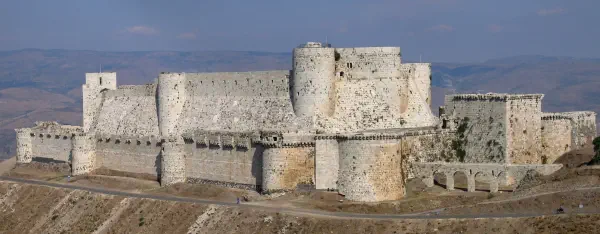
The Violence Tournament – Part 1: The Paradox of Backwardness
·924 words·5 mins
In 900 AD, western Europe was poorer, more violent, and more backward than China, India, or the Muslim Middle East. By 1914, Europeans controlled 84 percent of the world's land surface.
The Violence Tournament – Part 2: The Four Levers of Conquest
·998 words·5 mins
Three major factors explain Europe's success in military innovation:
The Violence Tournament – Part 3: Where the Tournament Failed
·1268 words·6 mins
China, the Ottoman Empire, and eighteenth-century India all had frequent warfare and access to gunpowder weapons. None sustained military innovation at Europe's pace.
The Violence Tournament – Part 4: The Accidental Crucible
·1296 words·7 mins
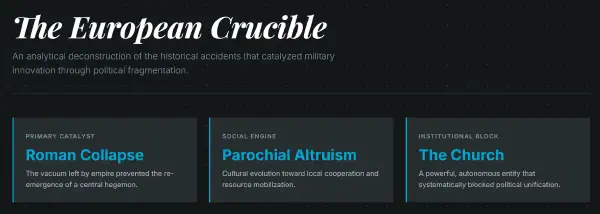
Europe's political fragmentation and low-cost resource mobilisation were not products of geography or superior culture.
The Violence Tournament – Part 5: Conquest on the Cheap
·1414 words·7 mins
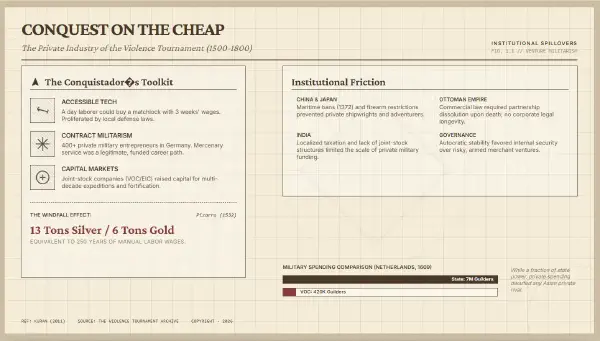
State-funded tournaments produced Europe's military lead, but private adventurers did most of the actual conquering. Cortés, Pizarro, da Gama, and the East India Company all operated with minimal government oversight.