The Abdication#
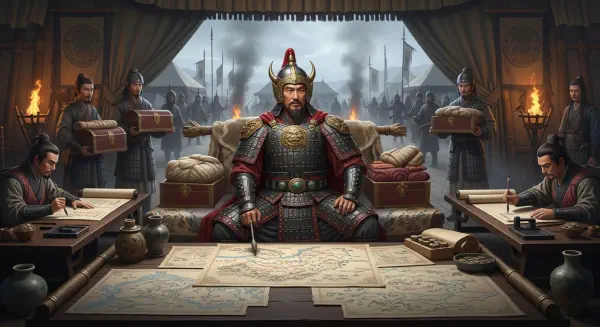
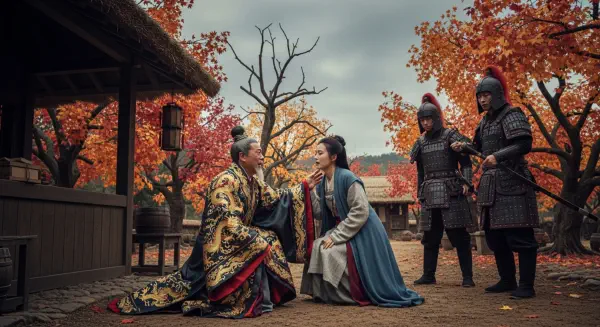
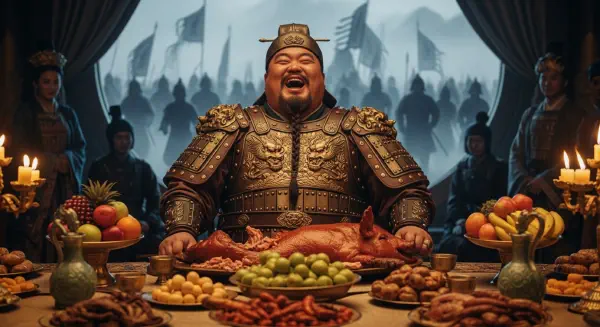
On May 12, 907, the 15-year-old Emperor Ai handed the imperial seal to Zhu Wen’s emissaries in a ceremony lasting exactly 47 minutes. He then knelt three times and knocked his head against the floor—the same kowtow he had once received from provincial governors. Zhu Wen, now Emperor Taizu of the Later Liang dynasty, graciously permitted his predecessor to live. For now.
The Tang dynasty had lasted 289 years—longer than the United States has existed. It had governed a population exceeding 60 million. It had produced Li Bai and Du Fu, Wang Wei and Bai Juyi—poets whose work would be memorized by Chinese schoolchildren 1,200 years later. It had welcomed the world to its capital, translated Buddhist scriptures from Sanskrit, and sent armies 4,000 kilometers into Central Asia.
And it ended with a teenager performing ritual submission to a former rebel.
The Poets’ Witness#
Du Fu, who lived through the An Lushan Rebellion, had described the experience of watching an empire die in real time:
The nation is destroyed, but mountains and rivers remain. Spring comes to the city; grass and trees grow deep. Flowers shed tears at the time of separation. Birds startle the heart of a man with partings.
He understood something that historians often forget: empires die not when emperors abdicate but when ordinary people lose the expectation of order. The mountains and rivers remain. The grass grows deep in empty streets. But the human world that gave meaning to these landscapes has vanished.
By 907, this disappearance had been underway for 150 years. The population of Chang’an, once one million, had fallen below 100,000. The Grand Canal, which had carried 4 million tons of grain annually, carried perhaps 400,000. The examination system, which had selected 30 new officials yearly, had not functioned since 880.
The Cultural Inheritance#
Yet the Tang did not entirely die. Its institutions, however transformed, would shape Chinese governance for the next millennium. The examination system revived under the Song, producing a meritocratic bureaucracy that the Tang had only imagined. The equal-field system, though dead, inspired land-reform debates for centuries. The poetry composed in Tang capitals remained the standard against which all later verse would be judged.
The military governors, too, left their mark. The Shatuo Turks, who had arrived as mercenaries, founded the Later Tang, Later Jin, and Later Han dynasties—three of the Five Dynasties that ruled north China between 907 and 960. They eventually merged with the Han Chinese population, losing their steppe identity while preserving their military traditions.
The Vermilion Bird’s Meaning#
The vermilion bird of the title—zhuque in Chinese—was one of the four celestial symbols guarding the cardinal directions. It represented the south, the direction of warmth and life, the direction from which the Tang had drawn its salvation and its doom.
The bird’s flight suggests both elevation and departure. The Tang rose higher than any dynasty before it, creating a cosmopolitan civilization that attracted the world’s admiration. But flight also means leaving, and by 907, the Tang had left China to its successors—a collection of rival kingdoms that would spend the next fifty years fighting over the empire’s carcass.
The Long View#
What killed the Tang? Not An Lushan’s rebellion, though it opened the wound. Not eunuch intrigue, though it prevented healing. Not Huang Chao’s peasant army, though it tore the flesh. Not the warlords, though they picked the bones.
The Tang died because its success created structures the center could not control. Frontier armies required autonomy to function; autonomy allowed them to rebel. Provincial governors required local authority to govern; local authority made them independent. Eunuchs required military power to protect the emperor; military power enabled them to dominate him.
Every adaptation to crisis created the next crisis. Every solution generated new problems. By the time anyone noticed this pattern, reversing it had become impossible.
The last Tang poet—perhaps a minor official named Luo Yin, who outlived the dynasty by two years—might have written an elegy. If he did, it has not survived. What survived instead was the question his generation faced: after the vermilion bird departs, what remains?
The answer, as subsequent centuries would show, was everything and nothing. The empire remained, but never again as the Tang had known it. The Chinese world continued, but without the cosmopolitan confidence that had marked the dynasty’s peak. The poets were still read, but as relics of a golden age that would not return for another 300 years.
The vermilion bird had flown. China would spend the next half-century searching for its nest.