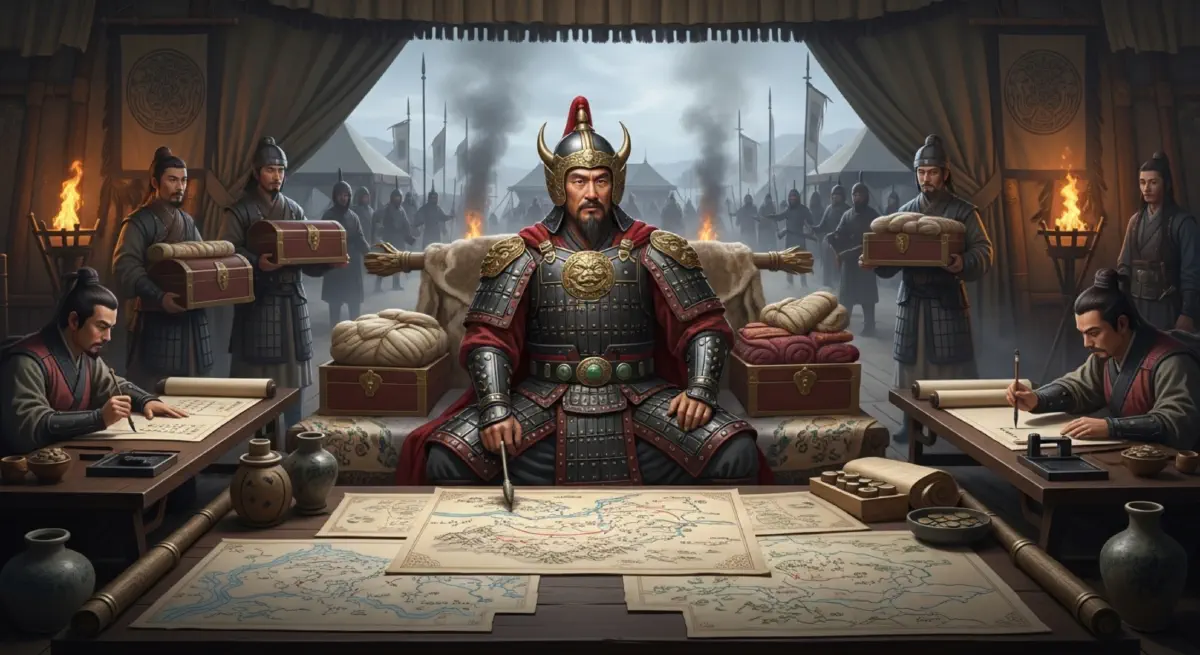
The Governor Who Would Be King#
By 890, the Tang empire had fractured into perhaps a dozen functionally independent states. The most powerful military governors controlled territories larger than many European kingdoms, with populations in the millions and armies numbering in the hundreds of thousands.
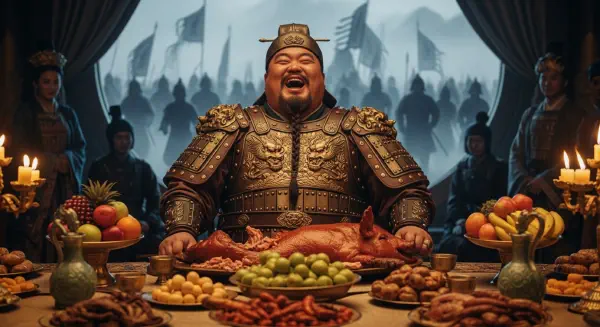
Zhu Wen, a former Huang Chao lieutenant who had defected to the Tang, governed the strategic Bianzhou circuit—modern Kaifeng—controlling the Grand Canal’s intersection with the Yellow River. He had 70,000 soldiers, a bureaucracy of 3,000 officials, and annual revenues exceeding 2 million strings of cash. When he wanted something from the emperor, he sent a request, not a petition.
Li Keyong, the Shatuo Turk, governed Hedong from his capital at Taiyuan. His cavalry could reach Chang’an in ten days. His sons married Uighur princesses and Khitan noblewomen, building a steppe alliance network that dwarfed the court’s diplomatic corps.
Wang Jian controlled Sichuan, the traditional refuge for fleeing emperors. His territory’s mountain passes made invasion nearly impossible, and its rice production could support his army indefinitely. He declared himself emperor of an independent kingdom in 907, the moment the Tang finally fell.
The Salt Monopoly’s Collapse#
Salt had funded the Tang state since the eighth century. The government monopolized production and distribution, selling salt for ten times its production cost. At its peak, the salt monopoly generated 60 percent of state revenue—enough to fund armies, build granaries, and maintain the canal.
The Huang Chao Rebellion destroyed this system. Salt works in Jiangsu and Zhejiang, which produced 80 percent of government salt, lay in ruins. Distribution networks required peace to function, and peace had vanished. By 890, salt revenue had fallen 90 percent from pre-rebellion levels.
The court responded by selling offices—thousands of them. Local magistrates paid for their positions, then extracted the cost from peasants with interest. Provincial governors began taxing salt themselves, keeping the proceeds for their armies. The central government, starved of funds, could no longer pay even its eunuch-controlled Shence Army reliably.
The Eunuch Massacre#
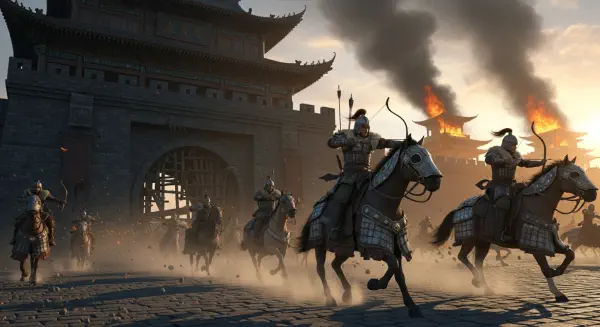
In 903, Emperor Zhaozong made a final attempt to restore imperial authority. With Zhu Wen’s military support, he ordered the massacre of the eunuch corps. Perhaps 700 eunuchs died in a single day—the entire administrative class that had dominated the court for a century.
The massacre solved nothing. It simply replaced one set of power-brokers with another. Zhu Wen, who had provided the troops for the operation, now controlled access to the emperor completely. He moved the court to Luoyang, closer to his power base, and staffed it with his own appointees.
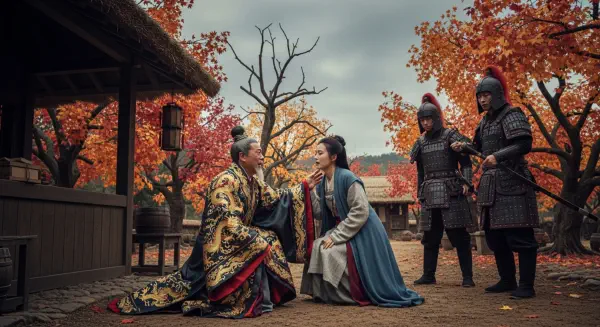
The emperor became a prisoner in all but name. When he complained, Zhu Wen had him murdered and replaced with his 13-year-old son, Emperor Ai. The Tang dynasty continued on paper, but everyone understood the truth.
The Warlord’s Economy#
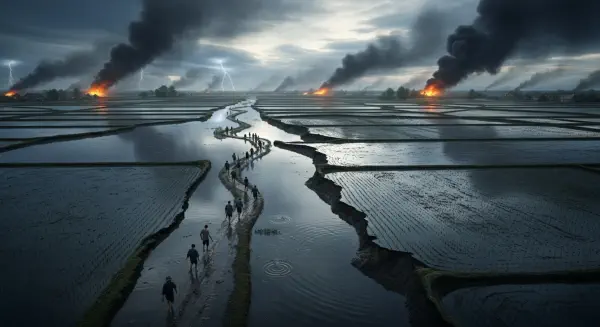
The new political order produced its own economic logic. Warlords needed revenue for armies; armies required conquest to justify themselves; conquest disrupted the trade that generated revenue. This contradiction created constant low-level warfare that enriched no one but the soldiers who plundered.
Some governors attempted to build sustainable states. Yang Xingmi, who controlled the Yangtze delta, invested in water control projects that reclaimed 40,000 hectares of rice paddy. Qian Liu, in Hangzhou, built sea walls and dredged canals, creating a prosperous kingdom that would outlast the Tang by decades.
But most governed through extraction. They taxed everything—land, commerce, marriages, deaths, even the birth of children. They confiscated merchant cargoes passing through their territories. They melted Buddhist statues for coinage, provoking popular resistance that required more soldiers to suppress.
The Sword’s Logic#
By 905, the question was not whether the Tang would fall but who would deliver the final blow. The imperial house had become a chess piece that powerful men moved to legitimate their ambitions. When Zhu Wen decided to found his own dynasty, he simply ordered the last Tang emperor to abdicate.
The emperor complied. What choice did he have?
In the final post, we will examine how China’s greatest cultural dynasty ended not with a bang but with a bureaucratic formality—and what its collapse meant for the poets, painters, and philosophers who had defined its glory.