The Death of Consensus#
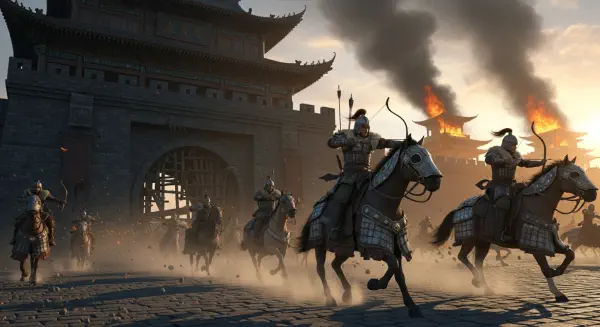
On July 15, 756, a column of exhausted travelers reached Mawei Postal Station, 70 kilometers west of Chang’an. Emperor Xuanzong, now 71, had fled the capital three days earlier as rebel forces approached. His entourage included Consort Yang, his cousin the chief minister Yang Guozhong, and 3,000 imperial guardsmen who had not been paid in months.
What happened next destroyed the ideological foundation of Tang rule.
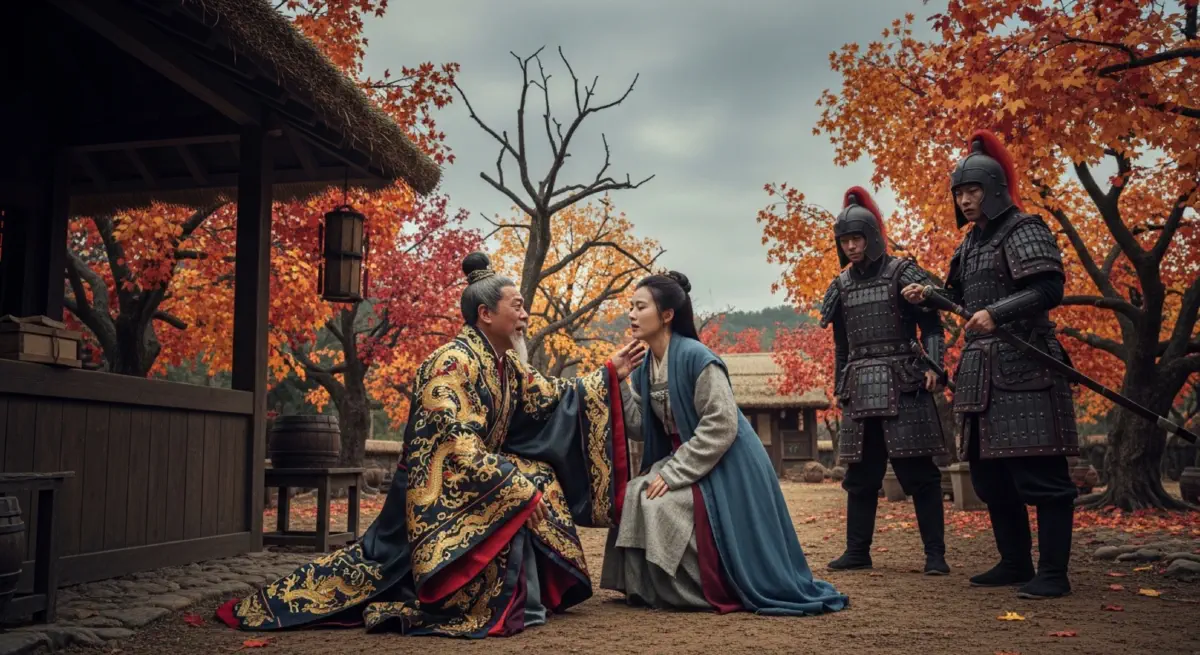
The soldiers refused to proceed. They blamed Yang Guozhong for the rebellion—fairly, given his provocations—and demanded his execution. When Xuanzong hesitated, the troops murdered the minister with their bare hands. Then they demanded Consort Yang’s death as well. The emperor, who had loved this woman for more than a decade, who had promoted her entire family based on that love, faced an impossible choice.
He ordered her strangled with a silk cord. She was 37.
The Mawei Mutiny demonstrated something terrifying to every future emperor: the army could kill an imperial consort and force the emperor’s compliance. The monarch’s person remained sacred, but his authority had evaporated. When Xuanzong finally reached Sichuan and abdicated in favor of his son, the transfer of power occurred not through dynastic ritual but through military necessity.
The Eunuch’s Grip#
By 780, the eunuch-controlled Shence Army had become the empire’s most cohesive fighting force. Its 50,000 soldiers were better paid, better equipped, and more reliably supplied than provincial armies. But this very efficiency created a new problem: the army’s commanders could now dictate policy.
Emperor Dezong, who reigned from 779 to 805, discovered this painfully. When he attempted to reduce eunuch influence in 783, the Shence Army simply refused to deploy against a rebel threat. Dezong fled Chang’an in humiliation, returning only after agreeing to restore eunuch privileges.
The numbers illustrate eunuch power’s trajectory. In 755, perhaps 3,000 eunuchs served the court, primarily as household staff. By 820, that number exceeded 50,000. Eunuchs controlled not just the palace armies but also the intelligence network, the treasury, and even the succession process. Between 820 and 846, eunuchs installed and deposed seven emperors. One emperor, Jingzong, was assassinated by eunuchs in 827 after attempting to assert independence.
The Financial Architecture of Failure#
The Tang tax system could not adapt to the new political reality. The equal-field system, which distributed land to peasants in exchange for tax grain and labor service, assumed effective central administration. By 780, with half the empire outside court control, this system had collapsed.
Revenue commissioner Yang Yan proposed a radical solution in 780: the Two-Tax System. Henceforth, households would pay taxes twice annually based on their property, not their persons. The government would calculate assessments in cash, though most peasants paid in grain or cloth.
This reform recognized reality—the state could no longer track individual peasants—but created new problems. Tax collectors demanded payment in copper cash during a period of chronic coin shortage. Peasants sold grain at harvest-time lows to obtain coins, then watched prices rise as they tried to repurchase food later. Rural debt increased sharply. Land concentration accelerated as wealthy families bought out distressed smallholders.
By 800, perhaps 70 percent of peasants in the core provinces worked land they did not own, paying rents to absentee landlords who often enjoyed tax exemptions. The state collected less while the population’s suffering increased.
The Fanzhen Equilibrium#
The military governors—fanzhen—developed their own political economy. They controlled local militias, tax collection, and trade routes. In the northeast, where the rebellion had originated, governors passed positions to sons with minimal court interference. The Chengde circuit, centered on modern Shijiazhuang, remained in a single family for forty years across four generations.
These governors maintained their own diplomatic relationships. They married daughters to neighboring governors’ sons. They made treaties with each other, dividing territory and coordinating responses to imperial encroachment. Some employed their own scholars, poets, and chroniclers, creating miniature courts that mimicked Chang’an’s cultural production.
Yet most governors continued to acknowledge imperial authority. They accepted nominal appointments, sent occasional tribute, and invoked the emperor’s name in official documents. This fiction benefited everyone: governors gained legitimacy, the court preserved the appearance of unity, and neither side had to fight the expensive wars that genuine separation would require.
The Hollow Crown#
By 820, the Tang emperor presided over an empire in name only. Real power flowed through networks the court could not control—eunuch factions in the capital, hereditary governors in the provinces, Buddhist monasteries that owned vast tax-exempt estates. The phoenix crown remained beautiful, but beneath it sat a skull.
In the next post, we will examine how this hollowed-out state faced its greatest challenge: the Huang Chao Rebellion, a peasant uprising that would kill more people than any event in Chinese history before the Taiping Rebellion a millennium later.