The General Who Would Not Stop#
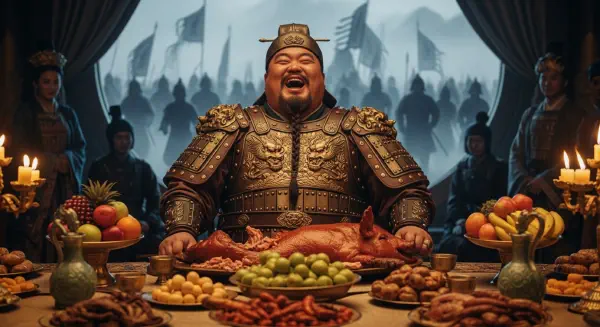
By January 756, An Lushan’s army had crossed the Yellow River and captured the eastern capital of Luoyang. The general, now fifty-three years old and suffering from chronic ulcers, made a decision that revealed his ultimate intentions: he declared himself emperor of a new dynasty called Great Yan.
This was not mere rebellion anymore. This was a claim to replace the Tang entirely.
The court in Chang’an reacted with the paralysis that afflicts aging regimes facing existential threats. Emperor Xuanzong, sheltered by eunuchs who controlled access to information, initially refused to believe the rebellion’s scale. When he finally dispatched the empire’s best remaining general, Geshu Han, he undermined the commander by forcing him to attack prematurely from a fortified position. The result was a catastrophic defeat that cost 80,000 Tang soldiers their lives.
But the rebellion’s greatest damage came not from battles won but from the political adaptations the Tang court made to survive them.
The Eunuch Ascendancy#
The Tang court had employed eunuchs since the dynasty’s founding, but primarily as household servants. The crisis of 756 changed everything. With provincial armies unreliable and field commanders suspect, Emperor Xuanzong turned to the only men whose loyalty seemed absolute: the men who could never found dynasties of their own.
Eunuch commanders began leading armies. Eunuch administrators took control of tax revenues flowing into the capital. Most critically, eunuchs assumed command of the Shence Army—the 50,000-man imperial guard that represented the court’s last reliable military force.
The numbers tell the story. In 755, eunuchs held no significant military commands. By 760, they controlled the capital’s defenses. By 780, eunuch generals had begun appointing and deposing emperors. A political class that could not reproduce had, paradoxically, achieved dynastic continuity by making themselves indispensable to an imperial lineage that could.
The Uighur Bargain#
Desperate for allies, the Tang court made a deal in 757 that would haunt China for generations. They invited the Uighur Khaganate, a Turkic steppe power based in modern Mongolia, to send cavalry in exchange for plunder rights.
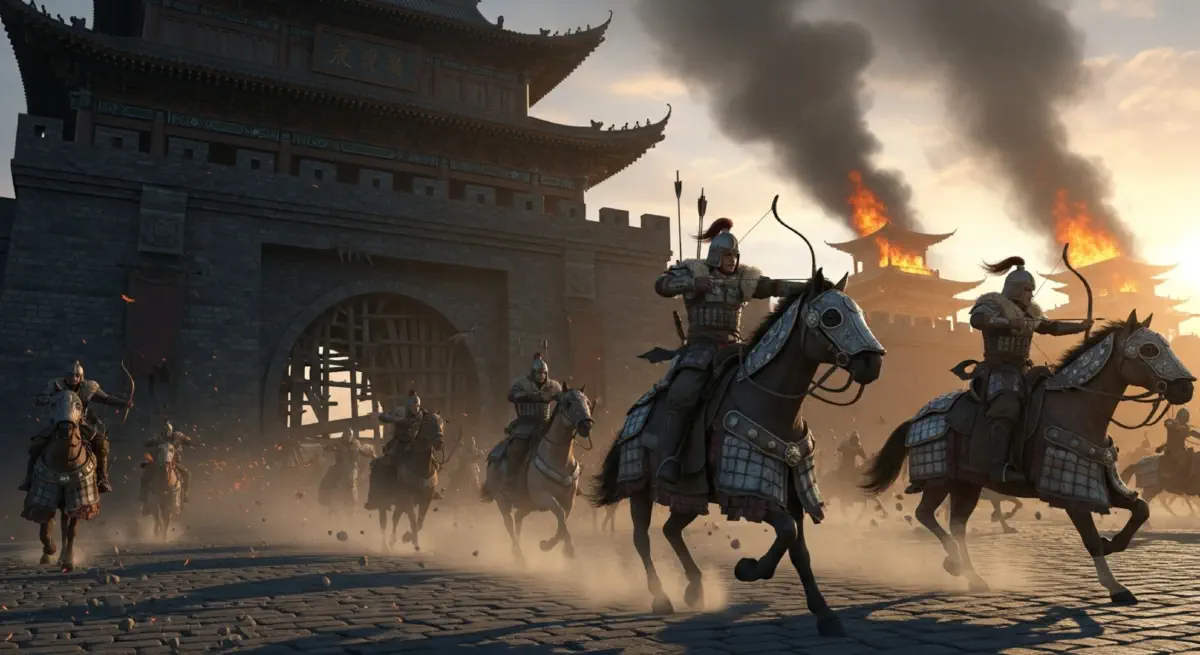
The Uighurs arrived with 4,000 horsemen—not a massive force, but sufficient to tip the balance when combined with loyalist armies. They recaptured Chang’an and Luoyang from An Lushan’s successors. But they also extracted their payment with brutal efficiency. Contemporary sources describe Uighur soldiers looting Luoyang for three days, burning neighborhoods and carrying away thousands of captives to sell in the steppe slave markets.
The cost extended beyond immediate destruction. The Uighur alliance created a precedent: henceforth, Tang emperors would regularly invite steppe armies into China proper to suppress internal revolts. Each invitation weakened the dynasty’s legitimacy and exposed civilians to predation from supposed allies.
The Geography of Fragmentation#
The rebellion’s military stalemate by 758 produced a new political geography. An Lushan’s successors controlled the northeast—roughly modern Hebei and Beijing—while the Tang held the central plains and the south. But neither side could destroy the other.
This stalemate forced both regimes to delegate unprecedented authority to local commanders. On the rebel side, generals like Shi Siming governed territories larger than many European kingdoms, collecting taxes and raising armies with minimal oversight. On the Tang side, provincial military governors—jiedushi—received permanent appointments and authority to pass positions to their sons.
By 763, when the last rebel stronghold finally fell, the Tang court controlled perhaps 30 percent of the territory it had governed a decade earlier. The rest remained nominally loyal but functionally independent. A new political order had crystallized: the empire as a federation of hereditary military households, acknowledging the emperor’s supremacy only when convenient.
The Poisoned Victory#
The rebellion officially ended in 763, but its conclusion revealed how completely the Tang had transformed. A rebel general named Li Huaixian controlled the key northeastern prefectures. Rather than fighting him, the court simply confirmed his governorship. He became a Tang official while continuing to rule exactly as he had as a rebel.
This pattern repeated across the north. Perhaps forty military governors exercised de facto sovereignty within the empire’s nominal borders. They minted their own coins, appointed their own officials, and fought wars with each other that the court could neither prevent nor stop.
The double-headed snake had emerged: an empire with two heads—the ceremonial emperor in Chang’an and the warlords who actually governed—neither able to survive without the other, neither willing to submit.