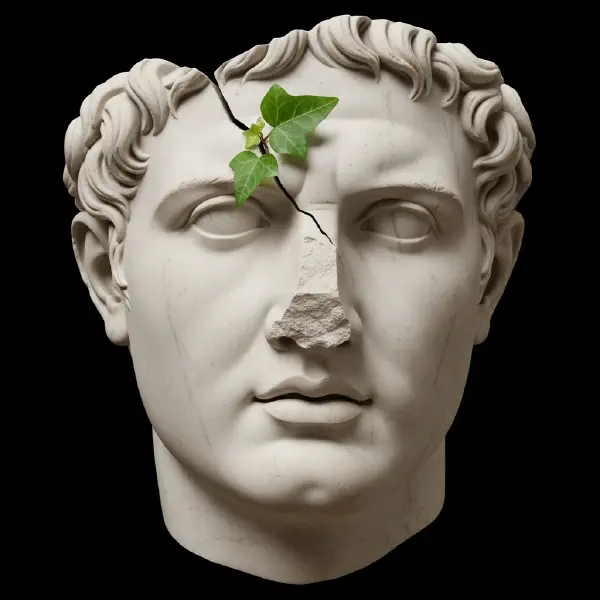
Key Insights
#- Leaders who inherit decaying systems often face impossible choices between reform and collapse.
- Attempts to reform entrenched systems can trigger resistance that accelerates failure.
- Some systems are too decayed to reform from within
- Tactical success can mask strategic impossibility
- Principle can become a liability in corrupt systems
- Leadership requires understanding when to walk away
Related Content
#
References
#- Cohen, E. A. (2002). Supreme command: Soldiers, statesmen, and leadership in wartime. Free Press.
- Cohen, E. A., & Gooch, J. (1990). Military misfortunes: The anatomy of failure in war. Free Press.
- Goldsworthy, A. (2006). Caesar: Life of a colossus. Yale University Press.
- Goodman, R., & Soni, J. (2012). Rome’s last citizen: The life and legacy of Cato, mortal enemy of Caesar. St. Martin’s Press.
- Keegan, J. (1987). The mask of command. Viking.
- Liddell Hart, B. H. (1927). A greater than Napoleon: Scipio Africanus. Blackwood & Sons.
- Massie, R. K. (2012). Catherine the Great: Portrait of a woman. Random House.
- Mosse, W. E. (1992). Alexander II and the modernization of Russia. I.B. Tauris.
- Paternoster, T. (2021). The Roman Republic: A very short introduction. Oxford University Press.
- Pflanze, O. (1990). Bismarck and the development of Germany, Vol. II: The period of consolidation, 1871–1880. Princeton University Press.
- Steel, C. (2013). The end of the Roman Republic, 146 to 44 BC: Conquest and crisis. Edinburgh University Press.
- Tuchman, B. W. (1962). The guns of August. Macmillan.
- Van Creveld, M. (1985). Command in war. Harvard University Press.
- Weir, A. (1992). The six wives of Henry VIII. Grove Press.
- Wylie, J. C. (1989). Military strategy: A general theory of power control. Naval Institute Press.
·1127 words·6 mins
·1150 words·6 mins
·1057 words·5 mins
·1037 words·5 mins