A Hundred Days in April#
On April 6, 1994, a surface-to-air missile struck the plane carrying Rwandan President Juvénal Habyarimana as it approached Kigali airport. Within hours, organized killing squads spread across the capital. Within days, what had been a civil war between the Rwandan government and the Rwandan Patriotic Front transformed into something the UCDP dataset had no category to contain: a civilian genocide conducted at industrial pace by non-military actors wielding machetes, nail-studded clubs, and lists.
By July 4, when the RPF took Kigali, approximately 100 days had elapsed. Estimates of the dead range from 500,000 to 800,000. Accepting the midpoint, roughly 650,000 people were killed in approximately 91 days. That is approximately 7,140 deaths per day. In a country of 7 million people, roughly 9.3% of the entire population was killed in three months. The world watched, debated, and did not intervene until the killing was nearly complete.
Rwanda is not the subject of this post. But it is the necessary benchmark. It defines the upper end of a metric this series introduces in its final chapter: the Casualty Rate — the Human Cost Index divided by the duration of the conflict in years. Rwanda's Casualty Rate was approximately 4,568 deaths per 10,000 people per year. No modern conflict has exceeded it. Several have approached or are approaching it faster than the international frameworks designed to prevent atrocity can respond.
Velocity Is the Missing Variable#
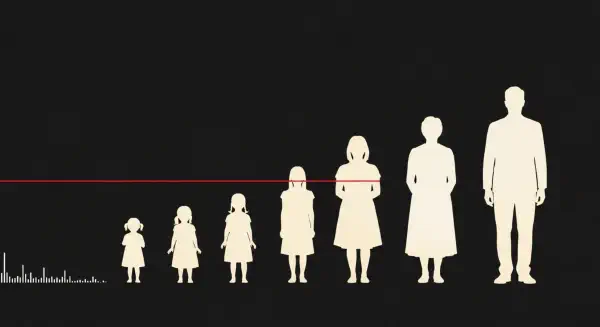
The Human Cost Index, introduced in the previous post, measures the cumulative toll of a conflict normalized against population. It answers the question: of the people in this territory, what fraction has been killed? The Casualty Rate answers a different and in some ways more urgent question: at what pace was that fraction consumed?
The distinction matters for a reason that is simultaneously statistical and moral. A conflict with an HCI of 60 that unfolded over 20 years is a different phenomenon — for survivors, for institutions, for the demographic structure of the society — than a conflict with an HCI of 60 that unfolded over six months. In the first case, communities can adapt, emigrate, rebuild. In the second case, every social and institutional system — health care, education, civil administration, family structure — is struck faster than it can reconstitute itself. The Casualty Rate is the number that captures this difference. It converts cumulative cost into annualized intensity, and intensity into the urgency of potential intervention.
The Architecture of the Metric#
The Formula and Its Calibration#
The Casualty Rate is defined as: HCI ÷ conflict duration in years. It expresses the annualized rate at which a conflict kills the population it is occurring within, in units of deaths per 10,000 people per year. Applied across the major conflicts examined in this series, the results span four orders of magnitude — which is itself a finding. Not all wars kill with the same velocity, and that variation is not random. It is structured by geography, by power asymmetry, by the availability of escape routes, and by the degree to which one party controls the conditions under which the other population lives.
Rwanda (1994, duration 0.25 years): HCI 1,143 ÷ 0.25 = 4,572 per 10,000 per year. The genocide's 100-day duration compresses its catastrophic human cost into the highest annualized rate in the modern record.
Gaza (October 2023–March 2026, duration 2.5 years): HCI 327 ÷ 2.5 = 131 per 10,000 per year. Second in the modern record. This figure reflects sustained, high-intensity operations across the full conflict period — not a single spike.
Lebanon in the 2026 Iran-Israel-US war (Day 31 as of March 30, 2026, duration 0.085 years): HCI 2.25 ÷ 0.085 = 26.5 per 10,000 per year. After 31 days, Lebanon's Casualty Rate already exceeds Syria's entire 13-year average.
Syria (2011–2024, 13 years): HCI 294 ÷ 13 = 22.6 per 10,000 per year. Syria's position — third in HCI, fifth in Casualty Rate — reflects the attrition character of its conflict: enormous total death toll accumulated over a very long timeframe.
Ukraine (2022–2024, 3 years): HCI 47 ÷ 3 = 15.7 per 10,000 per year. Ethiopia (2020–2022, 3 years): HCI 25 ÷ 3 = 8.3 per 10,000 per year. Afghanistan (2001–2021, 20 years): HCI 63 ÷ 20 = 3.15 per 10,000 per year — the lowest Casualty Rate in this comparison despite producing a large absolute death toll, reflecting both the long duration and the relatively large population.
Iran in the 2026 war (0.085 years): HCI 0.22 ÷ 0.085 = 2.59 per 10,000 per year. Iran's 90 million people absorb the same 31-day war at a Casualty Rate ten times lower than Lebanon's — confirming what HCI already showed: these are not comparable experiences for the populations involved.
What Velocity Reveals About the Nature of Conflict#
The most striking feature of the Casualty Rate table is not Rwanda's dominance. It is Gaza's position at second, above Syria's 13-year conflict, above Ukraine, above every other recent war. Gaza's 131 per 10,000 per year does not represent a moment of catastrophic intensity followed by lower-level violence. It represents a sustained rate, maintained with rough consistency across 2.5 years of near-continuous operations in a territory where no part of the civilian infrastructure was outside the range of weapons being employed.
The medical literature has documented the cascading effect of this velocity. The Lancet's March 2025 projection estimated that indirect deaths from the destruction of Gaza's health infrastructure, the disruption of food supply chains, and the collapse of water and sanitation systems could add 186,000 additional deaths above the directly documented violent toll — a multiplier of roughly 2.5. This is not hypothetical; it reflects patterns well established from comparable conflicts in Yemen, South Sudan, and Syria, where indirect mortality from conflict-related disease and starvation consistently exceeds direct battle deaths.
The Casualty Rate is the leading indicator of this cascade. When a conflict's annualized rate exceeds roughly 20 per 10,000 per year — the approximate threshold suggested by the Syria and Lebanon 2026 figures — the secondary mortality multiplier begins to activate: health systems exceed their surge capacity, nutrition networks collapse under displacement pressure, and disease burden in sheltering populations rises faster than any improvised response can address. Gaza's rate of 131, sustained across 2.5 years, crossed that threshold in its first weeks and never descended below it.
The Responsibility to Protect and the Problem of Threshold#
The Casualty Rate has a direct relevance to the international framework most explicitly designed to prevent mass atrocity: the Responsibility to Protect, or R2P. Adopted at the UN World Summit in 2005, the year the Human Security Report celebrated the decline of conflict, R2P identified a three-stage obligation: to prevent, to react, and to rebuild. The "responsibility to react," specifically, was defined as triggered when a state is "unwilling or unable" to protect its own population from "genocide, war crimes, ethnic cleansing and crimes against humanity."
R2P's formulation contains no velocity threshold. It identifies categories of atrocity — genocide, war crimes — but not the pace at which they occur. This is a structural gap. A genocide conducted at 4,572 per 10,000 per year looks and feels categorically different from a siege conducted at 131 — even if both meet the definitional criteria for serious violations of international humanitarian law. Rwanda's Casualty Rate allowed no time for international debate; it was over before the UN Security Council had agreed on language. Gaza's lower but sustained rate created the opposite problem: enough time for debate, but also enough time for the total HCI to accumulate to near-genocidal scale before any binding international response materialized.
The Casualty Rate suggests a possible addition to R2P's operational framework: a metric-based trigger that identifies combinations of HCI and Casualty Rate that exceed documented historical thresholds for demographic catastrophe, and that require a mandatory Security Council session within a defined response window. Whether such a mechanism is politically achievable is a separate question. That it would improve on the current absence of any quantitative trigger is not seriously in doubt.
The Full Picture, Assembled#
This series has followed a single thread from Uppsala in 2001 to the active front lines of 2026. Gleditsch and colleagues built the most rigorous conflict dataset the field had ever produced, and it showed a world becoming less violent. SIPRI and the Human Security Report confirmed the finding. The theoretical framework — democratic peace, economic interdependence, international institutions — explained why the trend was real and provided grounds for projecting its continuation.
Then the world diverged. The UCDP v25.1 dataset, extended through verified external sources to March 2026, shows a trajectory that the S-curve's third polynomial could not anticipate: a 2022 global battle death total 48% above any year since the end of the Cold War, followed by the opening of a new Middle East interstate war in 2026 on top of a Gaza conflict that has already killed more than 3% of a population of 2.3 million people.
The raw count, the Human Cost Index, and the Casualty Rate are not competing measures of the same thing. They are sequential lenses, each revealing a dimension of violence that the previous one leaves in shadow. Raw counts are necessary but flattened by scale. HCI normalizes for population size and reveals the asymmetric distribution of cost. Casualty Rate divides by time and reveals the velocity of destruction — the dimension with the most direct bearing on whether any institutional response can arrive before the damage is irreversible.
Together, they answer the question the UCDP dataset implicitly posed in 2002 and left open: not just how many conflicts, and not just how many dead, but how much of a people, and how fast. Rwanda's answer was 4,572 per 10,000 per year, and the world responded too late. Gaza's answer has been 131, and the world is still debating. Lebanon in the 2026 war has recorded 26.5 in its first 31 days, while active operations continue.
The scholars in Uppsala believed the curve was bending toward peace. They were right about 2001. The curve has since bent back, and the populations on which it is bending are not abstract entries in a dataset. They are communities with schools, clinics, and family networks — the very structures that define what it means to survive a war rather than merely to be counted among its casualties. Counting them is the beginning of accountability. Understanding the velocity at which they are being consumed is the measure of urgency. The first step toward a more honest accounting of modern war is the willingness to ask not only how many, but how fast — and to act on the answer before the counting is done.