As of mid-2024, UNHCR recorded 117.3 million people forcibly displaced worldwide — the highest figure in the organization's 74-year history, and a number that has increased every year since 2012. The word most frequently used by international institutions to describe this condition is "temporary." The data does not support that word.
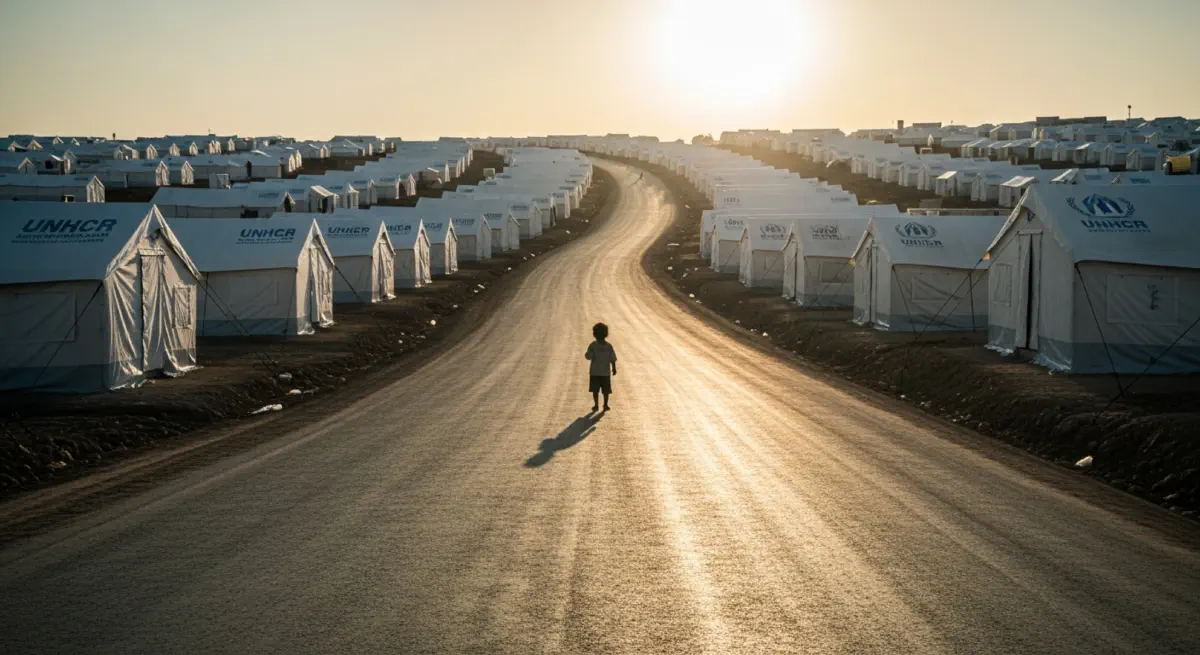
Protracted displacement — defined by UNHCR as five or more consecutive years in exile — now characterizes approximately 78% of the global refugee caseload. The median duration of refugee displacement, across all active situations, exceeds 20 years. The Kakuma refugee camp in Kenya opened in 1992. As of March 2026, it has been temporary for 34 years.
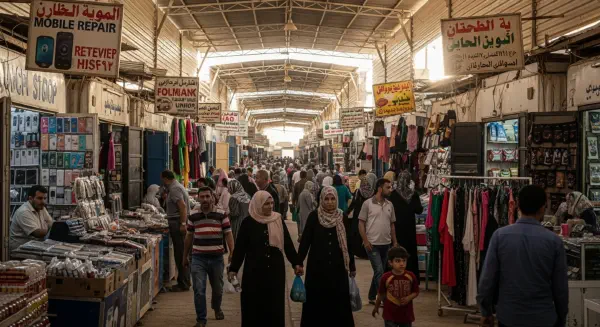
The Host Country Burden Index (HCBI), introduced in this series, normalizes refugee populations against both the host country's total population and its GDP per capita. Measured this way, Lebanon — hosting 1.5 million Syrian refugees in a population of 5.5 million with a collapsed economy — carries a burden approximately 89 times heavier than Germany. The rhetoric of Global North generosity does not survive contact with this arithmetic.
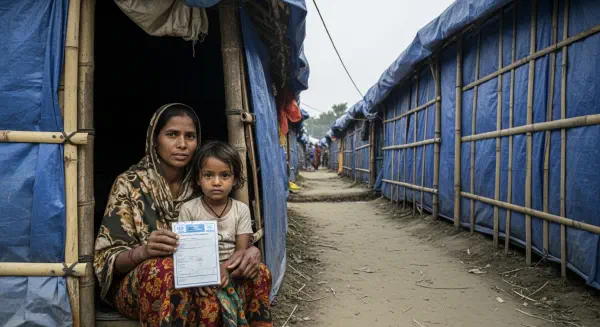
UNHCR estimates 4.4 million stateless people worldwide. Independent research organizations place the real figure above 10 million. The distinction matters because statelessness is not a fixed condition — it reproduces itself across generations. A child born in a Cox's Bazar camp to Rohingya parents is stateless at birth, in a country that did not expel her parents.
The per-capita cost of maintaining a refugee in a UNHCR-managed camp averages $300–$700 per year. Kakuma has operated for 34 years, hosting an average of 150,000 people. The arithmetic yields a figure in the billions — spent maintaining a condition rather than resolving it. Economic analyses consistently find that integration into host-country labor markets costs less over a ten-year horizon and produces measurable GDP contributions. The preference for encampment is political, not economic.
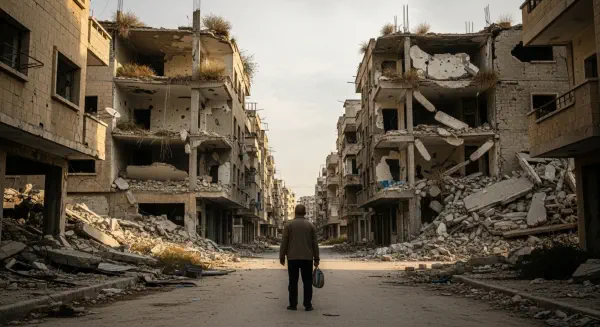
Fewer than 6% of Syria's 5.4 million registered refugees had returned home as of late 2025 — seven years after the Syrian government pronounced the conditions for return adequate. Of those who did return, a documented fraction re-fled within months. Return, as an international policy objective, has largely failed for the major crises of the 2010s without exception.
Zetter, R. (2007). More labels, fewer refugees: Remaking the refugee label in an era of globalization. Journal of Refugee Studies, 20(2), 172–192.
Betts, A., & Collier, P. (2017). Refuge: Rethinking refugee policy in a changing world. Oxford University Press.
Crisp, J. (2003). No solution in sight: The problem of protracted refugee situations in Africa. New Issues in Refugee Research Working Paper No. 75. UNHCR.
Jacobsen, K. (2001). The forgotten solution: Local integration for refugees in developing countries. New Issues in Refugee Research Working Paper No. 45. UNHCR.
OECD. (2024). International development statistics: Official development assistance flows. OECD DAC. https://data-explorer.oecd.org
Dryden-Peterson, S. (2011). Refugee education: A global review. UNHCR Policy Development and Evaluation Service.
Malkki, L. H. (1995). Refugees and exile: From "refugee studies" to the national order of things. Annual Review of Anthropology, 24, 495–523.
In 2018, Syrian regime officials announced that conditions for refugee return were safe. In the seven years since, fewer than 6% of Syria's 5.4 million registered refugees have gone back. Most of those who tried, re-fled. The gap between 'return' as a policy goal and 'return' as a lived event is the measure of what the displacement economy has actually built.
Zaatari camp in Jordan opened in July 2012. By 2026, it has operated for 14 years, making it Jordan's fourth largest city by population. UNHCR has spent approximately $1.8 billion managing it. Every year of that spending was described, in the documents that authorized it, as an emergency response.
A child born in Cox's Bazar to Rohingya parents in 2018 is eight years old in 2026. She has never been a citizen of any country. She will not become one unless a political decision is made by a government that has already decided she does not exist. This is not an edge case. It is a category with at least ten million members.
In 2024, Germany received more political credit for hosting Ukrainian refugees than any country in the world. Lebanon, which hosts a refugee population comprising more than 25% of its total population and has done so for over a decade, received a fraction of that attention. A single index reveals why the arithmetic of generosity is almost entirely wrong.
In 1992, UNHCR opened a camp in northern Kenya for Somali refugees fleeing civil war. It was designed as a temporary measure. In March 2026, it is still operating. The data on protracted displacement tells a story that the word 'temporary' was never equipped to describe.