The Commodity Curse: How What You Grow Decides How You're Governed
Key Insights#
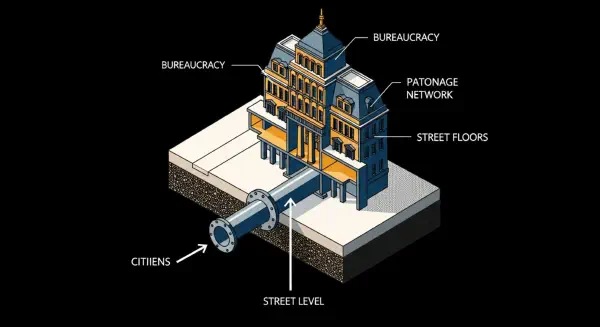
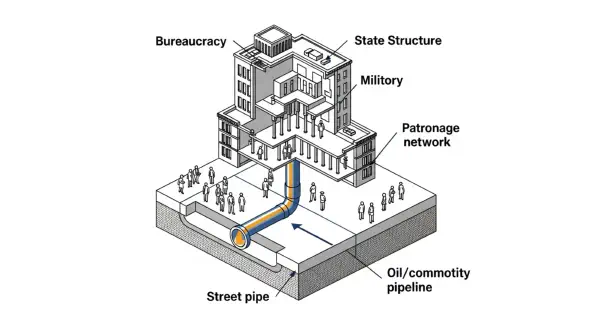
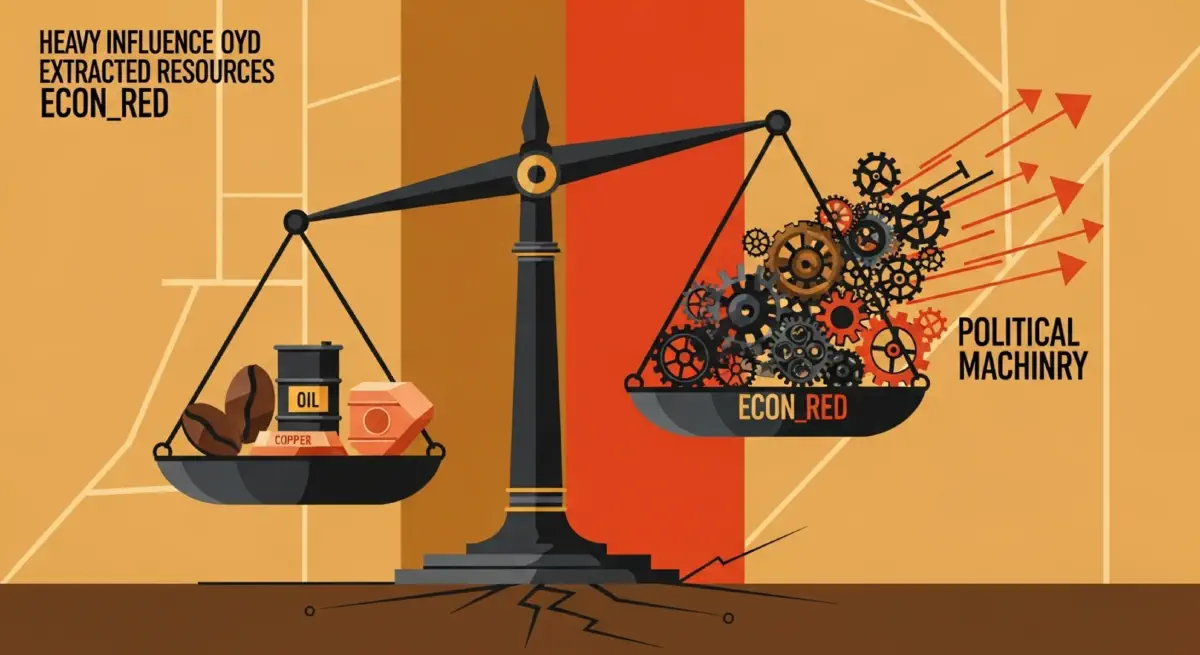
The Commodity Fiscal Dependency Index (CFDI), introduced in this series, expresses primary commodity export earnings as a percentage of total government revenue. Nigeria scores 85. Angola, 82. Iraq, 78. The DRC, 76. Every country above 60 on this index shares a structural feature that no amount of foreign aid, debt relief, or democracy promotion has reliably overcome: a government that does not need its citizens to function. It extracts rent from the ground, not from the population — and what you tax, you account for.
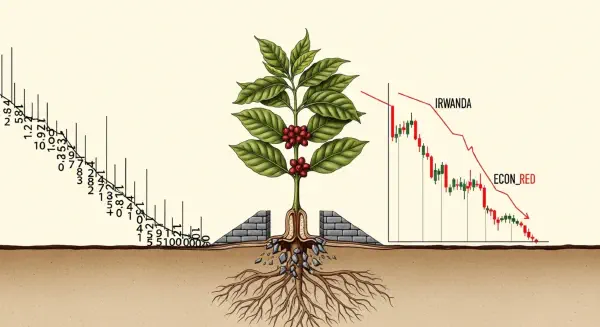
The 1989 collapse of the International Coffee Agreement’s quota system — triggered when the United States withdrew — reduced the international coffee price by 65% within 24 months. Rwanda derived 68–75% of its total export earnings from coffee at the time. By 1993 the government’s budget deficit had widened from 3% to 12% of GDP, 800,000 smallholder families had seen their livelihoods collapse, and the Habyarimana regime had shifted its survival strategy from rent distribution to ethnic mobilization. The genocide of 1994 had many causes. One of them was a commodity price collapse administered from Geneva.
The commodity super-cycle of 2002–2014 — driven by China’s industrialization — raised copper prices 471%, oil 420%, and coffee 285% from their 2002 floors to their 2011 peaks. The governments of Nigeria, Zambia, Angola, and Sudan spent the windfall on recurrent expenditure and borrowed against future commodity revenues. When prices fell after 2014, all four faced fiscal crises within 18 months. Zambia defaulted in 2020. Sudan’s Omar al-Bashir, who had governed for 30 years on oil rents, was removed in a coup within months of the fiscal collapse. The super-cycle did not make these states resilient. It made them more dependent.
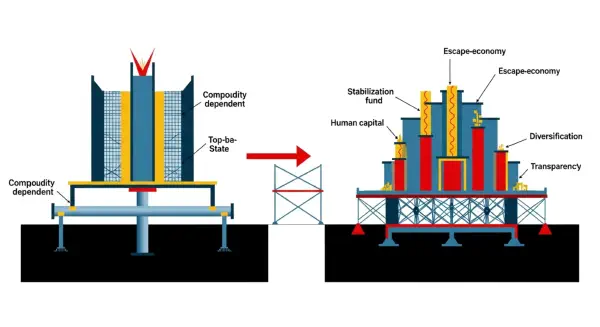
The countries that escaped the commodity curse — Botswana, Malaysia, Chile, Indonesia — share five characteristics the data consistently identifies as causal: a sovereign wealth or commodity stabilization fund established during the first commodity windfall; education spending sustained above 5% of GDP throughout the transition; domestic revenue mobilization (non-commodity taxes) above 18% of GDP; transparent commodity revenue management; and, in three of four cases, functioning democratic accountability. The escape is not accidental. It is a deliberate institutional construction built against the immediate incentives of every actor in the system.
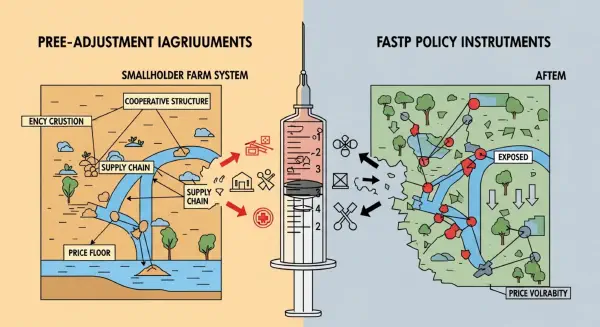
IMF structural adjustment programs in commodity-dependent economies required the elimination of input subsidies and price floors for smallholder farmers — the same populations whose incomes had been destroyed by the commodity price collapses that triggered the programs. In Côte d’Ivoire, every major political rupture between 1999 and 2011 was directly preceded by a commodity price shock and a fiscal squeeze. The medicine was indistinguishable from the disease.
References#
Verwimp, P. (2003). Testing the double-genocide thesis for central and southern Rwanda. Journal of Conflict Resolution, 47(4), 423–442. https://doi.org/10.1177/0022002703254207
Ross, M. L. (2001). Does oil hinder democracy? World Politics, 53(3), 325–361. https://doi.org/10.1353/wp.2001.0011
Beblawi, H., & Luciani, G. (Eds.). (1987). The rentier state. Croom Helm.
World Bank. (2024). World development indicators: Commodity exports and government revenue. World Bank Open Data. https://databank.worldbank.org/source/world-development-indicators
International Coffee Organization. (2024). Coffee prices. ICO. https://www.ico.org/prices/
IMF. (2024). Primary commodity prices database. International Monetary Fund Research Department. https://www.imf.org/en/Research/commodity-prices
Fund for Peace. (2023). Fragile States Index 2023. Fund for Peace. https://fragilestatesindex.org/data/
Sachs, J. D., & Warner, A. M. (1995). Natural resource abundance and economic growth (NBER Working Paper No. 5398). National Bureau of Economic Research. https://doi.org/10.3386/w5398
Karl, T. L. (1997). The paradox of plenty: Oil booms and petro-states. University of California Press.
Acemoglu, D., & Robinson, J. A. (2012). Why nations fail: The origins of power, prosperity, and poverty. Crown Publishers.
UNCTAD. (2023). State of commodity dependence 2023. United Nations Conference on Trade and Development. https://unctad.org/publication/state-commodity-dependence-2023
Extractive Industries Transparency Initiative. (2024). EITI global data. EITI International Secretariat. https://eiti.org/data