Key Takeaways
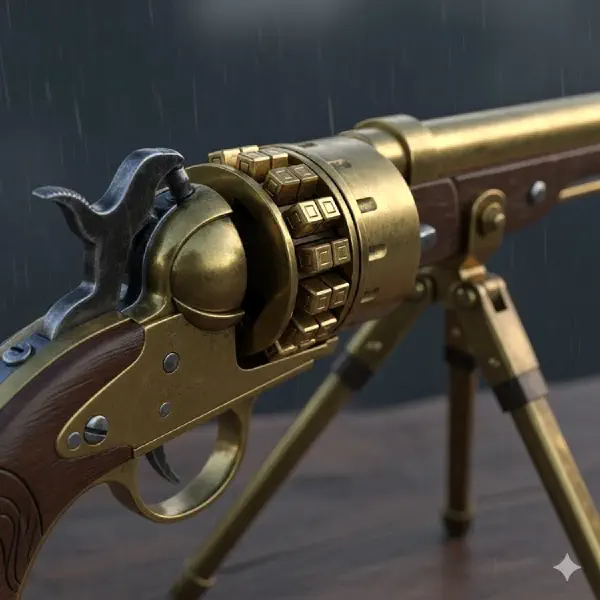
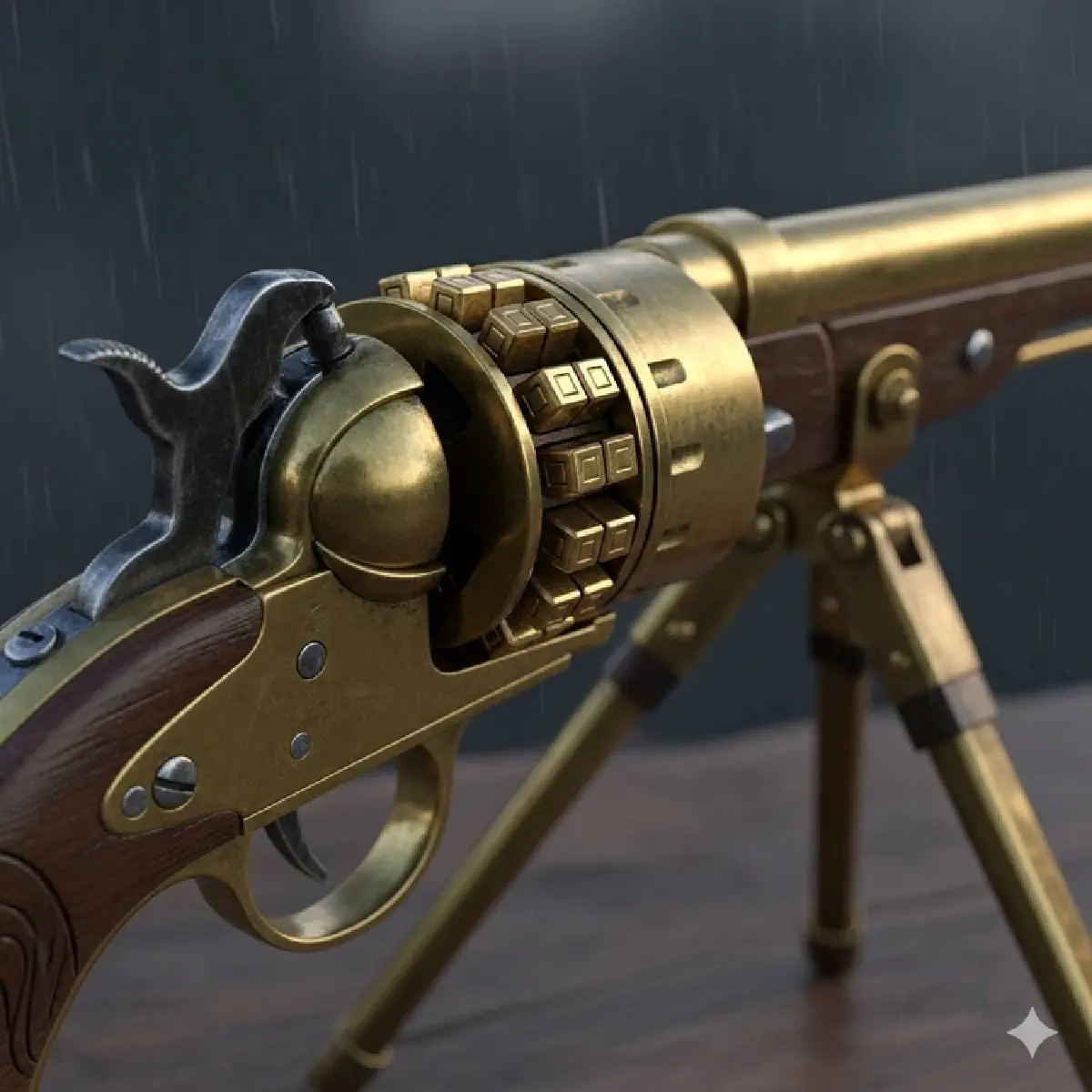
- Early Automatic Weapon: The Puckle gun, patented in 1718, is one of the first firearms referred to as a "machine gun," featuring a tripod-mounted revolver design.
- Religious Ammunition Design: It had two configurations: one firing round bullets for Christians and another firing square bullets for Muslims, intended to cause more severe wounds.
- Innovative Reloading Mechanism: The gun featured a detachable, pre-loaded cylinder allowing for quicker reloading, a concept ahead of its time.
- Commercial Failure: Despite its innovative design and impressive firing rate, the Puckle gun was never mass-produced or used in combat, leading to its status as a commercial flop.
- Global Legacy: Surviving examples of the Puckle gun are housed in museums worldwide, including in the UK, Russia, and China.
1718 One of the first firearms called a ‘machine gun’ – a primitive tripod-mounted revolver that fired square bullets at Muslims and round bullets at Christians.
Long before the advent of modern automatic weapons, an English inventor patented a primitive, tripod-mounted revolver that was one of the first firearms ever to be referred to as a “machine gun,” a term used for it in a 1722 shipping manifest. Patented in 1718, the Puckle gun stands as one of history’s most fascinating and bizarre firearm inventions. It was a weapon caught between centuries—embodying a forward-thinking mechanical concept while being shackled by the religious prejudices and technological limitations of its time.
Designed with ‘Holy War’ in Mind#
This design choice offers a stark window into the era’s mindset, where military technology was explicitly intertwined with religious and cultural ideology.
Impressive Fire Rate, Total Commercial Flop#
Despite its advantages over a standard musket, the Puckle gun drew few investors and was never mass-produced or sold to the British armed forces. Production may have been as low as two guns, and the weapon was never used in any combat operation. A leaflet from the period, commenting on the failed business venture, sarcastically captured the sentiment of its financial backers: “…they’re only wounded who hold shares therein.”
Clever Reloading System Ahead of Its Time#
This concept of swapping an entire pre-loaded cylinder would not become common practice until the 19th century, when users of Remington-pattern revolvers frequently carried spare cylinders to reload quickly in the field.
Surprisingly Well-Traveled for a Failed Invention#
Curiously, curators there had misunderstood the weapon’s design for years, mistaking the flintlock mechanism for a sight and believing the gun was fired with a lit match.
A Brilliant, Bizarre Footnote in History#
Ultimately, the Puckle gun is more than a historical curiosity; it is a case study in how a brilliant mechanical solution can fail when its purpose is convoluted and its underlying technology is not yet mature enough to support its ambition. It represents a unique intersection of technological ambition and cultural prejudice, leaving us with a compelling question: how often in the history of technology has true innovation been driven, or derailed, by the ideologies of its inventors?