The Crisis of 1943#
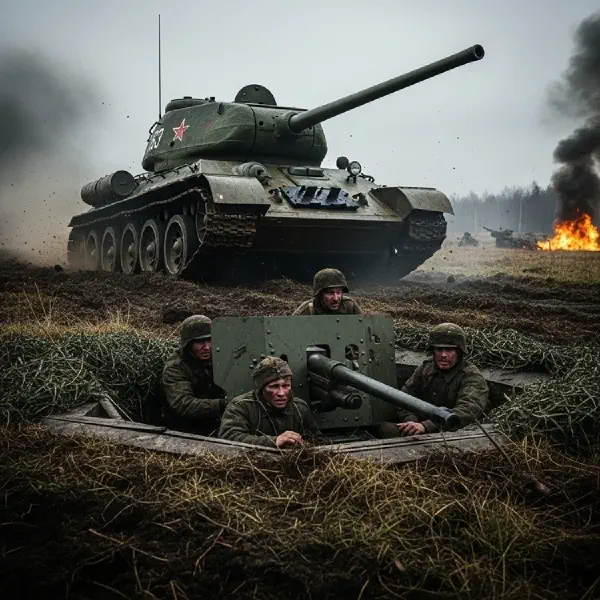
By the summer of 1943, the arrival of the German Panther and Tiger tanks made the T-34’s 76.2mm gun practically obsolete in frontal engagements. At the Battle of Kursk, Soviet crews were horrified to find that their shells bounced harmlessly off the new German “Big Cats” even at ranges of 500 meters (547 yards). To destroy a Panther, T-34 crews had to resort to risky flanking maneuvers to target its thinner side armor. The need for a heavier weapon was urgent, yet the Soviets refused to halt production to introduce an entirely new vehicle like the prototype T-43.

The Thesis of the Masterstroke Upgrade#
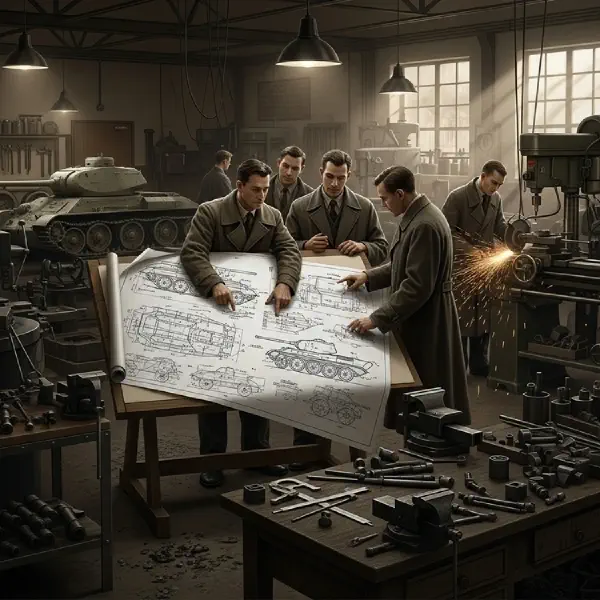
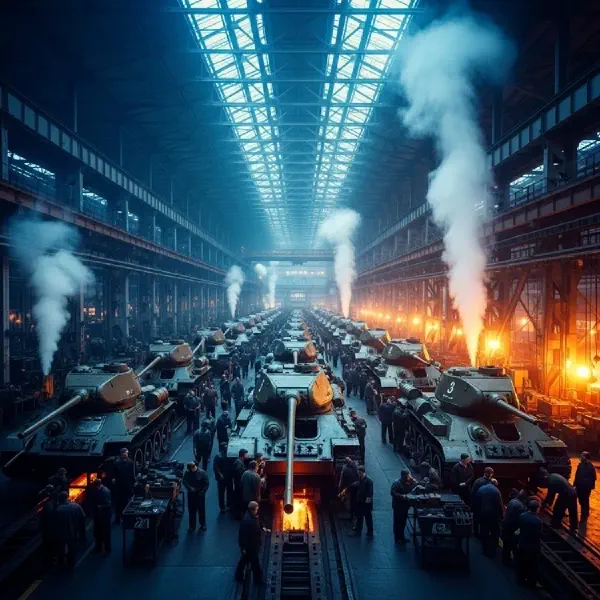
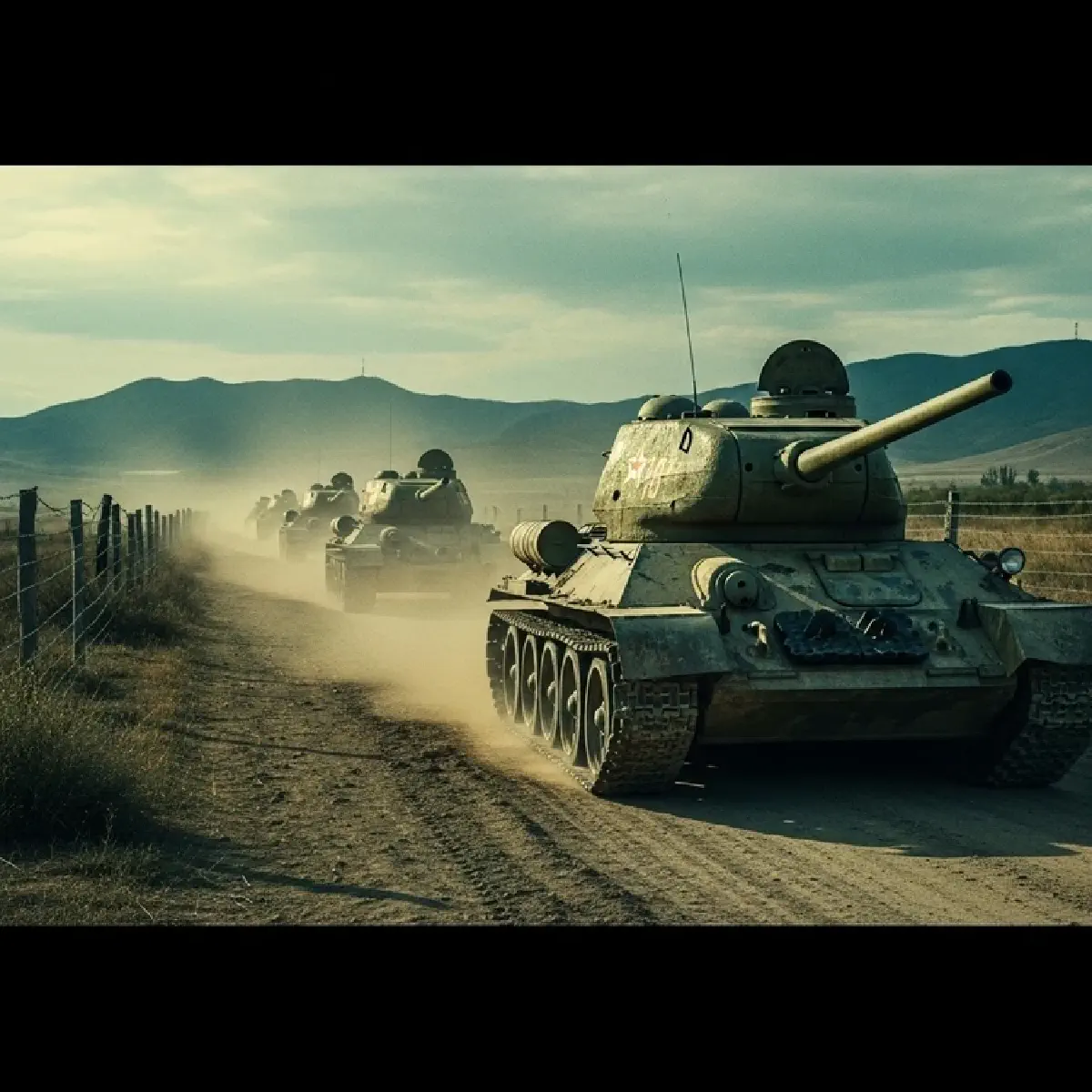
The T-34-85 was a “masterstroke” of pragmatism that brought the tank back from the brink of obsolescence without slowing down the industrial assembly lines. By adapting the turret and 85mm (3.35 in) gun from the canceled T-43 project onto the existing T-34 hull, the Soviets created a vehicle capable of matching the German Panzer IV and threatening even the Tiger I. This evolution turned the T-34 into a viable late-war main battle tank that retained its superior mobility while gaining a much-needed tactical edge.
Explaining the System: The Three-Man Turret#
Separation of Roles#
The most significant improvement in the T-34-85 was the enlargement of the turret ring from 1,425 mm to 1,600 mm (56 in to 63 in), allowing for a three-man crew. For the first time, the tank commander was relieved of gunnery duties, allowing him to focus exclusively on leading the crew and maintaining situational awareness via a new cupola. This change drastically increased the tank’s rate of fire and its effectiveness in coordinating with other units in a platoon.
Complicating Factors: The Cost of Firepower#
The 85mm ZiS-S-53 gun was a modified anti-aircraft weapon with a muzzle velocity of 792 m/s, capable of penetrating 102 mm (4 in) of armor at 1,000 meters. However, the larger rounds meant that ammunition capacity dropped from 100 shells in the 76mm version to just 55–60 rounds in the T-34-85. The long gun barrel also required crews to be extremely careful during cross-country movement; if the barrel “dug the ground” in a ditch and was subsequently fired, it would peel open like the “petals of a flower”.
Tracing the Consequences: From Berlin to Korea#
The T-34-85 spearheaded the final Soviet offensives, including the double-encirclement of Manchuria in August 1945, where it achieved complete surprise over Japanese forces. After World War II, the T-34-85 became the standard armored vehicle for the Eastern Bloc, seeing extensive service in the North Korean invasion of the South in 1950. In the early months of the Korean War, American 2.36-inch bazookas and M24 Chaffee light tanks were useless against the T-34, forcing the U.S. to rush heavier M26 Pershing tanks to the front.
The Eternal Veteran#
The T-34’s impact on tank design was so profound that it led directly to the T-44, T-54, and T-55 series, which formed the armored core of modern armies for decades. Its ruggedness allowed it to survive as an active combatant long after the Cold War ended; as recently as 2015, T-34-85s were photographed in use during the Houthi takeover in Yemen. In 2023, nine countries still reported T-34s in their military inventories, a testament to Mikhail Koshkin’s original vision of a durable, functional machine. The T-34 remains the ultimate symbol of a design that prioritized “effective” over “perfect,” a lesson that engineers continue to study today.