The Crisis of the Master and the Opportunity for the Captive#
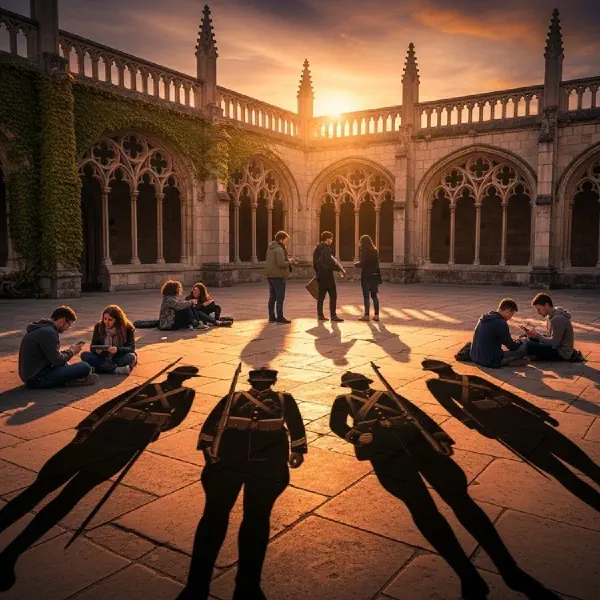
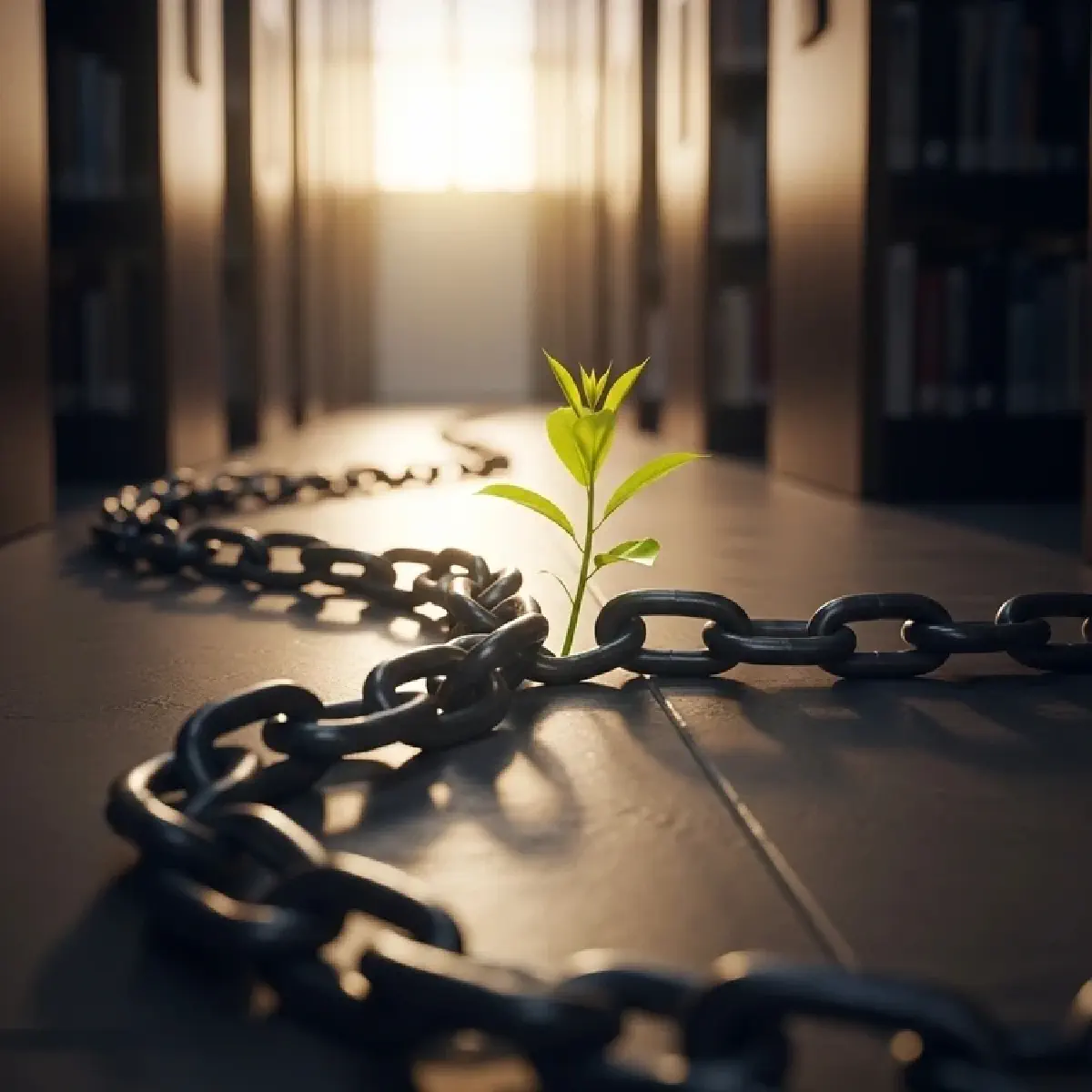
The final argument for why former colonies remain intellectually captive to the West is rooted in a fundamental misdiagnosis of the West’s current health. The author asserts that the “West is in deep trouble,” characterized by the collapse of the family, rampant drug addiction, and a moral vacuum where “everything goes”. Despite this, the captive mind continues to view the West as a “paradise” to be imitated. This represents a profound failure of the imagination. If the model being imitated is itself failing, the “colonized brain” is not just captive; it is suicidal. The author suggests that the current civilizational crisis in Europe and America provides the necessary opening for former colonies to finally break their intellectual chains and look toward their own heritage—specifically Islam—as a viable “answer and solution”.
The Path to Intellectual Sovereignty#
True liberation requires a multi-faceted return to indigenous roots, reclaiming the right to define progress, ethics, and the meaning of existence.
The Deconstruction of the Materialist Idol#
Reclaiming the mind starts with a “selective rejection” of the Western materialist worldview. The author emphasizes that one must take the “know-how” of Western science—which is currently at a 98.4% genetic similarity between humans and chimpanzees but cannot explain the soul—while rejecting its moral failures. For Muslims, this means moving toward the “Islamization of Knowledge,” where Western data is re-evaluated through the lens of Islamic values. This process acknowledges that science is a “human activity” prone to error and cultural bias, and that a “sacred view of the world” is a more robust foundation for the future.
The Crucible of Spiritual and Scientific Synthesis#
A critical complicating factor in this reclamation is the need to integrate modern science with traditional metaphysics. The author argues that the “Scientific Revolution” of the 20th century actually supports the religious view. Giants like Planck and Einstein found that “God appears at the end of their thinking,” suggesting that there is no inherent conflict between the “Book of Nature” and the “Revealed Book” (the Quran). By synthesizing these two realms, the post-colonial intellectual can bypass the “Scientific Materialism” of the 19th century and jump straight into a 21st-century synthesis of faith and reason.
The Cascade of Civilizational Renewal#
The ripple effect of this intellectual return is the restoration of the “hollowed-out” individual. Reclaiming the intellect leads to “vigilance” against addiction, the “sanctity of the family,” and a “human economy” that rejects the exploitation inherent in Western capitalism. The author suggests that by adopting the “middle way” of Islam, societies can avoid the extremes of both the “hated sex-free monasticism” of the past and the “uncontrolled sexual revolution” of the present. This is the “true release” from the tutelage of the West: becoming a “successor on earth” (Khalifa) who is guided by a higher purpose rather than foreign desires.
The Final Sovereignty: Beyond Brain Colonization#
The author concludes that “true freedom” for the Islamic and Arab world will only occur when their thinkers “remove their necks from the fascination” of everything Western. This is not a call for isolationism but for “conscious selection” from the “rich sources of their own Islamic culture”. The West’s dominance was a “military and exploitative” accident, not a permanent intellectual decree. By recognizing that “God is the Nourishment of the Heavens and the Earth,” the formerly captive mind finds a certainty that no materialist ideology can offer. The journey from being an intellectual captive to a sovereign subject is the final, and most difficult, battle of decolonization. It is time to let the ghost of empire fade and allow the indigenous soul to speak once more.