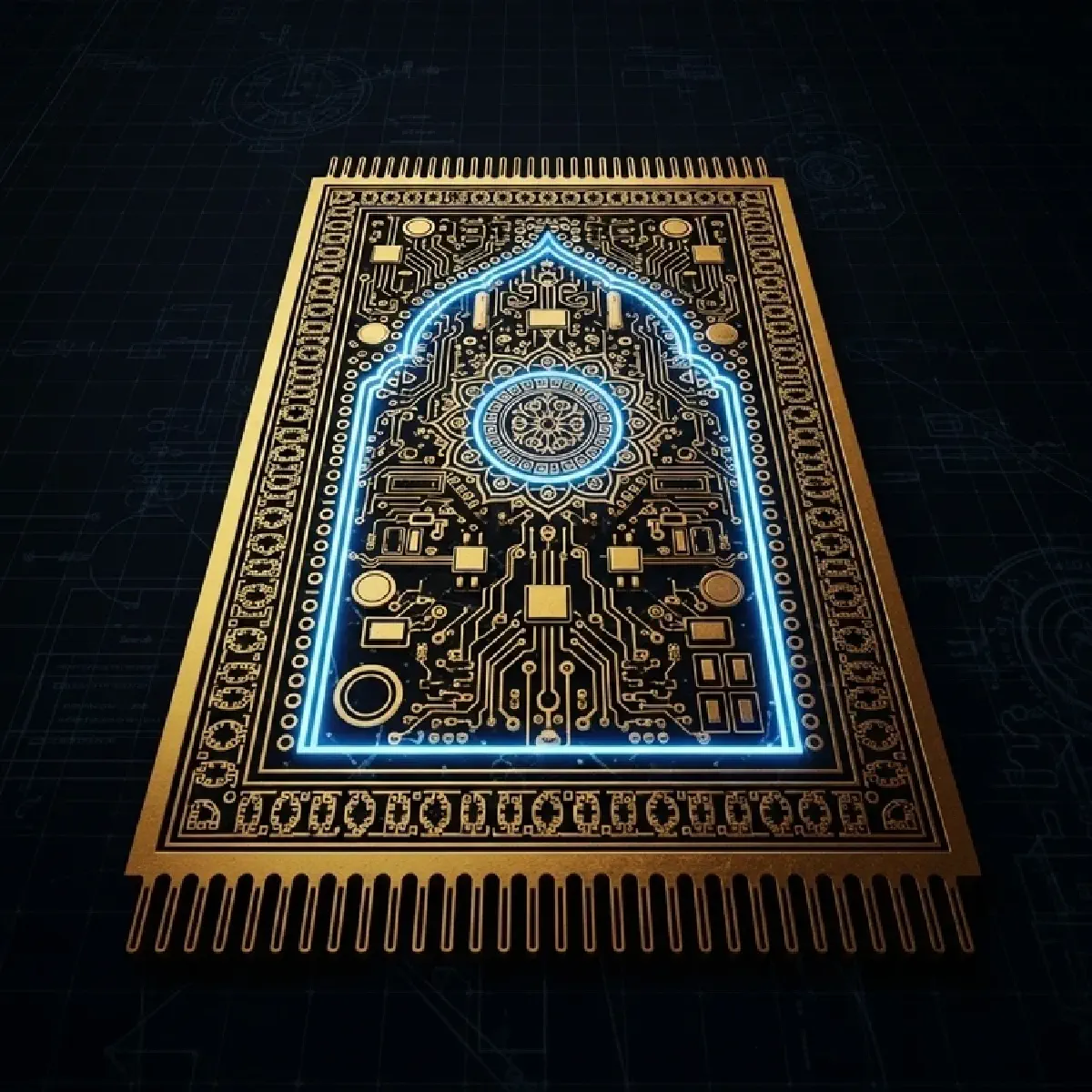
The Allure of the Technocratic Monolith#
The most enduring form of intellectual captivity is not found in political treaties but in the uncritical admiration for Western technology and lifestyle. Former colonies often view scientific progress as an exclusive monopoly of the West, leading to a totalizing fascination with the “American Way of Life”. This fascination creates a “mirage” where the technological “know-how” of the West is conflated with its moral and philosophical superiority. The author observes that many Arab intellectuals ignore the deep civilizational crisis of the West—manifested in family collapse and structural addiction—because they are blinded by the brilliance of Western gadgetry. This creates a state of “captivated imitation” where the periphery attempts to import the West’s prosperity while unknowingly importing its “inner emptiness”.
The Mechanism of Technological Fetishism#
The West maintains its intellectual grip by positioning itself as the sole architect of the future, discouraging non-Western societies from seeking solutions in their own history.
The Monopoly on Progress#
The West projects an image of progress that is inseparable from its materialist and secular foundations. This discourages the colonized mind from believing that indigenous traditions, such as Islamic law or ethics, can coexist with modern science. The author argues that this is a false dichotomy; the West’s dominance was built on military superiority and the exploitation of resources—such as the $1.5 trillion generated annually by organized crime or the 8% of global trade dedicated to narcotics—rather than inherently superior cultural values. Yet, because the West “owns” the tools of modernity, it effectively owns the minds of those who desire them.
The Crucible of Scientific and Ethical Divorce#
A major complicating factor is the divorce between “know-how” and “ideology.” While the West has perfected the former, its ideological foundations are crumbling. The author highlights that the West is the first “atheist civilization” in history, where the soul, will, and art are marginalized in favor of quantitative logic. This “civilization of logic” treats any intuitive or religious truth as “irrational”. Intellectuals in former colonies often fail to see that this materialism is actually a “dead-end” path. They ignore that the “Scientific Revolution” of the last 100 years—led by giants like Einstein and Heisenberg—actually points back toward metaphysical and spiritual questions, undermining the very materialism they are trying to copy.
The Cascade of Cultural Erosion#
The ripple effects of this technocratic fascination are visible in the erosion of traditional social structures. As former colonies adopt Western “hedonism” and materialist pleasure-seeking, they experience the same decay: the degradation of the family, the rise of “Reality TV” vulgarity, and the loss of honor as a social value. The author points out that 78% of Germans in 1993 were attracted to alternative spiritualities like reincarnation, signaling a desperate search for meaning that the materialist West cannot provide. By imitating this failing model, former colonies are effectively adopting a “prescribed disaster”.
Moving from Imitation to Selection#
The argument for intellectual liberation hinges on the ability to distinguish between technology and the “way of life.” The author appeals to Muslims and other post-colonial subjects to take the “best of the West”—its scientific advancement—while returning to their own religion for their social and moral framework. We must recognize that being a modern scientist does not require being a Western materialist. True independence is the power of “conscious selection,” where a nation uses Western tools to build an indigenous future rather than a Western replica. The mirage of Western perfection must be deconstructed so that the former colony can recover its soul from the rubble of technocratic obsession.