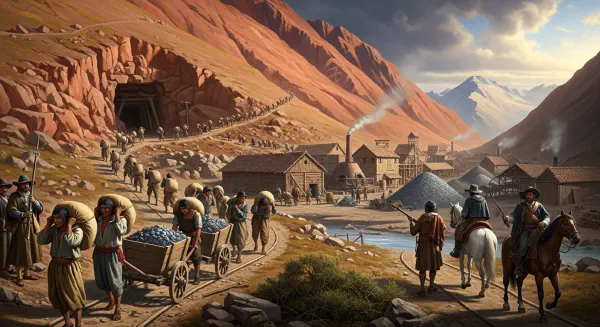
The Spanish Empire needed workers. Millions of them. To mine silver, to grow sugar, to herd cattle, to build cities, to row ships. But there was a problem: not enough Spaniards were willing to do the hard labor themselves. And the Indigenous population was collapsing—from disease, from overwork, from sheer despair.
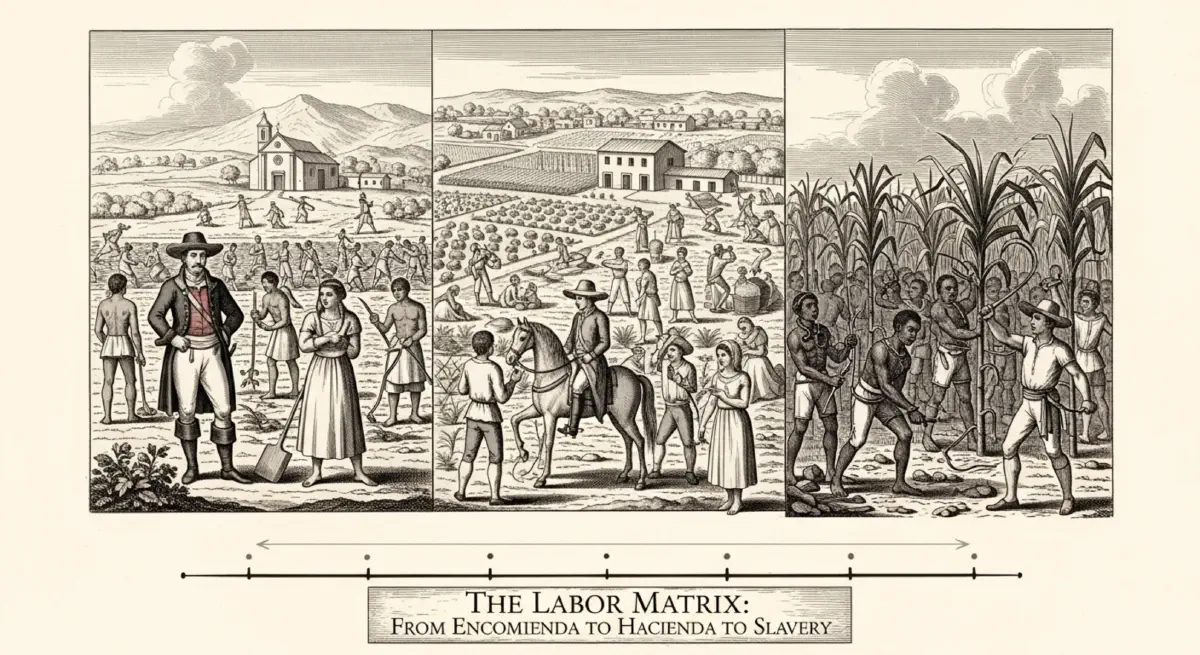
So the empire built a machine. Not one machine, but three, layered on top of each other like interlocking gears. They called it the labor matrix.
⚙️ Gear One: The Encomienda (1503–1721)#
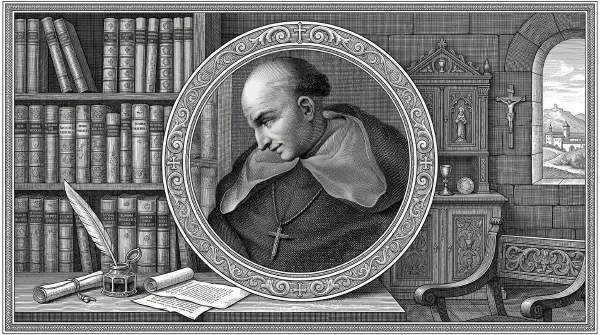
The encomienda was the first great labor system of the Spanish Americas. In theory, it was noble: the Crown entrusted (encomendar) a group of Indigenous people to a Spanish colonist. In return for the right to their labor and tribute, the encomendero was supposed to protect them, teach them Spanish, and ensure their conversion to Christianity.
In practice, it was legalized slavery with a religious mask.
Encomenderos became petty lords. They worked Indigenous men to death in mines, on plantations, and as domestic servants. Women were often subjected to sexual violence. Children were separated from families. The Crown, far away, rarely intervened.

| Region | Peak Encomienda Period | Estimated Indigenous population decline |
|---|---|---|
| Hispaniola | 1503–1520 | 90% (from ~500,000 to ~50,000) |
| Mexico | 1525–1550 | 80% (from ~25 million to ~5 million) |
| Peru | 1540–1570 | 70% (from ~12 million to ~3.5 million) |
Population collapse was not the intent. But it was the result. And it broke the system.
Under Spanish law, the Indigenous people were free subjects of the Crown, not slaves. Encomenderos did not "own" them. But the system gave encomenderos such total control that the distinction meant nothing in daily life. This legal fiction allowed the Crown to claim moral superiority over other European empires while exploiting labor just as brutally.
⚙️ Gear Two: The Repartimiento (1550–1812)#
As Indigenous populations fell, the encomienda became inefficient. Encomenderos hoarded workers, and the Crown lost direct control. So the empire introduced a new system: the repartimiento (also called cuatequil in Mexico or mita in Peru).
Here's how it worked:
- The Crown, not individual colonists, now controlled Indigenous labor.
- Each community had to supply a fixed percentage of its adult male population (usually 10-15%) for a set number of days per year (often 45–60 days).
- Workers rotated through mines, farms, and public works projects.
- They received a legal wage (though it rarely matched the market rate or even arrived on time).
The repartimiento was less brutal than the encomienda—but only by degrees. Workers still died in mines. They still left their families for months. They still had no real choice.
⚙️ Gear Three: African Chattel Slavery (1502–1886)#
The third gear was the most brutal—and the most enduring.
When Indigenous labor proved insufficient (due to population collapse and legal restrictions on the worst abuses), the empire turned to Africa. The asiento de negros—the royal monopoly contract for supplying African slaves—became one of the most profitable businesses in history.
Mechanism of the Slave Trade:
graph LR
A[Portuguese traders buy slaves in West Africa] --> B[Middle Passage to Caribbean]
B --> C[Slaves sold at Cartagena, Veracruz, Havana]
C --> D[Distributed to mines, plantations, households]
D --> E[Lifetime of forced labor, no legal protection]
E --> F[Children born into slavery]
F --> A
| Colony | Peak slave population (year) | Percentage of total population |
|---|---|---|
| Cuba | 400,000 (1841) | 44% |
| Brazil (Portuguese, but comparable) | 1.5 million (1872) | 31% |
| Mexico | 35,000 (1810) | <1% |
| Peru | 80,000 (1790) | 7% |
Unlike Indigenous workers, African slaves had no legal protections whatsoever. They could be bought, sold, branded, tortured, and killed with impunity (though killing a slave was technically illegal, it was almost never prosecuted).
An Indigenous mitayo could appeal to the Crown. An African slave could not. The slave had no community, no legal identity, no hope of freedom except through escape or manumission (which was rare). The Spanish Empire created a two-tiered system of oppression: one for "subjects" (Indigenous) and one for "property" (Africans).
🔄 How the Gears Interlocked#
The three systems did not operate separately. They overlapped, reinforced each other, and shifted depending on time and place.
| Period | Dominant Labor System | Secondary System | Notes |
|---|---|---|---|
| 1500–1550 | Encomienda | African slavery | Indigenous population still large enough to exploit directly |
| 1550–1650 | Repartimiento/Mita | Encomienda (declining) | Crown asserts control; African slavery grows |
| 1650–1800 | African slavery (coastal/lowland) | Repartimiento (highland/interior) | Geography determined which gear turned fastest |
| 1800–1886 | African slavery + indentured labor | Free wage labor (rare) | Abolition movements slowly dismantle the matrix |
Sugar plantations in Cuba and Brazil used almost exclusively African slaves. Silver mines in Peru and Mexico used repartimiento labor supplemented by African slaves in skilled roles (overseers, blacksmiths). Urban households in Mexico City used a mix of Indigenous servants (low or no wage) and African domestic slaves.
Gears could turn in opposite directions, but the machine always moved forward.
📉 The Collapse of the Matrix (1810–1888)#
Three forces eventually broke the labor matrix:
Independence movements (1810–1826): Most new nations abolished the encomienda and repartimiento immediately. Slavery persisted longer.
Abolitionist pressure from Britain: The Royal Navy patrolled the Atlantic, intercepting slave ships. Britain negotiated treaties with Spain and Portugal to end the trade.
Economic changes: Industrial capitalism preferred wage labor (mobility, flexibility) over fixed capital (slaves).
| Date | Event |
|---|---|
| 1811 | Venezuela abolishes slavery (first in the Americas) |
| 1821 | Encomienda abolished in newly independent Mexico |
| 1854 | Peru abolishes Indigenous tribute (repartimiento effectively ends) |
| 1865 | United States abolishes slavery |
| 1870 | Spain's Moret Law frees enslaved people over 60 and those born after 1868 |
| 1886 | Cuba abolishes slavery (last in the Spanish Empire) |
The machine ground to a halt. But its scars remain.
💎 Endnote: The Hidden Cost of Empire#
The labor matrix was not an accident. It was a deliberate, adaptive, and ruthlessly efficient system designed to solve one problem: how to extract maximum value from human beings while maintaining the legal fiction of their freedom.
The encomienda pretended to be a trust. The repartimiento pretended to be fair rotation. Slavery pretended to be property. Each gear turned, and the empire prospered.
But the human cost—tens of millions of lives lost or shattered—cannot be measured in silver or sugar.
Next in the Series: Turn Four: The Caste Calculus – A Social Sorting Algorithm
Further Reading:
- Primary Source: New Laws of 1542 (restricting encomienda)
- Overview: Wikipedia. Encomienda
- System: Wikipedia. Repartimiento
- Slave Trade: Wikipedia. Asiento de Negros
- Abolition: Wikipedia. Moret Law