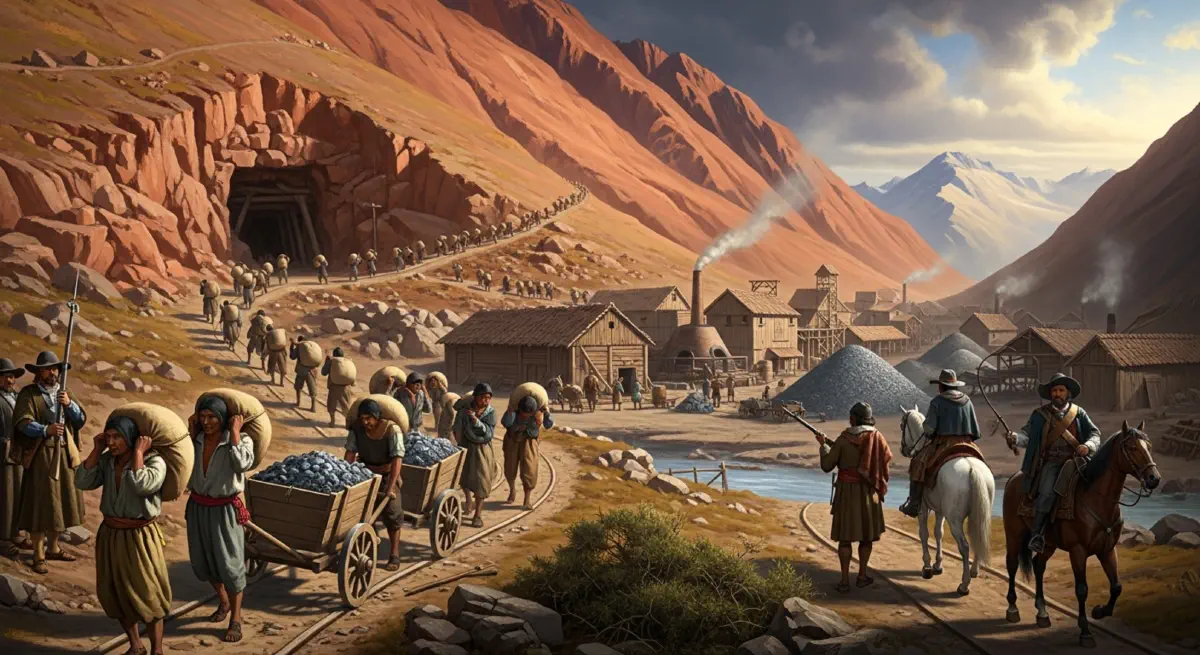
High in the cold, thin air of the Andes, at 4,090 meters above sea level, sits a dull red mountain. Its name is Cerro Rico—"Rich Mountain." Between 1545 and 1800, it produced an estimated 60% of all silver mined on the planet. Millions of silver coins, the famous "pieces of eight," flowed from this single peak across the globe—to Europe, to China, to India.
But the mountain had a secret. It didn't give up its treasure willingly.
🪙 The World's First Global Currency#
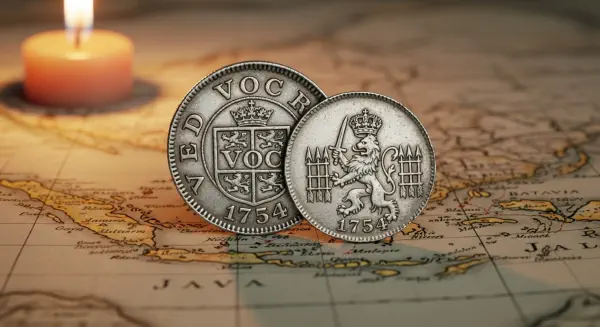
Before the discovery of Potosí, global trade was fragmented. The Spanish silver peso (real de a ocho) changed everything. It was the first currency accepted from Manila to Madrid, from Amsterdam to Beijing. For nearly three centuries, the global economy ran on silver stamped with the Spanish coat of arms.
But here is the counterintuitive truth: Spain became the world’s richest country and its most indebted one simultaneously.
The silver didn't stay in Spain. Most of it flowed immediately out again—to pay for wars against the Ottomans, the Dutch, the English, the French. To buy grain, textiles, and manufactured goods from northern Europe. And to purchase silks, porcelain, and spices from China, which only accepted silver in exchange.
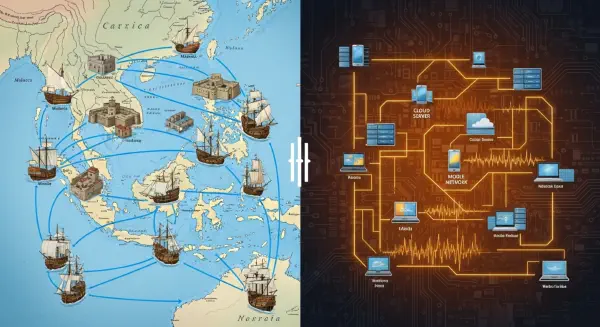
China, at the time, had a paper currency but no silver mines. Spanish silver became the foundation of the Ming and Qing economies. The Manila Galleons—those massive ships that sailed once or twice a year from Acapulco to the Philippines—were essentially a silver pipeline into Asia.

⛏️ The Mita: Forced Labor on an Industrial Scale#
How did Spain extract so much silver? Not with machines or technology. With human backs.
The mita system, inherited from the Incas and expanded by the Spaniards, forced every Indigenous community in a vast radius to supply one-seventh of its adult male population to work in the mines. Each mitayo served for a year, walking hundreds of miles to Potosí, descending into the toxic, dark, freezing tunnels, and emerging months later—if at all.
The human cost is staggering:
| Century | Estimated Indigenous miners per year | Annual death rate (estimated) |
|---|---|---|
| 1570s | 10,000 | 30-40% |
| 1620s | 5,000 | 20-30% |
| 1700s | 3,000 | 15-20% |
These are partial figures; total deaths from mining across the empire likely exceeded eight million over three centuries.
The mita was not chattel slavery. Mitayos were legally free, were paid a small wage, and could not be bought or sold. But the conditions were so brutal that many communities paid tribute to escape the draft. Indigenous leaders often sent the elderly or the criminal, knowing the strong were needed to maintain the community.
🔄 The Feedback Loop of Dependency#
Here is the system's internal logic, circular and self-devouring:
graph TD
A[More silver mined at Potosí] --> B[More coins minted]
B --> C[More spent on European wars]
C --> D[Higher Spanish debt]
D --> E[More pressure on mines to produce]
E --> A
Spain became an extractive machine that never industrialized. The silver paid for armies but not for factories. It bought luxury goods but not productive investments. When the silver began to run out in the late 1700s, the empire had no other economic engine to fall back on.
Economists call this the "resource curse" or "Dutch disease." Spain invented it.
🌏 The Global Reach of a Single Mountain#
A single Potosí coin could travel farther than any person of its time.
- A miner in Potosí extracts silver ore.
- The ore is smelted with mercury (imported from Spain, mined by prisoners in Almadén).
- The pure silver is stamped into pesos at the Potosí mint.
- A mule train carries the coins to the Pacific coast at Arica.
- A ship sails north to Panama, then overland, then another ship to Havana.
- From Havana, treasure fleets convoy to Seville.
- In Seville, the Crown takes its quinto (20% royal tax).
- The remaining silver is loaded onto Dutch or Genoese ships to pay German bankers, or sent via Acapulco to Manila.
- In Manila, Chinese traders exchange silk and porcelain for silver pesos.
- Some pesos end up in the Forbidden City in Beijing. Others circulate as far as Bengal and the Spice Islands.
One coin. One mountain. Half the world.
💀 The Black Legend and the Truth#
Spain’s European enemies exploited the brutality of the mines to fuel the Leyenda Negra—the Black Legend. English and Dutch pamphlets depicted Spaniards as uniquely cruel, torturing helpless Indians for gold.
The truth is more complicated. The mita was certainly brutal. But English colonists in North America also used forced labor (indentured servitude, and later African slavery) to extract wealth. The difference is that Spain's empire was older and documented its abuses in extraordinary detail. The Relaciones Geográficas, a massive survey commissioned in the 1580s, asked colonial officials to report on how they treated native peoples—including the abuses.
The Spanish Empire was not uniquely evil. It was uniquely recorded.
The silver engine never invested in itself. Most of the mined wealth left the Americas and Spain entirely, financing the rise of Spain's rivals. By the 1700s, England and France had built real industrial economies. Spain had built a mountain of debt.
💎 Endnote: The Mountain That Ate Men#
Potosí still stands. The mountain is still mined—now for tin and zinc, by private companies. The old tunnels are honeycombed, unstable, and dangerous. Locals say the mountain cries at night.
The silver engine was the heart of the Spanish Empire. It beat for 250 years. But it pumped wealth out of the empire, not into it. When the heartbeat slowed, the empire's limbs—its colonies—began to feel the cold.
Next in the Series: Turn Three: The Labor Matrix – From Encomienda to Hacienda to Slavery
Further Reading:
- Primary Source: Potosí mint records, 1573–1776 (Archivo General de Indias, Seville)
- Overview: Wikipedia. Potosí
- System: Wikipedia. Mita (Inca)
- Global Context: Wikipedia. Spanish dollar