📚 Article List
#- Part One: The Conscience of an Emperor – How a 16th-century reform movement gave birth to the empire’s first legal machine.
- Part Two: The Silver Engine – How one mountain in Bolivia turned Spain into a global cash machine.
- Part Three: The Labor Matrix – From encomienda to hacienda to slavery.
- Part Four: The Caste Calculus – A social sorting algorithm for the ages.
- Part Five: The Conversion Machine – How the Church engineered consent.
- Part Six: The Information Filter – Censorship, propaganda, and the Black Legend.
- Part Seven: The Loyalty Trade – How the empire bought off its elites.
- Part Eight: The Fall – Systems collapse and path dependence.
- Part Nine: The Ghost in the Machine – Colonialism’s long shadow today.
🔑 Key Insights
#1. The Paradox of the Legal Labyrinth
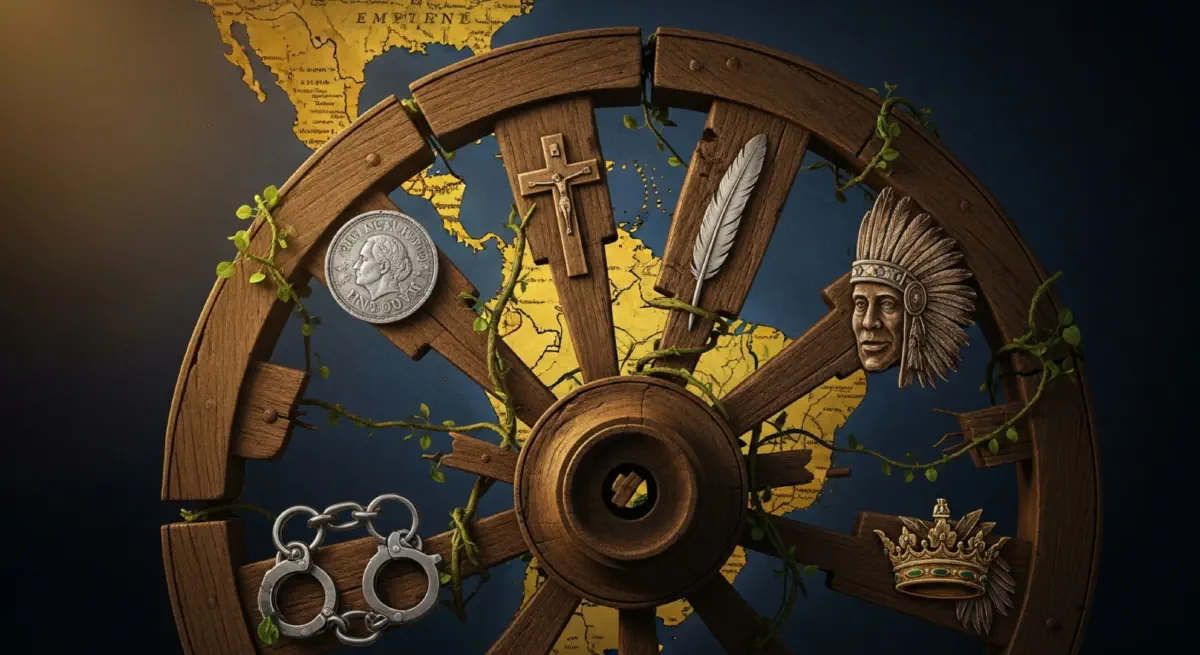
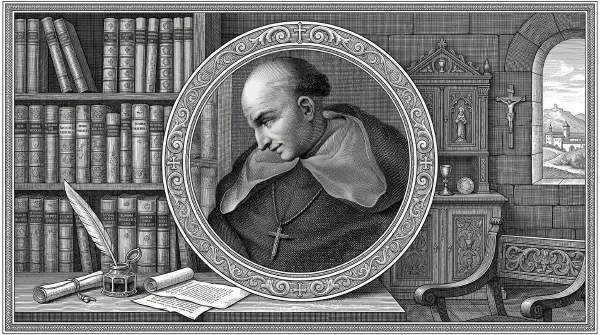
#The Spanish Empire was the most litigious and legally sophisticated empire of its time. The New Laws of the Indies (1542) , largely based on the writings of Dominican friar Bartolomé de Las Casas, were a sincere attempt to protect Indigenous peoples from the worst abuses of the encomienda system. However, these humanitarian laws were met with armed resistance by colonists and were largely unenforceable in practice. This created a permanent tension: the Crown wrote progressive laws, but colonists enforced what they wanted. Yet, this same legal maze gave Indigenous people a powerful tool—they could (and did) appeal colonial decisions in Spanish courts for three centuries, embedding legal rights into the imperial machinery.
2. The Silver Curse
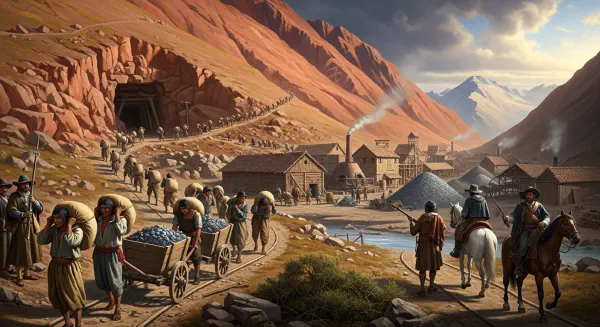
#The discovery of the Cerro Rico de Potosí in 1545 flooded the empire with silver, making Spain the richest kingdom in Europe. But this wealth triggered the “Resource Curse”——a flood of easy money that stunted industrial development, encouraged dependency, and ultimately fueled imperial decline. The more silver Spain mined, the more it borrowed. By 1800, the silver engine had enriched Spanish American miners and Chinese merchants far more than it had built sustainable prosperity within Spain itself.
3. The Layered Gears of Exploitation
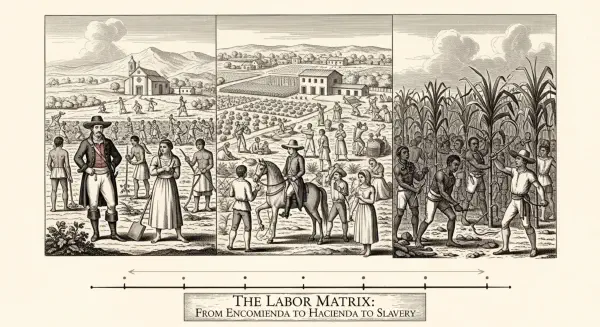
#The empire’s labor machine was not a single system but three interlocking gears. The encomienda (a grant of Indigenous labor to colonists) was the first gear, designed before the full scale of the demographic collapse was understood. The repartimiento/mita (a rotation of forced labor controlled directly by the Crown) replaced it as Indigenous populations collapsed, allowing the state to allocate workers without empowering a feudal aristocracy. African chattel slavery was the third and most brutal gear——reserved for those who had no legal protections whatsoever. These three systems overlapped and evolved over 400 years, adapting to economic needs and demographic realities while maintaining the empire’s labor supply.
4. The Caste “Algorithm”
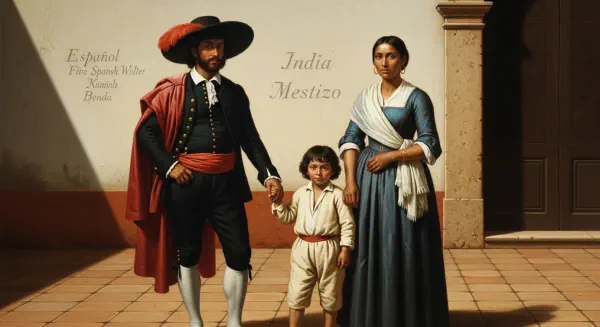
#The sistema de castas was not merely passive prejudice; it served as an active governance tool. By fracturing the population into dozens of minute racial categories (mestizo, mulatto, castizo, lobo, etc.), the empire prevented the formation of a unified non-Spanish identity while creating aspirational hierarchies that gave mixed-race elites a personal stake in the colonial project. The system was more fluid in practice than in law——wealth could “whiten” a family across generations, encouraging loyalty——but the stain of African ancestry was far harder to erase, reflecting the empire’s dual legacy of Indigenous “subjects” and African “property”.
5. The Conversion Machine
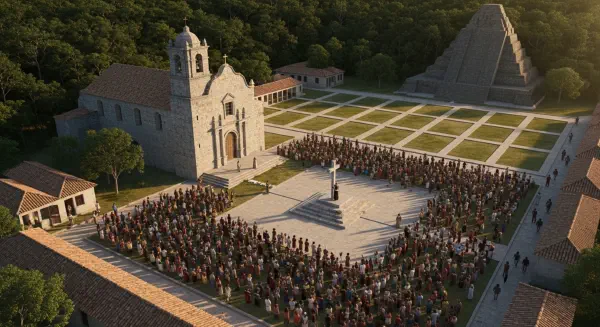
#The Catholic Church was the empire’s operating system. Through a unique arrangement called the Patronato Real, the Spanish Crown controlled Church appointments and revenues in the Americas, transforming the Church from a rival power into a branch of colonial administration. By forcing Indigenous populations into planned villages called reducciones, the Church reshaped not just belief, but everyday life——from housing patterns to marriage regulations. Yet this engine of control also produced unintended hybrids: Our Lady of Guadalupe emerged where the Aztec goddess Tonantzin was once worshipped, demonstrating how conversion could never fully erase Indigenous meanings.
6. The Information Failure
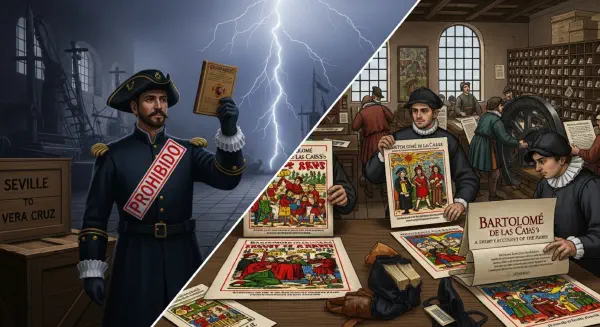
#The Spanish Empire built an elaborate apparatus to control the flow of ideas—strict licensing of printing presses, Inquisition edicts banning thousands of books, and customs inspections at every port to intercept contraband texts. Dominican friar Bartolomé de Las Casas’s 1552 exposé, A Short Account of the Destruction of the Indies, was written as an internal reform document. As royal censorship failed to control its circulation beyond the empire’s borders, it became the most explosive piece of anti-Spanish propaganda in European history, feeding the “Black Legend” that painted Spain as uniquely and irredeemably cruel. The filter worked reasonably well inside the colonies——where Indigenous people could rarely read Spanish anyway——but failed catastrophically in the international arena, causing a public relations defeat that has lasted for centuries.
7. The Loyalty Trade
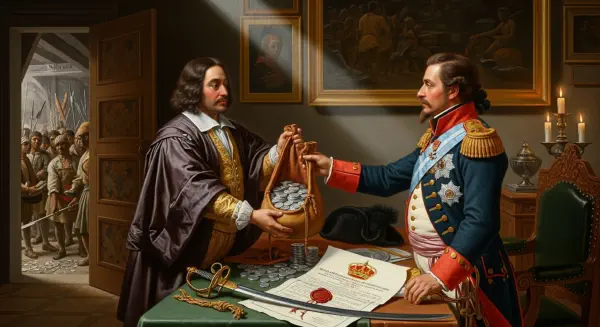
#Spain could not afford to pay for a large colonial army or bureaucracy. Instead, the Crown monetized its own authority by selling government offices, military commissions, and noble titles to wealthy creoles. This practice of venta de oficios absorbed ambitious elites into the imperial project, turning potential rebels into stakeholders. The Crown appointed Indigenous nobles*(caciques* and kurakas) as local administrators, granting them tax exemptions and Spanish-style coats of arms in exchange for loyalty. However, the sale of offices also cultivated a powerful class of entitled and often incompetent officials, and when the highest posts remained reserved for peninsulares, the glass ceiling it created eventually helped fuel the independence movements.
8. The System’s Collapse
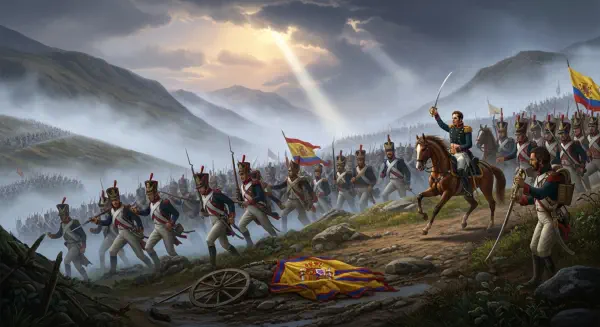
#The empire did not fall because of foreign enemies alone. The Bourbon Reforms of the 18th century were designed to make the empire more efficient and extract more revenue, but they had the opposite effect——they alienated the creole elites whose loyalty the “Loyalty Trade” had been designed to secure, and they created new resentments around taxes and trade restrictions. The trigger was Napoleon’s invasion of Spain in 1808 and the forced abdication of the king, which removed the symbolic head of the entire imperial structure. Without a legitimate monarch, the whole legal-political architecture collapsed into civil war between royalists and patriots, culminating in the Battle of Ayacucho ——a decisive defeat that sealed the empire’s fate in the Americas.
9. The Inescapable Ghost
#The Spanish Empire is gone, but its operating system remains. The empire’s influence persists in the language spoken by nearly 500 million people, in the haciendas and latifundia still dominating Latin American rural landscapes, and in the colorism derived from the casta system that still determines socio-economic outcomes. Its legal codes, urban grid plans, and authoritarian governance templates are still embedded in modern Latin American constitutions and city layouts. The Philippines, its “forgotten” Asian colony, remains majority Catholic and bears Spanish family names, while Spain itself still struggles with this complex legacy.
📖 References
#Primary Sources
#| Source | Citation |
|---|
| Las Casas, B. (1552). A Short Account of the Destruction of the Indies. | (Search available via primary source archives and Library of Congress.) |
| New Laws of the Indies (1542). (n.d.). | Charles V, Holy Roman Emperor. |
| Constitution of 1812. (1812). | Spanish Parliament (Cádiz Cortes). (Search available via Archivo Histórico Nacional, Madrid.) |
| United Nations. (2007). United Nations Declaration on the Rights of Indigenous Peoples (UNDRIP). | https://www.un.org/development/desa/indigenouspeoples/declaration-on-the-rights-of-indigenous-peoples.html |
Secondary Sources: Books & Academic Journals
#| Source | Citation |
|---|
| Faguet, J.-P., Matajira, C., & Sánchez, F. (2025). Encomienda, the colonial state and long-run development in Colombia. The Economic Journal, ueaf108. | https://doi.org/10.1093/ej/ueaf108 |
| Guardado, J. (2025). The Venal Origins of Development in Spanish America. Cambridge University Press. | https://www.cambridge.org/mz/universitypress/subjects/economics/public-economics-and-public-policy/venal-origins-development-spanish-america |
| Brading, D. A. (1991). The First America: The Spanish Monarchy, Creole Patriots, and the Liberal State, 1492–1867. Cambridge University Press. | Search available via major academic databases. |
| Elliott, J. H. (2006). Empires of the Atlantic World: Britain and Spain in America, 1492–1830. Yale University Press. | Search available via major academic databases. (ISBN: 978-0300114317) |
| Gibson, C. (1964). The Aztecs Under Spanish Rule: A History of the Indians of the Valley of Mexico, 1519–1810. Stanford University Press. | Search available via major academic databases. |
| Search available via major academic databases. (ISBN: 978-0804709121) | |
| Lockhart, J., & Schwartz, S. B. (1983). Early Latin America: A History of Colonial Spanish America and Brazil. Cambridge University Press. | Search available via major academic databases. |
Secondary Sources: Encyclopedia & Overview Articles
#| Source | Citation |
|---|
| Britannica, T. Editors of Encyclopaedia (1998). Battle of Ayacucho. Encyclopedia Britannica. | https://www.britannica.com/event/Battle-of-Ayacucho |
| Britannica, T. Editors of Encyclopaedia (1998). Bourbon reforms. Encyclopedia Britannica. | https://www.britannica.com/topic/Bourbon-reforms |
| Britannica, T. Editors of Encyclopaedia (1998). Generation of 1898. Encyclopedia Britannica. | https://www.britannica.com/event/Generation-of-1898 |
| Britannica, T. Editors of Encyclopaedia (1998). Laws of the Indies. Encyclopedia Britannica. | https://www.britannica.com/topic/Laws-of-the-Indies |
| Britannica, T. Editors of Encyclopaedia (1998). Peninsular War. Encyclopedia Britannica. | https://www.britannica.com/event/Peninsular-War |
| Wikipedia contributors. (2025). Black Legend. In Wikipedia, The Free Encyclopedia. | https://en.wikipedia.org/wiki/Black_legend |
| Wikipedia contributors. (2025). Casta. In Wikipedia, The Free Encyclopedia. | https://en.wikipedia.org/wiki/Casta |
| Wikipedia contributors. (2025). Disaster of 1898. In Wikipedia, The Free Encyclopedia. | (Search term referenced in historical and political contexts.) |
| Wikipedia contributors. (2025). Encomienda. In Wikipedia, The Free Encyclopedia. | https://en.wikipedia.org/wiki/Encomienda |
| Wikipedia contributors. (2025). Generation of ’98. In Wikipedia, The Free Encyclopedia. | https://en.wikipedia.org/wiki/Generation_of_%2798 |
| Search available in literary and historical databases. | |
| Wikipedia contributors. (2025). New Laws. In Wikipedia, The Free Encyclopedia. | https://en.wikipedia.org/wiki/New_Laws |
| Wikipedia contributors. (2025). Potosí. In Wikipedia, The Free Encyclopedia. | https://en.wikipedia.org/wiki/Potos%C3%AD |
| Wikipedia contributors. (2025). Spanish American wars of independence. In Wikipedia, The Free Encyclopedia. | https://en.wikipedia.org/wiki/Spanish_American_wars_of_independence |
| Wikipedia contributors. (2025). White Legend (Leyenda Rosa). In Wikipedia, The Free Encyclopedia. | https://en.wikipedia.org/wiki/White_legend |
Additional Resources
#