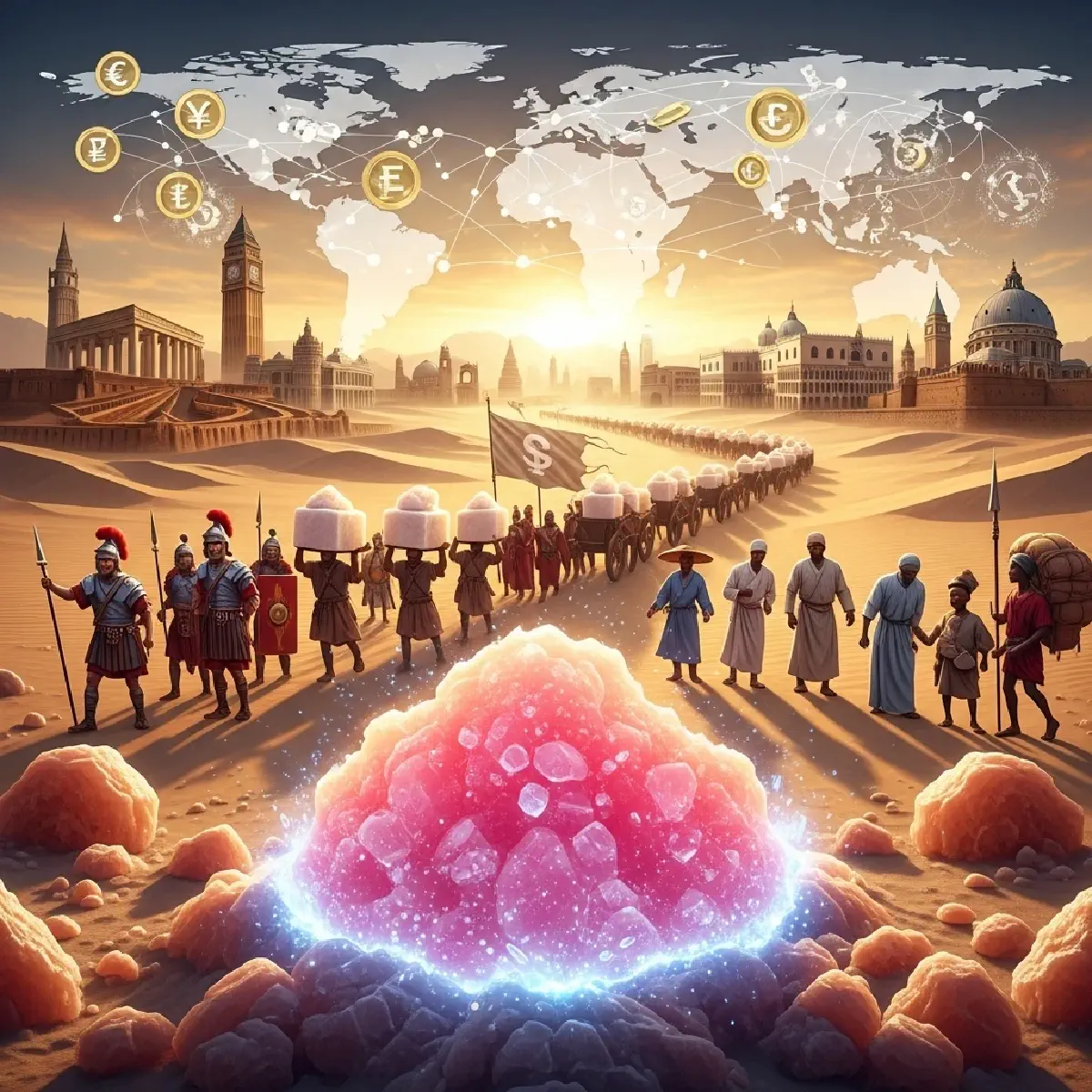
Salt has been a crucial commodity throughout human history, influencing trade routes, economies, and even the rise and fall of empires due to its essential role in food preservation and seasoning.
The control and taxation of salt have led to significant social and political upheavals, such as the Salt March led by Mahatma Gandhi, which was a pivotal event in India’s struggle for independence from British rule.
The production and trade of salt have shaped the development of cities and regions, with places like Venice and the Sahara becoming central hubs due to their strategic locations in salt trade networks.
Salt has had a profound cultural impact, influencing language, religion, and social customs, as seen in phrases like “worth one’s salt” and the use of salt in religious rituals.
The history of salt reflects broader themes in human history, including the dynamics of power, economics, and social justice, illustrating how a simple mineral can have far-reaching effects on civilization.