The Economic Weight of Reliability#
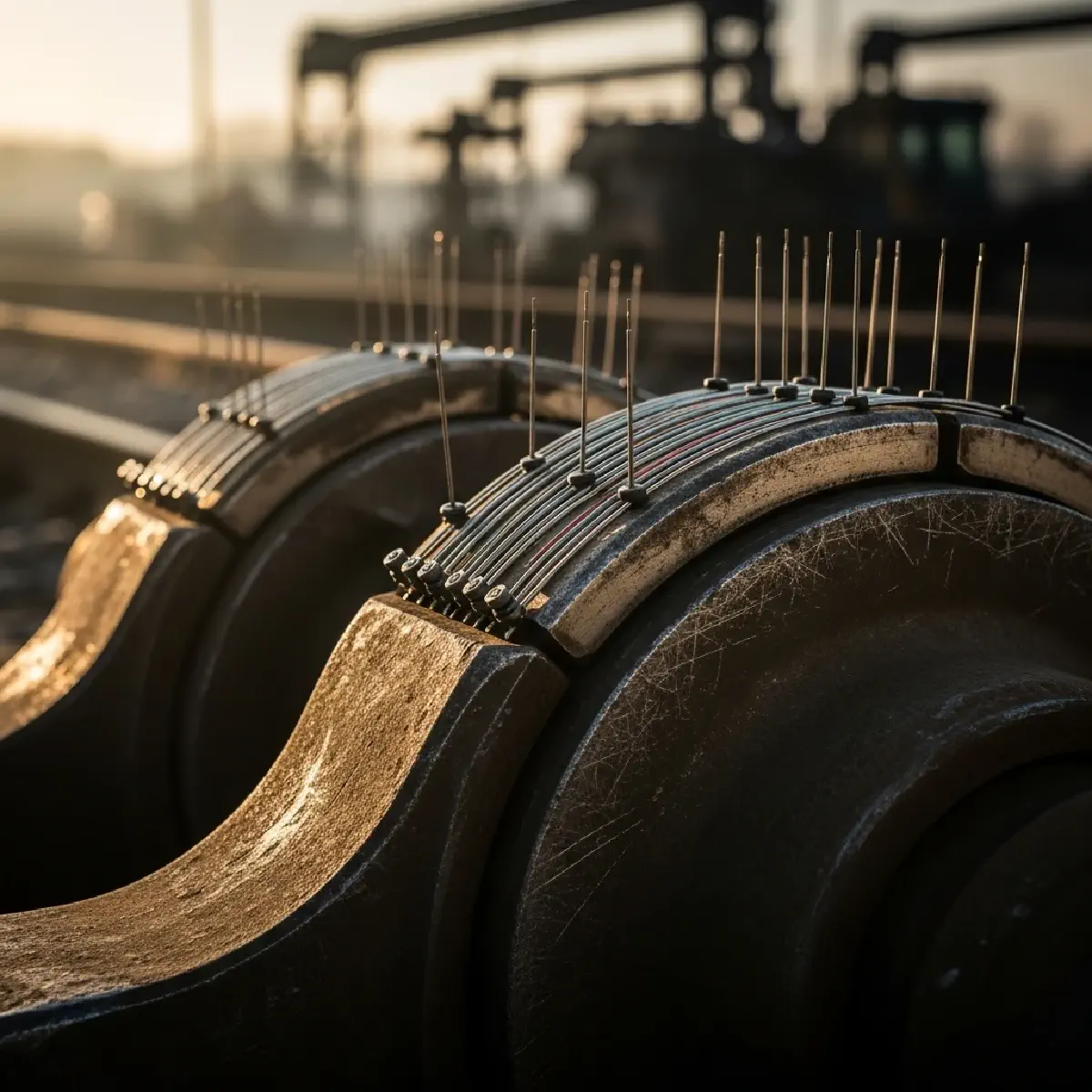
Railway couplings are high-mass steel components tasked with the safe transmission of force for freight trains exceeding 2,154 metric tons (2,374.3 US tons). These connectors are produced through sand casting, a method that allows for complex 3D geometries but introduces inherent stochastic defects. A series of failures in coal transport trains recently led to significant service disruptions and measurable economic losses for thermoelectric utility providers. The cracks consistently originated in the transition radius between the “head” and the “body” of the coupling, a known zone of geometric stress concentration. This repetitive failure mode highlights the tension between industrial casting throughput and the rigorous requirements of structural fatigue design.
The Probabilistic Audit of Structural Fatigue#
Structural durability in railway systems is the product of an interaction between service load spectra, material properties, and manufacturing defects. Because these factors are inherently variable, deterministic design methods often fail to predict real-world service life.
The Foundation of Casting Solidity#
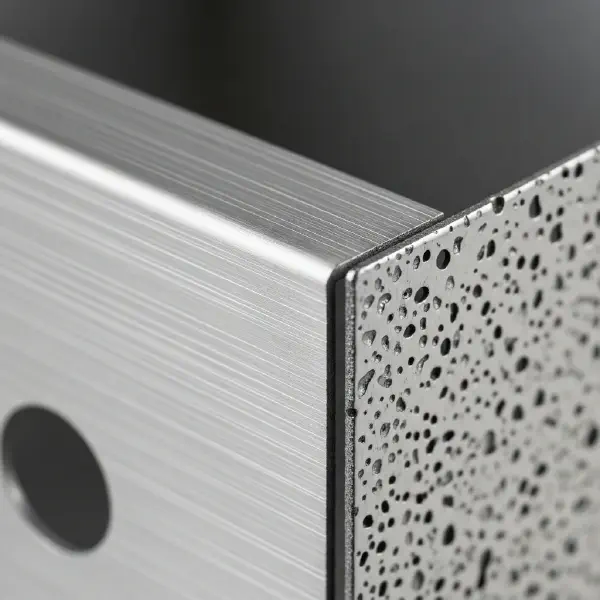
Couplings typically utilize low-alloy manganese steels meeting ASTM A148 90-60 specifications, which prioritize yield strengths near 464 MPa (67.3 ksi). The sand-casting process frequently produces a high density of spherical micro-porosity bands adjacent to the outer surfaces of the part. These pores result from dissolved gases expelled during the cooling phase and are often accompanied by larger shrinkage cavities in the core. Detailed statistical analysis shows that 64% of defects occur internally, while nearly 79% of detectable flaws reside at the surface. These defects limit the fatigue resistance by providing pre-existing sites for crack initiation under cyclic loading. The presence of non-metallic inclusions further diminishes the fatigue limit as defined by the Murakami and Endo model.
The Crucible of Service Loads#
Assessing the risk of failure requires a comprehensive audit of the stresses encountered during operation. Engineers utilize strain gauge rosettes with a 30 Hz acquisition frequency to document the strain state during representative journeys. For a coal train, the track profile from harbor to village presents the most accidental track profile with significant altitude fluctuations. Data processing through “Rainflow” counting organizes these stochastic signals into discrete stress cycles. Results indicate that maximum equivalent stresses remain below the material yield stress, reaching peak levels of 308 MPa (44.7 ksi) in critical zones. However, the stress ratio (R) often resides in the 0.99 to 1.0 range, indicating that the components are subjected almost exclusively to varying tensile loads.
Tracing the Consequences of Life Prediction#
Life prediction methodologies generate widely divergent results based on the chosen statistical reliability level. The Palmgren-Miner rule, modified by the Haibach correction, calculates a cumulative damage sum to estimate structural life in years. For a 95% reliability level, this model predicts a coupling service life of 7 years, while 90% reliability extends the prediction to 13 years. In contrast, the Goodman equation, which accounts for mean stress cycle-by-cycle, yields much more conservative results of less than 2 years. Actual service data from the coal freight lines demonstrated that the Goodman approach more accurately reflected the premature failures documented in maintenance records. This discrepancy proves that many standard industry models are too optimistic when casting health is suboptimal.
The Path to Zero-Growth Failure#
Ensuring the durability of heavy transit systems requires a fundamental shift toward the probabilistic design of high-mass components. The direct relationship between porosity size and reduced fatigue life is unmistakable; larger pores in the surface bands correlate with a precipitous drop in cycles to failure. Manufacturers must maintain a higher level of homogeneity in complex-geometry parts to prevent microscopic voids from merging under dynamic loads. Standardized inspections should rely on derived stress spectra from actual service rather than idealized laboratory constants. Only by reconciling the randomness of the casting process with the rigor of service-load audits can the industry eliminate the disruptions inherent in freight logistics.