The Hidden Defects of Forged Matter#
A transmission axle in a heavy dump truck serves as the critical conduit for high-torque delivery at construction and excavation sites. These components are designed to withstand massive shear loads, yet they remain vulnerable to systemic internal flaws. During a routine dynamometer test, one such axle exhibited excessive vibration followed by a sudden structural breach. The failure occurred well within the design life, suggesting a disconnect between theoretical capacity and the physical reality of the material. The subsequent investigation revealed that the primary cause of failure was not operational overload but a metallurgical legacy from the casting and forging phase.
The Internal Mechanics of Torsional Failure#
High-cycle torsional reliability is dictated by the interaction between service loads and pre-existing metallurgical discontinuities. When these hidden flaws intersect zones of high shear strain, catastrophic fracture becomes highly probable regardless of external surface quality.
The Foundation of Torsional Integrity#
Axles are commonly fabricated from carbon steels such as AISI 1048, specified with enhanced manganese for improved hardness. Heat treatment protocols aim for a surface hardness of 54 to 60 HRC to resist wear and surface crack initiation. In the center of a large-diameter shaft, the hardness may drop significantly, sometimes as low as 10.5 HRC due to the slow cooling rates associated with coarse microstructures. Under torsional loading, shear stress increases linearly from the center toward the outer surface. Finite element analysis (FEA) confirms that the maximum stresses typically occur at geometric fillets between the axle and its mounting flange. If a fracture initiates outside this maximum-stress zone, it serves as a definitive indicator of a pre-existing structural flaw.
The Crucible of Casting Legacies#
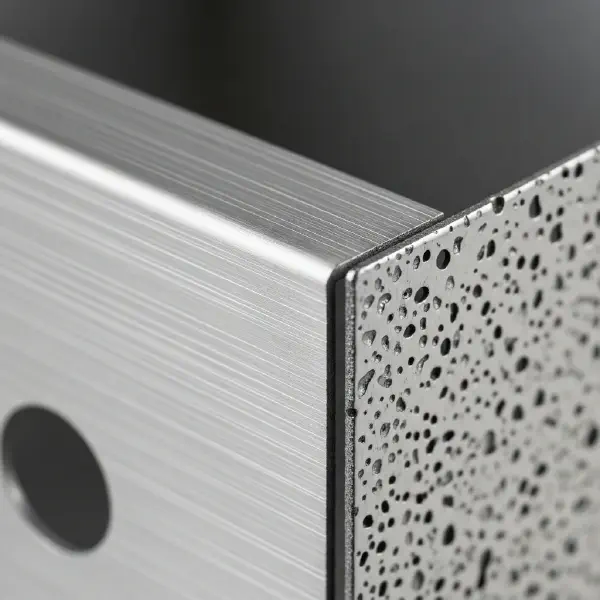
The primary vulnerability in forged heavy axles is the quality of the base ingot. Ingot casting often results in centerline porosity and a banded microstructure containing significant oxide stringers. These stringers represent regions where the metallurgical union is compromised by non-metallic inclusions. During the forging process, complex flow patterns develop that can trap these oxides deep within the shaft geometry. While surface quenching provides a hard martensitic case, it cannot rectify these internal voids. These flaws act as internal stress concentrators that remain invisible to standard visual or magnetic particle inspections. The transition from ingot casting to continuous casting is a critical step in mitigating these systemic risks.
Tracing the Cascade of Instantaneous Rupture#
The failure of the heavy axle manifests as a complex fracture geometry that deviates from simple 45-degree torsional cracking. Macro-etching of failed components reveals internal cracks measuring up to 10 mm (0.39 in) in length intersecting the fracture surface. These cracks are often bridged by secondary micro-cracks that connect different stringers of oxide inclusions. The presence of “Chevron” marks on the fracture surface allows investigators to trace the path back to the initial flaw near the subsurface. Once the primary crack initiates, the final fracture occurs via a “center of twist” phenomenon where the remaining cross-section yields instantaneously. This process is accelerated if the failed part is subjected to improper handling, such as being cut into quarters before a professional analysis can document the initiation site.
The Forensic Imperative for Heavy Transit#
The survival of heavy axles depends on reconciling the forging process with the absolute purity of the base steel. Large shear strains in service inevitably seek out oxide inclusions to initiate propagation, as seen in similar failures of high-speed railway axles. Manufacturers must implement more stringent ultrasonic inspections to detect internal stringers that surface-based nondestructive testing (NDT) bypasses. The engineering community must also recognize that hardness alone does not guarantee structural durability in high-torque applications. Final conclusions regarding axle failure must always balance mechanical stress analysis with detailed metallographic documentation. Only through this integrated audit can the systemic manufacturing defects that compromise road safety be eliminated.