Reflections on Development - Part 5: The Synthesis - Turning Reflections into Collective Action
By Hisham Eltaher
  1. History and Critical Analysis/
  2. Reflections on Development/

Reflections on Development - Part 5: The Synthesis - Turning Reflections into Collective Action

Reflections on Development - This article is part of a series.
Part 5: This Article

Key Takeaways
#

  1. Holistic Vision: You cannot fix the economy without fixing culture; you cannot empower the poor without giving them technology—everything is connected.
  2. For Individuals: Be a conscious consumer—value local products and recognize the “cultural code” in what you buy.
  3. For Professionals: Design for reality—use modern knowledge to upgrade the local reality of farmers and craftsmen.
  4. For Policymakers: Invest in “Know-Why,” not just “Know-How”—build a National System of Innovation focused on local challenges.
  5. The Green Opportunity: Leapfrog dirty industrialization by utilizing renewable biological resources and solar energy.

We have traveled a long road in this series. We started by rethinking the very definition of development (Part 1), challenged the way we measure economic success (Part 2), recognized the untapped potential of the poor (Part 3), and acknowledged the vital role of our cultural code (Part 4).

But as Dr. Hamed El-Mously reminds us, “Reflections” are useless if they remain trapped in a book. The ultimate goal is Synthesis—bringing these disparate ideas together to fuel a movement of change.

The Big Picture: A Holistic Vision
#

The tragedy of modern development is that it is often fragmented. Economists look at charts, sociologists look at people, and engineers look at machines. El-Mously’s vision requires us to see the whole picture.

You cannot fix the economy without fixing the culture of consumption. You cannot empower the poor without giving them the technology to process their local resources. Everything is connected.

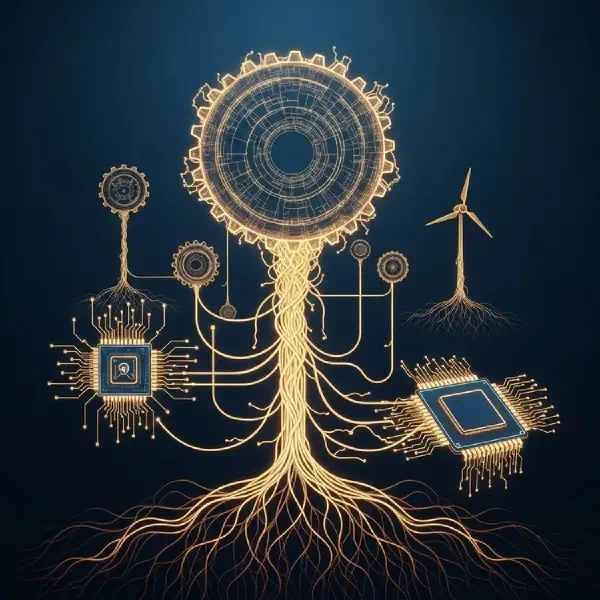
The Synthesis: True development happens when Culture, Technology, and Society move in the same direction. It is when our factories use local materials, our schools teach local problem-solving, and our laws respect local traditions.

From Theory to Practice: What Can We Do?
#

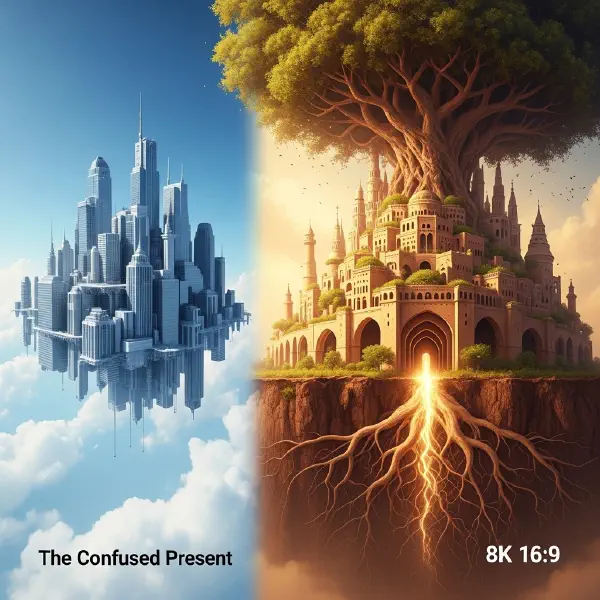
So, how do we stop “confusing the present” and start building the future? Here is an action plan derived from the book’s core message:

1. For the Individual: Be a Conscious Consumer
#

Stop measuring your worth by how many Western goods you own. Start valuing local products—not just out of charity, but out of pride. Recognize the “cultural code” in what you buy. Ask yourself: Does this product support my community’s growth, or does it deepen our dependency?

2. For the Engineer & Professional: Design for Reality
#

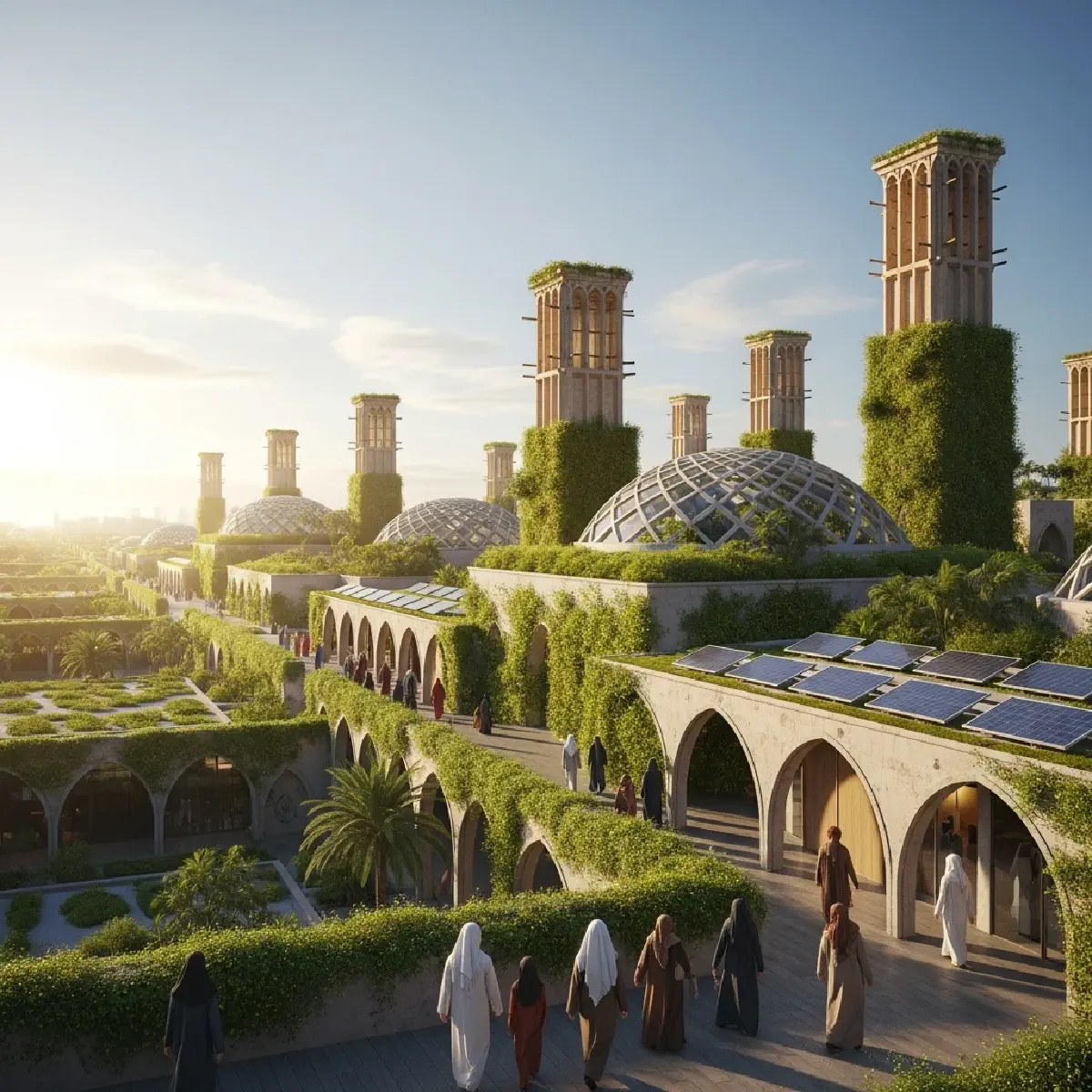
If you are an engineer, architect, or designer, stop designing for a fantasy world. Go to the countryside. Look at the “waste” that farmers burn. Look at the houses the poor build for themselves. Use your modern knowledge to upgrade their reality. Design a machine that processes date palm leaves. Design a home that stays cool without AC. Innovate for the poor.

3. For the Policymaker: Invest in “Know-Why,” Not Just “Know-How”
#

Stop buying “black boxes” from abroad. When we import technology, we must demand the knowledge behind it. Invest in Research & Development (R&D) that focuses on our specific challenges—water scarcity, desertification, and rural unemployment. The goal is to build a National System of Innovation.

The “Green” Opportunity
#

The most exciting takeaway from this series is the Green Industrial Revolution. We have a golden opportunity to leapfrog the dirty, heavy industrial phase of the West. By utilizing our renewable biological resources (biomass) and solar energy, we can build a decentralized, clean economy that revitalizes our villages and protects our environment.

Final Thought: Owning Our Future
#

Reflections on Development is ultimately a message of hope. It tells us that we are not poor; we are just looking in the wrong direction. We have the history, the culture, the people, and the resources to build a magnificent future.

The path is not easy. It requires us to unlearn the “blind imitation” of the past century. But the reward is a society that is not just a shadow of the West, but a shining example of its own authentic, sustainable, and human-centered civilization.

We are not poor; we are just looking in the wrong direction. We have the history, the culture, the people, and the resources to build a magnificent future.


End of Series.

Thank you for joining us on this journey through Dr. Hamed El-Mously’s thought-provoking work. We hope this series has sparked your own reflections on what development truly means for you and your community.


This series is based on Dr. Hamed El-Mously’s book “Reflections on Development” (Ta’ammulāt fī at-Tanmiyah), available at the Hindawi Foundation.


Reflections on Development - This article is part of a series.
Part 5: This Article

Related

Reflections on Development - Part 4: The Cultural Context - Institutions, Values, and Sustainable Change

Key Takeaways # The Cultural Code: Just as DNA dictates biological growth, culture dictates how a society functions—imported solutions often carry incompatible “codes.” Tradition as Resource: Traditional knowledge is a reservoir of wisdom that has survived centuries because it works. Weaving, Not Assembling: Development should intertwine new threads with old ones to create continuous fabric, not replace the old carpet with plastic. Institutional Harmony: Institutions must reflect community values like solidarity, resourcefulness, and respect for nature. The Dual Society Problem: Modern institutions often disconnect from informal street-level reality, creating dysfunction. We have built the philosophy, the economic engine, and the human workforce. But why do so many development projects in the Arab world still fail? Why do “modern” systems often collapse or become corrupt when applied to our reality? In this fourth step, Dr. Hamed El-Mously points to the missing link: The Cultural Context. He argues that you cannot simply “copy-paste” a Western institution (like a specific management style or a legal framework) into a developing society and expect it to work.

Reflections on Development - Part 3: The Human Element - Investing in the 'Creativity of the Poor'

Key Takeaways # The Poor as Solution: Marginalized communities display incredible ingenuity to survive—they are not a burden but an untapped resource. Innovation for the Poor: True human development means empowering natural creativity, not giving handouts. Education Disconnect: Current education often prepares students for jobs that don’t exist while devaluing practical, hands-on work. Contextual Education: Teaching should focus on local technology, local resources, and solving local problems. Bridging the Divide: We need engineers and scientists who work alongside craftsmen and farmers, merging modern science with traditional wisdom. We have looked at the philosophy and the economy. Now, we arrive at the most critical asset any nation possesses: Its People. In many conventional development models, the poor are often viewed as a “burden”—a statistic that needs to be managed, fed, or subsidized. Dr. Hamed El-Mously radically challenges this view in Reflections on Development. He argues that the poor are not the problem; they are the solution.

Reflections on Development - Part 2: Beyond GDP - Measuring Material Progress and Well-being

Key Takeaways # The Consumption Trap: A nation might appear “developed” because its citizens use modern technology, but if it can’t produce these tools, it’s merely a wealthy consumer. Technology Transfer Illusion: Buying a factory without the underlying knowledge makes it just a “metal box” we don’t truly own. Green Industrial Revolution: Shift from heavy, imported industry toward renewable local resources. Rural Industrialization: Build small-scale, high-tech industries in rural areas processing local materials. From Scarcity to Abundance: Stop feeling “poor” for lacking Western machinery; recognize the untapped richness in local resources. In our previous post, we discussed the need to redefine what “development” means philosophically. Now, we move to the hard numbers: The Economy. When we talk about a country’s success, we almost always point to the Gross Domestic Product (GDP). If the number goes up, we celebrate. But Dr. Hamed El-Mously argues that for developing nations, this metric can be a dangerous mask. It often hides a reality of deep dependency rather than true strength.

Reflections on Development - Part 1: What 'Development' Truly Means

Key Takeaways # The “Confused Present”: Many developing societies are racing toward the future without a clear destination, trapped in consumption rather than production. Technology Transfer Illusion: Buying a factory doesn’t mean acquiring technology—technology is the knowledge and capability to design, build, and adapt. Cultural Code: Development cannot be air-dropped onto a society; it must be compatible with its values, history, and social fabric. Endogenous Development: Growth that comes from within, valuing traditional knowledge and local resources. Core Question Shift: Move from “How can we buy what they have?” to “How can we solve our problems using what we have?” In a world obsessed with GDP figures, skyscrapers, and the latest tech trends, it is easy to mistake “modernization” for “development.” We often look at developed nations and think the path forward is simply to copy their output—to buy their machines, adopt their lifestyle, and import their systems.