In 1955, a 42-year-old seamstress named Rosa Parks refused to give up her bus seat to a white passenger in Montgomery, Alabama. Her arrest sparked a 381-day boycott that helped catalyze the civil rights movement. What’s less known: Parks wasn’t a random tired woman making a spontaneous choice. She was an NAACP organizer who had trained at the Highlander Folk School in nonviolent resistance. The Montgomery bus boycott was a calculated strategy, planned by organizers who understood systems of power and how to pressure them.
The boycott worked not through moral persuasion but through economic leverage. Black residents comprised 75% of Montgomery’s bus ridership. Their absence cost the transit company $3,000 per day—$33,000 in today’s currency. The city lost revenue. White businesses near bus lines lost customers. After more than a year of financial pressure, combined with a Supreme Court ruling, the buses desegregated.
This is the paradox at the heart of effective resistance: To challenge systems that operate through power calculations, you must yourself engage in power calculations. You must understand the mechanisms to disrupt them. Moral clarity without strategic effectiveness is simply martyrdom. And martyrdom, while noble, rarely changes systems.
The Topology of Leverage#
If large entities optimize through three mechanisms—coercion, exchange, and deception—then resistance must target these mechanisms. You cannot appeal to the predator’s better nature because entities don’t have better natures. They have incentive structures. The question isn’t “How do we make them care?” It’s “How do we change the calculation so that predation costs more than it yields?”
Disrupting Coercion: Building Collective Power
Individual weakness is structural. One worker negotiating with a corporation has no leverage. Ten thousand workers organized into a union can shut down production. The 1936-37 Flint Sit-Down Strike saw autoworkers occupy General Motors plants for 44 days. GM couldn’t manufacture vehicles. The strike cost the company $175 million—roughly $4 billion today. GM capitulated, recognizing the United Auto Workers union.
This is mechanism one (coercion) being constructed from below rather than imposed from above. Power asymmetry doesn’t disappear—it shifts. The weak become strong enough to impose costs that change the calculation. Collective action is the only path from individual vulnerability to structural leverage.
But building collective power requires solving coordination problems. The game theory is brutal: If most workers strike but some don’t, the strikers lose jobs while the scabs keep theirs. Successful organization requires trust, communication infrastructure, and willingness to absorb costs for uncertain future gains. These are solvable problems—unions exist, as do cooperatives, mutual aid networks, and protest movements—but solving them requires sustained effort.
Disrupting Exchange: Leveraging Interdependence
When power balances, exchange occurs. But exchange creates dependence. The corporation needs customers. The state needs tax revenue and legitimacy. These dependencies create pressure points. Consumer boycotts, capital strikes, tax resistance, withdrawal of consent—these exploit the reality that even hierarchical systems require participation from below.
The Montgomery bus boycott worked because the system depended on Black riders’ fares. The United Farm Workers’ grape boycott in the 1960s succeeded because it targeted the supply chain—convincing retailers not to stock non-union grapes, creating pressure that forced growers to negotiate. The boycott took five years and required coordinating thousands of activists, but it worked because it disrupted the exchange relationship growers depended on.
These tactics don’t work through persuasion. They work through pain. When the cost of maintaining the status quo exceeds the cost of concession, rational entities concede. This is the predator’s calculus applied against itself.
Disrupting Deception: Weaponizing Transparency
Mechanism three—deception—depends on information asymmetry. The predator knows something the prey doesn’t. Breaking this asymmetry disrupts the mechanism. Investigative journalism exposing corporate malfeasance. Whistleblowers revealing government surveillance programs. Leaked documents demonstrating systematic fraud. These don’t work through persuasion—they work by changing what the public knows, which changes political costs.
When Edward Snowden leaked NSA surveillance documents in 2013, he didn’t persuade the government that mass surveillance was wrong. He made it politically impossible to deny. The revelation forced policy changes not because officials developed consciences but because public knowledge created accountability pressure. Tech companies, facing user backlash, implemented encryption. Courts ruled certain programs unconstitutional. The game theory shifted when asymmetric information became symmetric.
But transparency has costs. Snowden lives in exile. Chelsea Manning served seven years in prison. Julian Assange spent seven years in an embassy and five years in British custody. Exposing deception often requires personal sacrifice. The system defends itself by making examples of those who breach information asymmetries.
The Marathon Metabolism#
The deeper challenge isn’t tactical—it’s temporal. Power structures operate on institutional timescales. Corporations plan in quarters and years. States think in electoral cycles and decades. Resistance must sustain itself against entities with greater resources, longer time horizons, and superior coordination infrastructure.
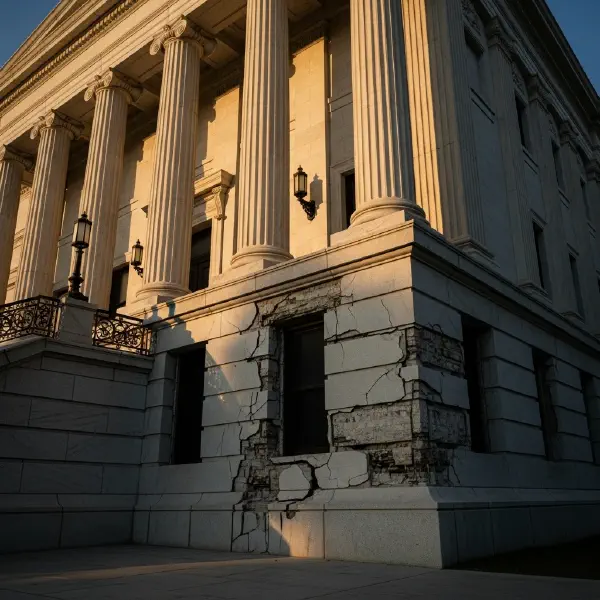
This is why water on granite is the right metaphor. Each drop seems futile. The stone is hard. The process is generational. But persistence changes structure. The civil rights movement didn’t succeed with the Montgomery bus boycott—that was one victory in a century-long struggle that included Reconstruction, the founding of the NAACP, Brown v. Board of Education, countless local organizing efforts, the Freedom Rides, the march on Washington, and legislative victories that were themselves only partial. Rosa Parks’s refusal was one drop. The granite eventually cracked.
But here’s the cruelty: Individual participants rarely see the crack. Most activists labor in obscurity. Most efforts fail. Most drops evaporate before the next falls. The organizers who laid groundwork for civil rights victories in the 1960s often worked in the 1920s and 1930s without witnessing success. They died before the granite broke.
This is the existential challenge of resistance against systemic power. You can’t guarantee victory. You often can’t even measure progress. The feedback loops are too long, the counterfactuals too unclear. Did your effort matter? Was the sacrifice worthwhile? You frequently can’t know.
The Choice That Isn’t a Calculation#
Which brings us to the fundamental paradox: If entities optimize through power calculations, and successful resistance requires engaging those calculations strategically, then resistance itself becomes another form of optimization. You’re playing the same game, just from a different position. The predator’s calculus colonizes resistance.
Except it doesn’t, quite. Because at some point, individuals make a choice that doesn’t follow from the calculation. They fight not because victory is probable but because surrender is intolerable. They resist not because the cost-benefit analysis favors it but because living in complicity with injustice feels like dying slowly.
Rosa Parks didn’t act because she calculated the boycott would succeed. She acted because continuing to accept segregation was unbearable. The civil rights organizers didn’t sustain decades of effort because they predicted specific victories. They sustained it because the alternative—accepting white supremacy—wasn’t psychologically survivable. The resistance wasn’t optimized. It was necessary.
This is where individual moral agency reasserts itself against entity logic. Yes, corporations and states operate through power calculations. Yes, institutions serve the interests of those who design them. Yes, the game is rigged. But individuals still choose whether to play, to challenge them strategically, or to opt out entirely. That choice isn’t determined by the structure, even though it’s constrained by it.
The person working inside a predatory corporation can blow the whistle, even knowing the personal cost. The citizen can refuse complicity, even when resistance seems futile. The activist can organize for decades without seeing victory, sustained not by expected returns but by the conviction that some things are worth fighting for regardless of outcome.
This isn’t naive idealism. It’s a different optimization function—one that values integrity and dignity as highly as material outcomes. It’s the refusal to let the predator’s logic become the only logic. It’s the insistence that human beings are more than rational maximizers, even when the systems we inhabit treat us as nothing but.
The Erosion Continues#
The granite is still here. The predators still calculate. Corporations still prioritize profit over people. States still serve power over justice. The mechanisms continue operating. Coercion, exchange, and deception remain the fundamental tools of entity behavior.
But erosion continues too. Labor movements won the 40-hour workweek and overtime pay. Environmental regulations, however imperfect, limit some forms of pollution. Civil rights legislation, however inadequate, prohibited some forms of discrimination. These victories didn’t come from appealing to conscience—they came from sustained pressure that changed calculations. The predators conceded because resistance made predation more costly than concession.
The victories are partial. The system adapts. Capital offshores production to jurisdictions with weaker labor laws. Corporations capture regulatory agencies. States find new mechanisms of control. The game continues. But the terrain shifts. Each drop, each effort, each generation of resistance changes the landscape incrementally.
You don’t choose to be born into a rigged game. But you do choose whether to play by the predator’s rules, to challenge them strategically, or to opt out entirely. The last option—pure withdrawal—is sometimes necessary for survival. But it doesn’t change the game for those who can’t withdraw. The first option—accepting the rules—guarantees the game continues unchanged. The second option—strategic resistance—is neither guaranteed to succeed nor free from moral compromise.
But it’s the only option that offers the possibility of cracking granite.
The Erosion Continues#
The water falls. The stone endures. The process continues. Not because victory is certain, but because surrender is unacceptable. Not because the calculus favors resistance, but because human dignity requires it. The predator’s logic is real. The choice to resist anyway is equally real. That choice—sustained across generations, coordinated through collective action, willing to absorb costs without guaranteed returns—is how systems change.
Slowly. Painfully. Incrementally. But really.