The Pound Sterling Trap: Egypt’s Lost Half-Century
Key Insights Across the Series#
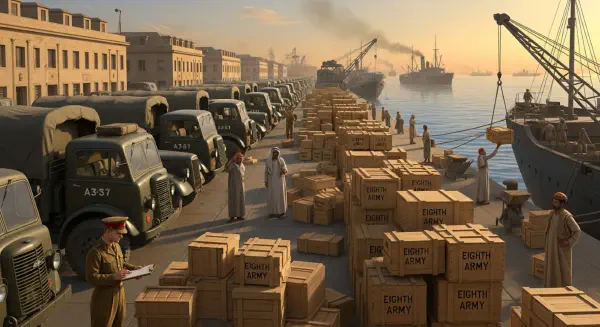
- The sterling balances accumulated by Egypt during WWII represented a genuine creditor position that was systematically converted into a liability through British financial regulations and post-war agreements.
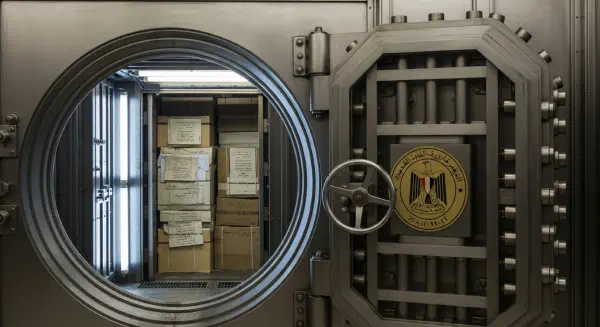
- The freezing mechanism—blocked accounts, restricted convertibility, set-off claims—created a legal architecture that allowed Britain to use Egyptian reserves for its own reconstruction while denying Egypt access to its own capital.
- The counterfactual model demonstrates that Egypt lost approximately £2.1 billion in forgone growth (in 1970 terms; calculated as the £2.24 billion counterfactual terminal value under 7% compound growth, minus £126 million in real receipts) due to the 25-year delay in accessing its capital, with effects that constrained Egyptian industrialization for decades. Under the lower 4.8% growth assumption, the loss was approximately £1.2 billion.
- The sterling area operated as an extraction mechanism that outlasted formal colonialism, enabling Britain to transfer wealth from newly independent countries through monetary rules designed in London.
- The case of Egypt parallels other sterling-area countries (India, Ghana, Nigeria) and offers enduring lessons about the power asymmetries embedded in monetary unions and reserve currency systems.
References#
Tignor, R. L. (1984). State, Private Enterprise, and Economic Change in Egypt, 1918–1952. Princeton University Press.
Yousef, T. M. (2004). Egypt’s Growth Performance Under Economic Liberalism. In J. H. Nugent & M. H. Pesaran (Eds.), Explaining Growth in the Middle East. Elsevier.
Owen, R. (2004). State, Power and Politics in the Making of the Modern Middle East. Routledge.
Cain, P. J., & Hopkins, A. G. (2002). British Imperialism: 1688–2000. Longman.
Schenk, C. R. (2010). The Decline of Sterling: Managing the Retreat of an International Currency, 1945–1992. Cambridge University Press.
Vitalis, R. (1995). When Capitalists Collide: Business Conflict and the End of Empire in Egypt. University of California Press.
Bank of England. (1943–1959). Sterling Balances Files: Egypt. Bank of England Archives.
International Monetary Fund. (1950–1970). Annual Reports on Exchange Restrictions. IMF.
World Bank. (1960). The Economic Development of Egypt. International Bank for Reconstruction and Development.