Oscillation Dynamics Late Colonialism Estado Novo
How a crumbling European dictatorship tried to modernise its empire with development plans, white settlers, and propaganda – only to trigger the wars that would bring it all down.
Prologue: The General’s Last Speech#
On the evening of April 24, 1974, General António de Spínola – Portugal’s most decorated soldier – sat in his Lisbon apartment, staring at a map of Africa. For thirteen years, he had commanded troops in Guinea‑Bissau, watching young Portuguese conscripts die in mangrove swamps against guerrilla fighters they could never catch.
He had just finished writing a book called Portugal and the Future. In it, he argued what the regime had forbidden anyone to say: the colonial wars cannot be won.
That night, he gave a television interview. His voice was calm, his uniform impeccable. He said: > “We have insisted that the overseas provinces are an indivisible part of Portugal. But a province that requires 200,000 soldiers to hold – that is not a province. That is a prison.”
Twelve hours later, army captains toppled the dictatorship. The prisoners became free. The empire became ash.
This is the story of how the Portuguese colonial machine – after five centuries – finally seized up, lurched forward one last time, and snapped.
🏛️ Part I: The Estado Novo – Dictatorship by Ledger#
Salazar: The Accountant Who Ran an Empire#
In 1928, a shy economics professor from the University of Coimbra named António de Oliveira Salazar became Portugal’s finance minister. Two years later, he was prime minister – a post he would hold for 36 years.
Salazar was a clerical ascetic who lived in a modest house, wore a black suit, and balanced the state budget the way a widow balances a household account. He despised debt, hated waste, and believed that Portugal’s greatness lay not in military glory but in fiscal discipline.
His colonial philosophy was simple: extract more than you spend. For decades, it worked. Between 1930 and 1950, Portugal extracted an estimated $500 million (in 2024 dollars) more from Angola and Mozambique than it invested. The colonies were cash machines.
graph LR
    A[Colonial extraction] --> B[Lisbon treasury]
    B --> C[Infrastructure in Portugal]
    C --> D[Social stability at home]
    D --> E[Regime longevity]
    E --> A
But by 1960, the machine was grinding. The rest of Africa was decolonising – Ghana (1957), Congo (1960), Tanzania (1961). Salazar’s response was not to retreat but to double down.
🔄 Part II: The Oscillation Trap – Reform and Repression#
A Dictatorship Tries to Modernise#
The 1950s and 1960s saw a strange dance. Salazar – a man who wore frock coats in an era of rock and roll – launched a series of development plans (Planos de Fomento) that poured money into the colonies:
- 1953–1958: First Plan – roads, ports, railways in Angola and Mozambique.
- 1959–1964: Second Plan – hydroelectric dams (Cabora Bassa in Mozambique), irrigation schemes, new settler towns.
- 1965–1969: Third Plan – heavy industry, oil refineries, and a massive expansion of primary schools (for white children).
Between 1950 and 1970, Portugal invested $4 billion (adjusted) in its African colonies – more than in the previous 400 years combined.
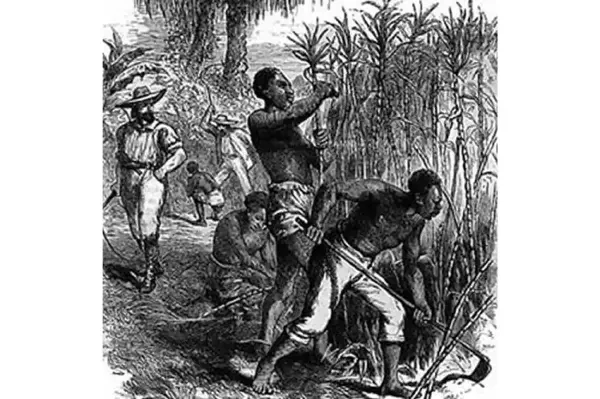
But – and this is crucial – the investments were designed to benefit Portuguese settlers and metropolitan companies, not Africans. The Cabora Bassa dam, for example, displaced 20,000 African families with no compensation. The new schools were 90% white. The “modern” cotton schemes still relied on forced labour.
1951
Colonies officially renamed “Overseas Provinces” – a legal fiction to defy UN decolonisation demands.1955–1965
Portuguese white settlers in Angola increase from 80,000 to 250,000; in Mozambique from 50,000 to 120,000.1961
Portugal forced to abolish *Indigenato* (legal racial discrimination) under international pressure – but forced labour continues in practice via tax and contract laws.1961–1974
Colonial wars absorb 40–50% of the national budget every year, bankrupting the state.
This oscillation – reform without justice, development without rights – created a destabilising feedback loop:
graph TD
    A[International pressure] --> B[Cosmetic reforms]
    B --> C[Reforms fail to address core extraction]
    C --> D[African resistance grows]
    D --> E[More repression]
    E --> F[More international pressure]
    F --> A
The more Portugal tried to “modernise” its empire, the more it exposed the empire’s fundamental contradiction – and the more Africans demanded its end.
🌍 Part III: The Wars of Liberation – Four Theatres, One Logic#
How the Empire Began to Bleed#
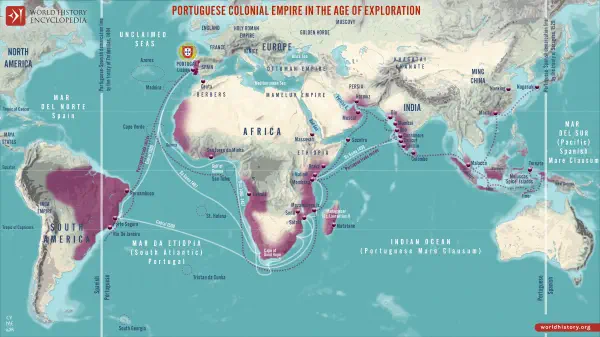
By 1961, armed resistance had erupted in three of Portugal’s five African colonies. Only Cape Verde and São Tomé remained quiet (and they would not for long).
1. Angola (1961–1974) Three rival independence movements (MPLA, FNLA, UNITA) fought each other and the Portuguese. The war began with a cotton workers’ revolt in the north; Portugal responded with the Baixa de Cassanje massacre (estimated 4,000‑7,000 dead) and a scorched‑earth campaign. By 1974, 30,000 Portuguese soldiers were tied down in Angola – and still losing ground.
2. Guinea‑Bissau (1963–1974) This small, swampy territory became Portugal’s Vietnam. The PAIGC, led by the brilliant Amílcar Cabral, controlled 80% of the countryside by 1970. Portuguese troops were confined to a few fortified towns. The cost in Portuguese lives: 2,000 dead – modest by Vietnam standards, but catastrophic for a country of 9 million.
3. Mozambique (1964–1974) FRELIMO, under Eduardo Mondlane (assassinated 1969) and later Samora Machel, used Tanzania as a rear base. They avoided set‑piece battles, instead hitting infrastructure – railway lines, power pylons, factories. The Cabora Bassa dam, the showcase of Portuguese development, became a guerrilla target. By 1973, Portugal was spending $300 million per year just to hold Mozambique.
The arithmetic of defeat: In 1973, Portugal was spending 47% of its national budget on its colonial wars – more than on health, education, and social security combined. Its army had 220,000 men in Africa, nearly all conscripts. Its casualty rate was 15 dead per week. And still the guerrillas grew stronger.
👤 Part IV: The Human Mechanism – A Conscript’s War#
António’s War (Composite Account)#
António was 19 years old in 1969, a bricklayer’s son from a village near Bragança in northern Portugal. He had never been more than 50 kilometres from home. Then the draft notice arrived.
He trained for four months, was handed an old German‑made G3 rifle, and flown to northern Mozambique. His first day in the bush, his sergeant pointed to a treeline and said: > “Everyone beyond that line is the enemy. If it moves, shoot it.”
For eighteen months, António walked patrols through 45‑degree heat, slept in trenches, and lost two friends to landmines. He never saw a FRELIMO fighter – only empty villages, sabotaged bridges, and the occasional sniper round that seemed to come from nowhere.
He wrote letters home: “They tell us we are fighting for Portugal. But every African I meet looks at my rifle, not my passport. What kind of Portugal is that?”
In 1971, António stepped on a landmine. He lost his right leg below the knee. A German NGO eventually fitted a prosthesis. He never returned to Africa. In 2017, he told a journalist: “I am not bitter. I am tired. We were lied to – lied that we were defending a country that did not exist.”
António’s story was repeated 180,000 times. Some soldiers came back whole; most came back broken. All came back knowing that the empire they had bled for was a fiction.
📉 Part V: The Collapse – Why the Machine Could Not Adapt#
Three Fatal Flaws#
Despite its development plans, white settlements, and massive military spending, the Portuguese colonial machine failed for three structural reasons:
1. Demographic exhaustion Portugal had only 9 million people. To field a 220,000‑man army in Africa, it had to conscript nearly every able‑bodied male. By 1973, the average Portuguese family had at least one member serving overseas. The social fabric began to tear.
2. Economic strangulation The wars cost $5 billion (in 2024 dollars) between 1961 and 1974. To pay for them, Salazar’s successors printed money – causing inflation to hit 30% by 1974. Real wages fell by 20%. Labour strikes, banned for decades, began erupting in Lisbon’s factories.
3. Military erosion By 1970, Portuguese army morale had collapsed. Conscripts mutinied, deserted, or simply refused to fight. Officers began forming secret networks – the Movimento das Forças Armadas (MFA) – to plan a coup. The war was no longer winnable; the only question was how to stop it without losing face.
🎖️ Epilogue: The Captains’ Revolution#
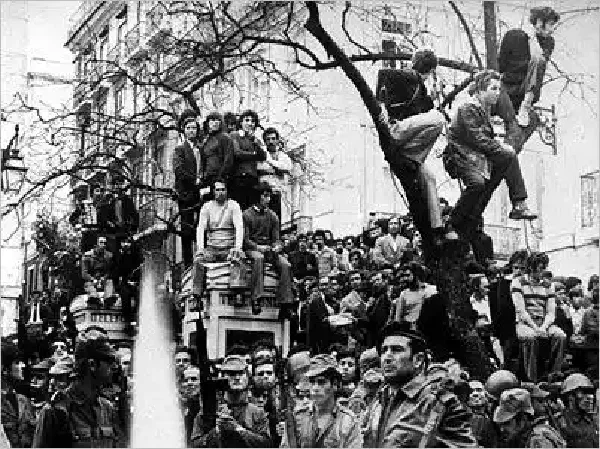
On April 25, 1974, a group of mid‑level army captains – not generals, captains – seized control of Lisbon. They called it the Revolução dos Cravos (Carnation Revolution). Soldiers placed red carnations in their rifle barrels. Crowds poured into the streets, chanting: “O povo unido jamais será vencido!”
The first act of the new government was to order a ceasefire in Africa. The second was to announce that all colonies would be granted independence.
Within a year, Guinea‑Bissau, Mozambique, Cape Verde, São Tomé and Príncipe, and Angola were free. The empire that had taken 500 years to build dissolved in 12 months.
But the collapse was not neat. In Angola, three rival liberation movements turned their guns on each other, triggering a civil war that would kill 500,000 people and last 27 years. In Mozambique, a rebel movement backed by apartheid South Africa and Rhodesia fought the new FRELIMO government, dragging the country into another decade of ruin.
And in Portugal? Hundreds of thousands of retornados – “the returned ones” – poured out of Africa, adding 500,000 people to a country of 9 million. They were traumatised, penniless, and angry. Some reintegrated. Others built a far‑right movement that still haunts Portuguese politics.
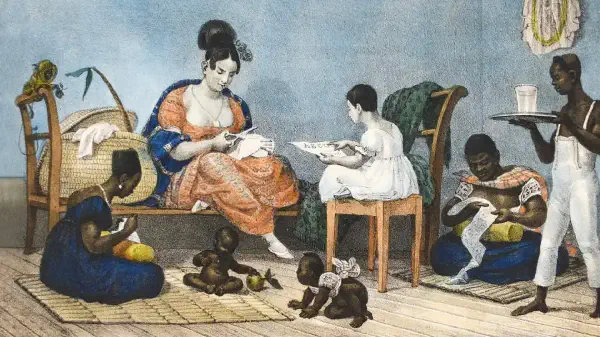
The machine had failed. But its legacy – the forced labour, the racial hierarchy, the distorted economies – did not vanish with the colonial flag. It merely changed shape.
In the next article, we will examine the catastrophic aftermath: the civil wars, the refugees, and the lingering question of how to bury an empire that refuses to die.
Continue to Article 5: The Revolution That Swallowed Its Children →
Sources & Further Reading:
- Cann, John P. Counterinsurgency in Africa: The Portuguese Way of War, 1961‑1974 (1997).
- Chabal, Patrick, et al. The Post‑Colonial Literature of Lusophone Africa (1996).
- Meneses, Maria Paula. “O ‘Portugal Não É um País Pequeno’” (2014) – on colonial propaganda.
- Maxwell, Kenneth. The Making of Portuguese Democracy (1995).
Article 4 of 6. Next: The Carnation Revolution and the human catastrophe of decolonisation.