Ideology as Efficiency Asymmetric Information Lusotropicalism
How a Brazilian sociologist’s academic theory became the most effective propaganda weapon in colonial history – and why millions still believe that Portugal was different.
Prologue: The Photograph That Lied#
In 1954, the Portuguese colonial office distributed a glossy pamphlet titled Portugal in the World. On page 12, a photograph showed a sunlit plaza in Luanda, Angola. A white Portuguese family sat on a wrought‑iron bench. Beside them, a Black Angolan woman in a nurse’s uniform held a white child. The caption read: “Harmony beyond race – the Portuguese way.”
What the photograph did not show: the same woman’s husband, forced to labour on a cotton plantation 300 kilometres away under threat of imprisonment. What it did not mention: the law that prohibited her from attending the same school as the white child. What it carefully concealed: a colonial system that, while less overtly segregationist than apartheid South Africa, was nonetheless built on racial hierarchy and forced labour.
The photograph was not a lie of commission. It was a lie of omission – and it was powered by an ideology so persuasive that even some of the colonised came to believe it.
That ideology had a name: Lusotropicalism.
🧠 Part I: The Inventor – Gilberto Freyre’s Dangerous Idea#
A Sociologist, a Mansion, and a Myth#
In 1933, a shy, bespectacled Brazilian scholar named Gilberto Freyre published Casa‑Grande & Senzala (The Masters and the Slaves). It was a brilliant, nuanced study of Brazilian society – but it contained a seed that would grow into a weapon.
Freyre argued that Portuguese colonisers were uniquely prone to miscegenation (racial mixing) because of their long history of contact with Moors and Jews. Unlike the English or Dutch, who built racial walls, the Portuguese built beds. The result, Freyre wrote, was a “racial democracy” – a society where colour mattered less than culture.
By the 1950s, Portugal’s dictator António de Oliveira Salazar had seized on Freyre’s idea. He invited the scholar to Lisbon, showered him with honours, and commissioned him to write a new book: O Luso e o Trópico (1961). In it, Freyre obliged, declaring that Portuguese colonialism was “the most efficient, most humane, and most Christian form of expansion in modern history.”
The irony: Freyre was never a simple propagandist. In private letters, he expressed horror at how Salazar twisted his work. But his ideas – stripped of nuance – became the ideological engine of late Portuguese colonialism.
🎭 Part II: The Mechanism – How Lusotropicalism Worked#
Four Levers of Ideological Control#
Lusotropicalism was not just a feel‑good story. It was a machine with four interlocking mechanisms:
graph TD
    A[Myth of racial harmony] --> B[Justifies colonial presence]
    B --> C[Undermines anti-colonial solidarity]
    C --> D[Extraction continues]
    D --> A
Let us examine each lever:
1. The Assimilation Mirage Portuguese law created a category called assimilado – an African who could “rise” to Portuguese citizenship by proving literacy, property ownership, and “good character.” In 1960, out of 7 million Africans in Angola and Mozambique, only 30,000 (0.4%) had achieved this status. Yet the promise of assimilation – the idea that any African could become “almost Portuguese” – deflected criticism. The mechanism was tokenism as pacifier.
2. The Sexual Myth Colonial propaganda celebrated Portuguese men marrying or cohabiting with African women. Real interracial unions occurred – often coercive, sometimes affectionate. But the image of the brown‑skinned mestiço family was used to contrast Portugal with the racial purity of apartheid South Africa or the violence of Belgian Congo. The mechanism was comparative virtue signalling.
3. The Linguistic Trap Portugal insisted that its colonies were not colonies but “overseas provinces.” The idea was that Cape Verde or Goa were as integral to Portugal as Algarve or Madeira. This legal fiction, written into the 1951 Overseas Organic Law, made anti‑colonialism technically treason – because seeking independence from a “province” was seeking to tear Portugal apart. The mechanism was juridical camouflage.
4. The Co‑opted Elite A small number of assimilados were given low‑level administrative jobs, teaching posts, or military commissions. They received better housing, whiter neighbourhoods, and a fragile immunity from forced labour. In exchange, they policed their own communities – reporting dissidents, discouraging revolt, and modelling “success” within the system. The mechanism was divide and privilege.
📜 Part III: The Reality – Race and Forced Labour in Portuguese Africa#
What the Pamphlets Did Not Show#
Behind the mask of Lusotropical harmony, a different reality persisted. Let us review three mechanisms that contradicted the myth.
1. The Statutory Discrimination Machine
1899
*Regulamento dos Serviçais* – African workers in Angola required to carry passes, while whites did not.1928
*Indigenato* system – Africans classified as “indigenous” (non-citizens) subject to forced labour; whites and *assimilados* exempt.1947
Wage law – Minimum wage for white workers was 6x higher than for Black workers doing the same job.1955
Education rule – African primary schools received 10% of the state budget per child compared to white schools.
2. Forced Labour as “Civilising” Duty
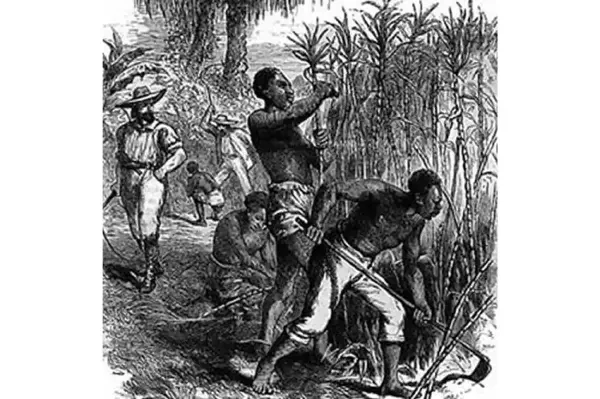
The Indigenato system (abolished only in 1962) required African men to work for a minimum period each year – typically six months. If they could not prove “voluntary” employment (nearly impossible in rural areas), the state assigned them to cotton, coffee, or road‑building camps. Wages were below subsistence. Beatings for “laziness” were routine. Portuguese officials called this the trabalho civilizador – civilising work.
The numbers: In 1945, 42% of all African men in Mozambique were engaged in some form of state‑mandated forced labour. The real figure, including family members forced to carry water and firewood for the camps, likely exceeded 60%.
3. The Cotton Monopoly
In Mozambique, the Algodão (Cotton) decree of 1938 forced every African family to plant cotton on a set acreage, sell it to a state‑chosen Portuguese company at fixed low prices, and pay taxes in cash – which required more labour. This created a coercive triple loop:
graph LR
    A[Forced to grow cotton] --> B[Sell at state price]
    B --> C[Earn too little]
    C --> D[Need cash for taxes]
    D --> E[Seek wage labour]
    E --> F[Wage labour is forced labour]
    F --> A
By 1960, Mozambique was the world’s eighth‑largest cotton exporter. Nearly 100% of that cotton came from land cultivated by forced labour. And yet Portuguese officials continued to speak of “fostering African entrepreneurship.”
👤 Part IV: The Human Cost – A Life Under the Mask#
Beatriz’s Story (Composite Account)#
Beatriz was born in 1930 in a village near Nampula, northern Mozambique. At age 12, her father was taken to a cotton camp. She never saw him again. At 15, she was forced to work on a Portuguese settler’s farm, planting beans from dawn to dusk for a ration of maize meal and salt.
At 19, she married a man who had managed to become an assimilado. He wore European clothes, spoke fluent Portuguese, and worked as a clerk in the colonial administration. He could walk into white‑only shops. He could not, however, prevent his brother from being conscripted to build roads – a job that killed him from malaria after eight months.
Beatriz’s son, born in 1953, was bright. He learned to read. But the local school for African children had only four grades; to continue, he would have to walk 40 kilometres to a missionary school. He never made it.
In 1961, Beatriz heard a speech on a hidden radio – Radio Tanzania – calling for independence. She whispered to her neighbour: “They say we are all Portuguese. But if that is true, why do my children sleep on a different floor than the white children?”
That question, whispered in a thousand villages, would soon ignite a war.
🔁 Part V: The Collapse of the Mask#
Why the Ideology Could Not Hold#
Lusotropicalism worked for decades because it was strategically deployed and rarely tested. But three mechanisms eventually tore it apart:
Counter‑information: The rise of shortwave radio and anti‑colonial newspapers (like Mozambique Revolution) allowed Africans to compare Portuguese propaganda with lived experience. The gap between promise and reality became visible.
International scrutiny: By the 1960s, the United Nations began hearing testimony from refugees who had fled forced labour camps. The apartheid comparison became harder to sustain.
The wars themselves: When Portugal tried to crush anti‑colonial rebellions in Angola (1961), Guinea‑Bissau (1963), and Mozambique (1964), its army committed atrocities – napalm, massacres, torture – that were impossible to reconcile with “benevolent assimilation.” The mask slipped.
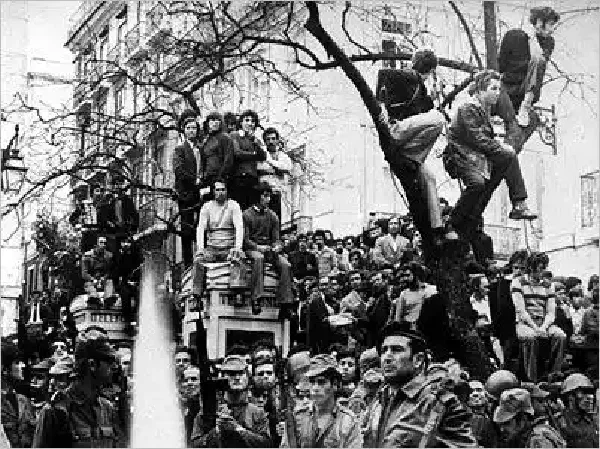
In 1974, the Carnation Revolution toppled Salazar’s regime. One of the new government’s first acts was to formally repudiate Lusotropicalism. But the myth did not die. It lives on in Portuguese textbooks, in tourist guidebooks, and in the memories of older generations who genuinely believe that Portugal was different.
📖 Epilogue: The Photograph, Revisited#
The 1954 photograph of the Luanda plaza now hangs in the Museum of the Portuguese Language in São Paulo. A curator has added a small plaque:
“This image was used to conceal a system of forced labour, racial hierarchy, and violent suppression. The nurse in the photograph, if she survived, died in poverty. The child she held became a soldier in the independence war. Harmony was the lie; extraction was the truth.”
The mask of benevolence was never innocent. It was a working part of the colonial machine – cheaper than bullets, lighter than chains, but just as effective.
In the next article, we will examine what happened when the mask finally fell: the terminal crisis of the Estado Novo, the wars of liberation, and the revolution that swallowed the empire whole.
Continue to Article 4: The Machine Fails →
Sources & Further Reading:
- Castelo, Cláudia. O Modo Português de Estar no Mundo (1998) – a devastating critique of Lusotropicalism.
- Freyre, Gilberto. Casa‑Grande & Senzala (1933) – the original text, read carefully.
- Jerónimo, Miguel Bandeira. The ‘Civilising’ Mission of Portuguese Colonialism (2015).
- Birmingham, David. Portugal and Africa (1999).
Article 3 of 6. Next: How a crumbling dictatorship tried to modernise colonialism – and why it failed.