Extraction Loops Forced Labour Plantation Economics
How a handful of sugar crystals, a human ankle bone, and a Portuguese accounting ledger reveal the brutal industrial logic that powered the empire for three centuries.
Prologue: The Bone and the Ledger#
In 1630, on a sugar plantation outside Recife, Brazil, an enslaved man named Kwame (born in the Kingdom of Kongo) collapsed while carrying a fifty‑kilogram basket of cane stalks. An overseer recorded his death in a leather‑bound log: “One male field hand, cost 4,000 réis, depreciation complete. Replace from Loango coast, estimated 45 days.”
Kwame’s ankle bone was later excavated by archaeologists. It showed grooves from iron shackles, healed fractures from beatings, and a thickened ridge indicating he had carried heavy loads from childhood. The ledger page and the bone are two halves of a single system: the machinery of extraction.
In this article, we trace how the Portuguese empire transformed from a network of spice ports into a continent‑spanning apparatus of forced labour. We will see mechanisms at work: positive feedback loops, economies of scale, and the deliberate creation of precarity as a management tool.
🍬 Part I: The Sugar–Slave Complex – A Feedback Loop on Steroids#
From Spices to Sweets#
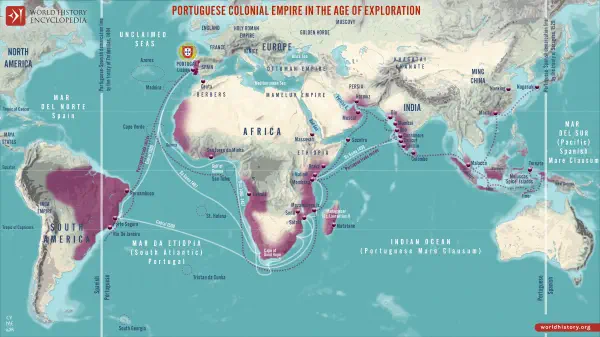
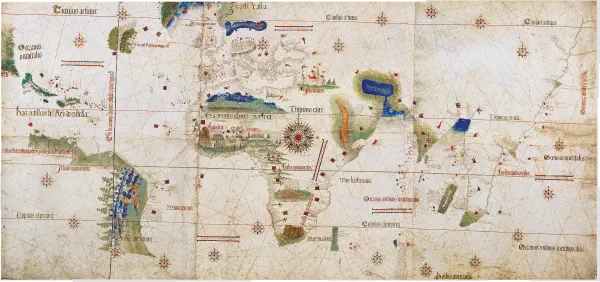
The spice trade had a problem: nutmeg and cloves grew only on a few tiny islands. Once the Dutch seized those islands (1605–1621), the Portuguese spice machine stalled. But sugar – that was different. Sugar cane could be planted anywhere hot and humid: Madeira, São Tomé, Brazil, and later Angola.
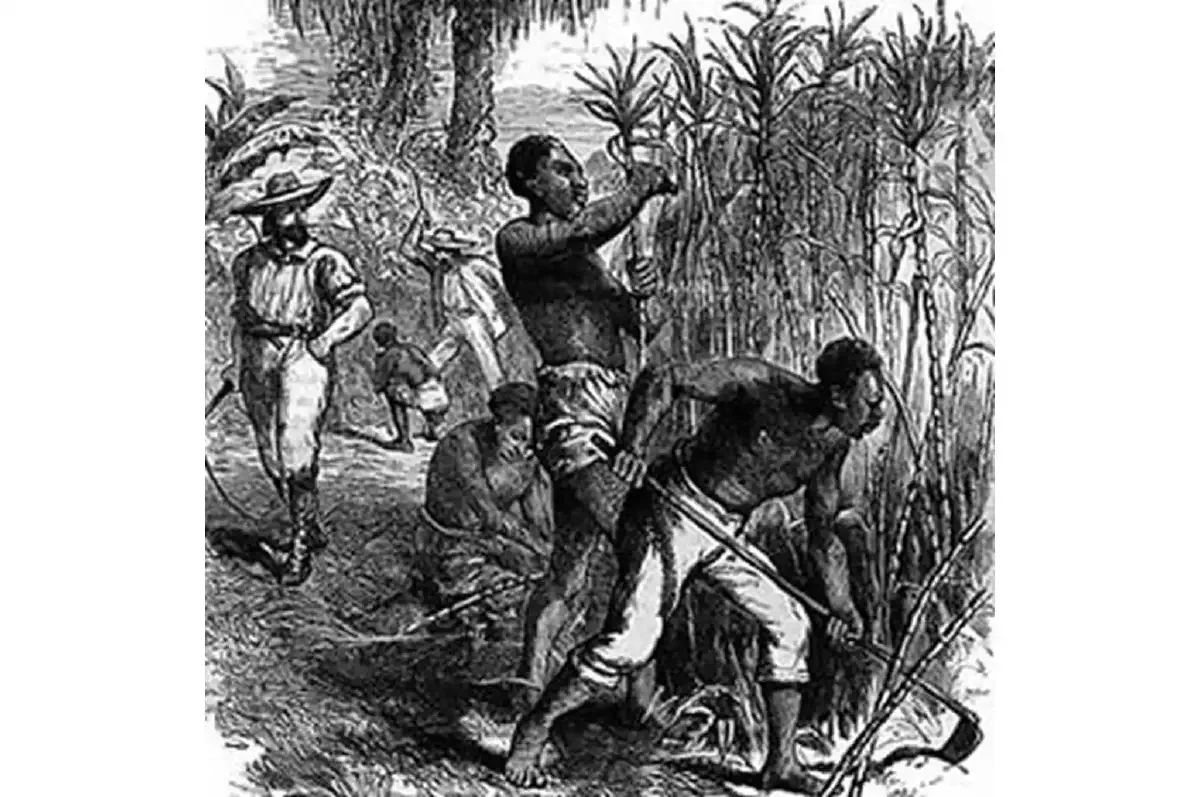
And sugar had a second advantage: it required brutal labour. Cutting cane is back‑breaking; milling it must happen within 24 hours; boiling the juice demands constant attention. No free worker would do it for long at the wages Portugal could pay.
Thus was born the sugar–slave feedback loop:
graph TD
    A[Cheap slave labour] --> B[Low-cost sugar production]
    B --> C[Large sugar exports to Europe]
    C --> D[High profits for Portuguese merchants]
    D --> E[More ships to Africa]
    E --> F[More slaves captured & sold]
    F --> A
Every part of this loop was optimised for extraction. By 1600, Brazil had 350 sugar mills (engenhos). Each mill required 100–200 slaves. Each slave produced, on average, 3 tons of sugar per season. Each ton sold in Amsterdam for 10 times its production cost.
1452
Pope Nicholas V issues *Dum Diversas*, authorising Portugal to enslave “Saracens and pagans” – a moral licence for the Atlantic trade.1500s
Sugar plantations spread from Madeira to São Tomé (the “training ground” for Atlantic slavery).1560–1640
Brazil becomes the world’s largest sugar producer, with 200,000 enslaved Africans arriving per decade.1700
Gold discovered in inland Brazil (Minas Gerais) – the slave machine pivots to mining.
🧮 Part II: The Economic Logic – Depreciation as a Business Model#
Humans as Capital Goods#
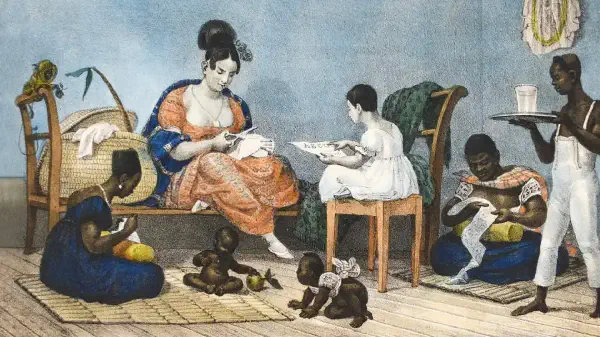
To a Portuguese plantation owner, an enslaved person was not a person. He was a depreciating asset – like a cart or a plough. Accountants at the time calculated “useful life” at seven to ten years, after which “replacement” was cheaper than “maintenance.”
Let us walk through a typical plantation ledger from Bahia, 1680:
| Item | Cost (réis) | Expected lifespan | Annual depreciation |
|---|---|---|---|
| Sugar mill (wood, iron) | 200,000 | 20 years | 10,000 |
| 10 oxen | 30,000 | 5 years | 6,000 |
| 50 enslaved workers | 250,000 | 8 years | 31,250 |
| Overseer (free) | 12,000/year | N/A | N/A |
The hidden logic: A slave costing 5,000 réis and lasting 8 years had an annual depreciation of 625 réis – lower than the 1,000 réis annual wage for a free labourer. From a purely financial perspective, slavery was cheaper than wages, even accounting for revolts, escapes, and mortality.
This arithmetic horrified some – but convinced most. And it created a negative feedback loop for human welfare: the cheaper the slave, the more slaves imported; the more slaves imported, the lower their price; the lower the price, the less reason to keep them alive.
Infant mortality on Brazilian sugar plantations exceeded 80% by age five. The Portuguese response? Buy more adults from Angola.
🗺️ Part III: The Machine Expands – Angola as a Slave Reservoir#
How an Entire Region Became a Factory#
By 1650, Brazil’s demand for new slaves was insatiable. Portugal responded by colonising Angola – not for its land, but for its people.
The mechanism was a colonial extraction pipeline:
- Capture zone: Portuguese pombeiros (licensed slave traders) allied with local Imbangala and Mbundu warlords, who raided inland villages.
- Transport corridor: Captives walked hundreds of kilometres in coffles (neck chains) to ports like Luanda and Benguela.
- Warehousing: Fortified feitorias held slaves in barracoons for 4–6 weeks, “seasoning” them (breaking resistance, teaching basic Portuguese commands).
- Middle passage: Packed on tumbeiros (“hearships” – Portuguese slavers) for 4–7 weeks to Brazil. Mortality: 10–20% per voyage.
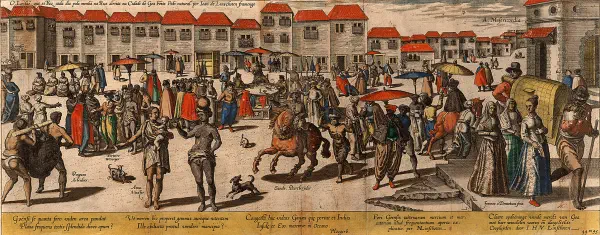
- Distribution: Sold at auction in Rio or Recife, then marched inland.
graph LR
    A[Inland Africa
capture] -->|forced march| B[Luanda barracoons]
    B -->|middle passage| C[Recife auction]
    C -->|sale| D[Plantation or mine]
    D -->|labour| E[Sugar/gold]
    E -->|export| F[Lisbon]
    F -->|guns & textiles| A
This loop was astonishingly efficient – by the cold metrics of extraction. A study of eighteenth‑century Portuguese slaving voyages found that, on average, every 100 slaves exported from Angola produced enough profit to purchase 300 more musketes from Liège, which were then used to capture 200 more slaves.
The moral catastrophe: Between 1600 and 1836, Angola lost an estimated 4 million people to the slave trade – roughly 40% of its pre‑contact population. Entire interior regions were depopulated. The social fabric collapsed into a permanent war economy. This was not “contact.” This was systemic extraction.
👤 Part IV: The Human Mechanism – Managing Precarity#
Why Whippings and Rations Were Calculated#
Behind the macroeconomics were daily micro‑mechanisms of control. Portuguese plantation manuals (governo dos engenhos) devoted entire chapters to “the administration of labour.” Here are three core techniques:
- Nutritional scarcity: Slaves received a daily ration of 1.5 kg of manioc flour and a dried fish head. That is about 1,800 calories – enough to work, not enough to heal. Malnutrition kept resistance low.
- Terrified hierarchy: A small number of enslaved feitores (foremen) were given privileges – slightly better food, fewer whippings – in exchange for policing others. This created a fracture in solidarity that proved remarkably durable.
- Predictable brutality: Whippings were not random. Most plantations had a “Tuesday and Friday” schedule, after the weekly market, to “remind” workers of their place before the labour grind resumed. The calendarisation of violence reduced the risk of unpredictable revolt.
🔁 Part V: The Pivot to Gold – and the Expansion of the System#
When One Commodity Dies, Another Feeds the Machine#
By 1700, Brazilian sugar faced competition from British and Dutch plantations in the Caribbean. Profits began to thin. But just as the loop started to slow, a new discovery re‑energised it: gold in the interior of Brazil (Minas Gerais).
The gold rush created a new feedback loop – but it ran on the same slave machine:
- Gold required deep shafts, crushing rocks, and carrying heavy loads. All deadly. All done by slaves.
- Between 1700 and 1750, Portugal shipped another 600,000 Africans to Brazil – mostly to the mines.
- The gold financed Portugal’s industrial imports (textiles from England, machinery from Holland) and built the baroque churches that still dazzle tourists in Ouro Preto.
The extraction multiplier: One kilogram of Brazilian gold required, on average, the death of 30 enslaved miners (from collapse, mercury poisoning, or exhaustion). By 1750, Portugal was the world’s largest gold producer – but the wealth stayed in Lisbon, not in the mines of Minas Gerais.
📉 Epilogue: The First Cracks#
The machinery of extraction was brutally effective – for a while. But it also contained the seeds of its own destruction.
By 1800, three mechanisms were eroding the system:
- Demographic collapse in Africa – Angola’s interior was so depopulated that slave prices began to rise.
- British abolitionism – The Royal Navy began intercepting Portuguese slave ships after 1810, raising the cost of “replacement.”
- Slave resistance – Massive revolts (the Malê revolt in Bahia, 1835) showed that the machinery was not infinitely stable.
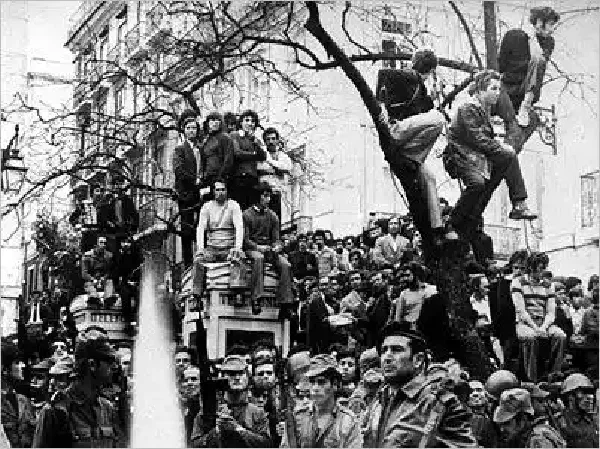
Portugal officially abolished the transatlantic slave trade in 1836 (though it continued illegally until 1850). The plantation machine did not stop; it merely morphed – into forced labour systems in Angola and Mozambique that would persist into the 1960s.
In the next article, we will examine the ideological serpent that coiled around this machinery: Lusotropicalism – the myth that Portuguese colonialism was uniquely benign.
Continue to Article 3: The Benevolent Mask →
Sources & Further Reading:
- Klein, Herbert S. The Atlantic Slave Trade (2010).
- Schwartz, Stuart B. Sugar Plantations in the Formation of Brazilian Society (1985).
- Miller, Joseph C. Way of Death: Merchant Capitalism and the Angolan Slave Trade (1988).
Article 2 of 6. Next: How Portugal invented the myth of the “good coloniser” – and why so many believed it.