Systems Thinking Extraction Loops Thalassocracy
How a small, underfed kingdom on Europe’s western edge built the first global empire—not by swallowing land, but by learning to squeeze the arteries of trade.
Prologue: The Man Who Held the World in His Warehouse#
In 1502, a Portuguese clerk named Diogo Álvares sat on a wooden stool in the feitoria (trading post) of Cochin, on India’s Malabar Coast. Around him: mountains of black pepper, cinnamon sticks rolled like cigars, and the scent of cardamom so strong it made his eyes water. He was not a soldier. He was not a governor. He was a logistics man.
From this single room, Álvares balanced ledgers, negotiated with local rajas, and dispatched ships back to Lisbon. His modest warehouse—no bigger than a tennis court—controlled the price of pepper across Europe. He never fired a cannon. Yet his power exceeded most kings of the era.
This was the Portuguese innovation: not territory, but choke points. Not armies of occupation, but networks of extraction.
🧭 Part I: The Architecture of a Low-Land Empire#
Why Portugal, of all places?#
Europe’s Atlantic fringe, 1415. Castile was busy fighting Moors. England and France were bleeding each other white in the Hundred Years’ War. Portugal—poor, rocky, and looking seaward—had nothing to lose.
King João I’s son, Prince Henrique (we call him “the Navigator”), made a bet: What if we go around Africa instead of fighting through the Muslim middlemen?
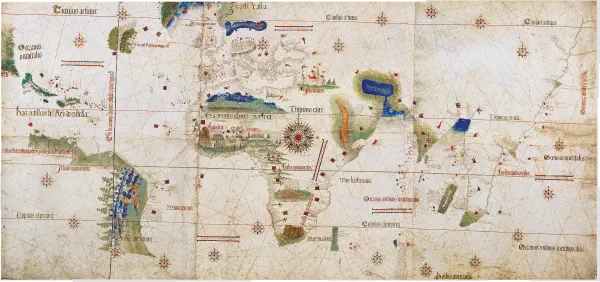
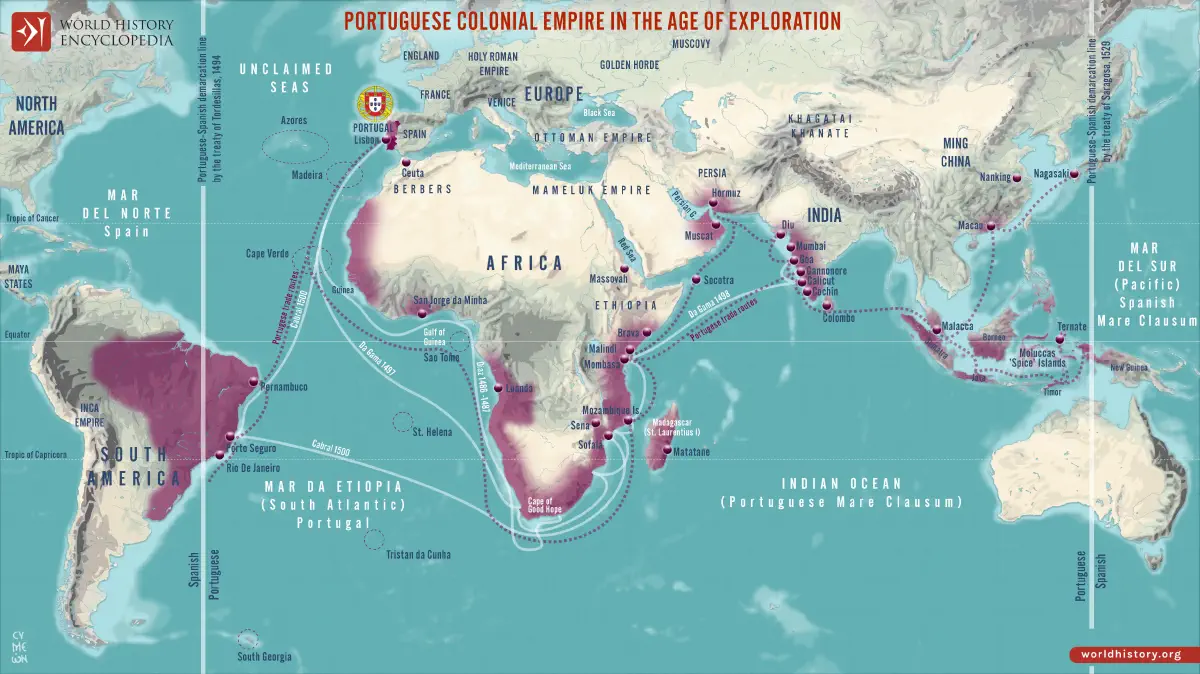
That bet launched a century of systematic exploration. By 1488, Bartolomeu Dias rounded the Cape of Good Hope. By 1498, Vasco da Gama reached Calicut. By 1511, Afonso de Albuquerque took Malacca, the spice gateway of Southeast Asia.
1415
Conquest of Ceuta – first overseas foothold in North Africa.1488
Dias rounds the Cape of Good Hope, proving the Indian Ocean is reachable by sea.1498
Da Gama lands in Calicut – the direct sea route to Asia is open.1510
Albuquerque captures Goa, which becomes the “Lisbon of the East”.1511
Malacca falls – the Portuguese now control the Strait of Malacca.
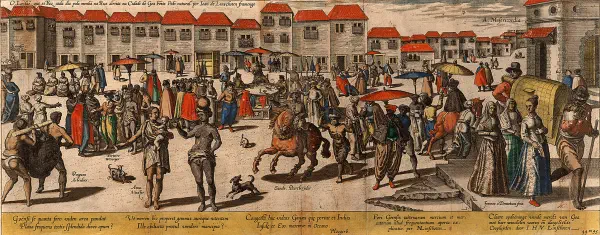
But notice what they didn’t do. They didn’t annex the Malabar hinterland. They didn’t send colonists to till the soil of Java. Instead, they built a string of fortified ports: Sofala, Hormuz, Goa, Malacca, Macau. Each point was a spigot on a global pipeline.
🔁 Part II: The Mechanism – Positive Feedback Loops of Extraction#
The Portuguese empire was not a static thing. It was a machine with three moving parts:
- Navigation technology (caravels, astrolabes, cartography)
- Intelligence networks (local pilots, interpreters, spies)
- Violent monopoly enforcement (cannon-equipped naus, licensing systems called cartazes)
These parts formed a classic positive feedback loop:
graph TD
    A[Conquer a port] --> B[Control local trade]
    B --> C[Extract taxes & spices]
    C --> D[Finance more ships]
    D --> E[Hire more soldiers & spies]
    E --> F[Conquer next port]
    F --> A
Each new conquest made the next one cheaper. By 1520, the Portuguese crown was spending only 15% of its Asian revenues on Asian defence. The rest flowed back to Lisbon, funding a royal palace and a merchant class that had, two generations earlier, been fishing for sardines.
🌍 Part III: Case Study – The Spice Feedback Loop#
Let us zoom in on one mechanism: the price wedge between Maluku and Lisbon.
In the Banda Islands (eastern Indonesia), nutmeg cost the equivalent of one silver coin per kilogram. By the time it reached Lisbon, after paying for shipping, insurance, cartaz fees, and bribes to local sultans, its price had ballooned to 100 silver coins.
Where did the 99 coins go? Not entirely to Portuguese nobles. A chunk went to shipbuilders in Lagos, to rope-makers in Porto, to Jewish financiers in Antwerp who loaned money to King Manuel. Each coin that flowed out of Asia created a counter-flow of investment into Portuguese shipyards.
The feedback loop in numbers (circa 1520):
Each kilogram of nutmeg sold in Lisbon returned enough profit to build two more caravels. Those caravels brought back 50 more kilograms. Within a decade, the Portuguese fleet had quintupled – without Lisbon raising a single new tax at home.
This is why Portugal’s sudden wealth felt like magic. But it wasn’t magic. It was a positive feedback loop set in motion by geography, violence, and a tolerance for risk that bordered on insanity.
👤 Part IV: The Human Cost – A Worker’s View#
Behind the charts and arrows, there were men who rowed.
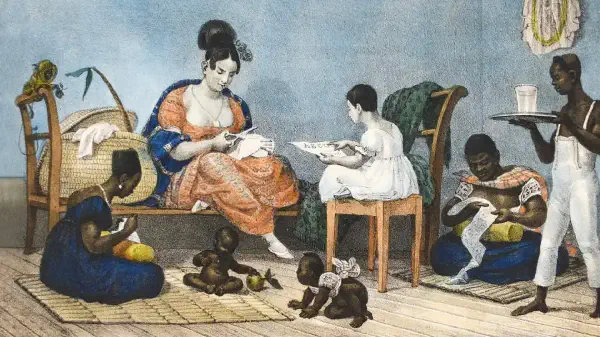
Meet Moussa, a Wolof fisherman from modern-day Senegal. In 1444, he was captured by Lancarote de Freitas, a Portuguese trader who had been granted a monopoly on “the trade of Guinea.” Moussa was chained below a caravel, shipped to Lagos (Portugal), and sold for 12 silver cruzados.
He was not a slave in the American plantation sense—yet. That horror was still sixty years away. But Moussa’s sale marked the first gear in a new machine: the Atlantic slave feedback loop.
graph LR
    A[Capture in Africa] --> B[Sale in Portugal]
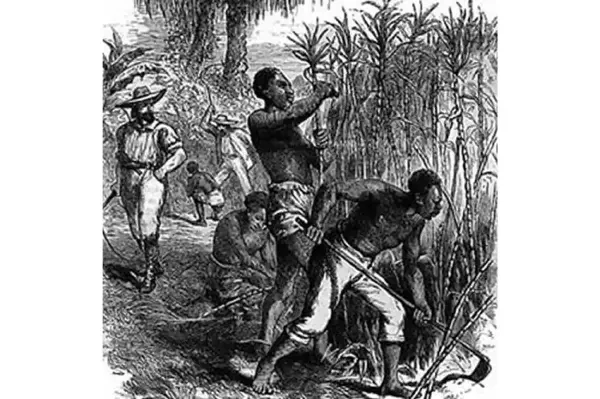
    B --> C[Forced labour on sugar plantations in Algarve or Madeira]
    C --> D[Cheap sugar exported to Flanders]
    D --> E[Profit funds more caravels]
    E --> F[More African captives]
    F --> A
By 1550, this loop had transported nearly 200,000 Africans across the Atlantic. Moussa’s great-grandchildren, if they survived, would be working sugar mills in Brazil.
🧠 Part V: Why “Ports, Not Provinces” Matters Today#
The Portuguese model—light footprint, tight grip on choke points—was hugely influential. The Dutch East India Company copied it. The British East India Company refined it. Even modern tech platforms (think Amazon’s fulfilment centres, or Google’s control of search) echo the feitoria logic: own the node, not the territory.
But the model had a fatal flaw: resilience through decentralisation.
When the Dutch attacked Malacca in 1641, Portugal had no inland reserves to fall back on. Its empire was a string of pearls; break one, and the necklace fell apart. By 1999, when Portugal returned Macau to China, the empire was gone—but the patterns of extraction and racial hierarchy remained.
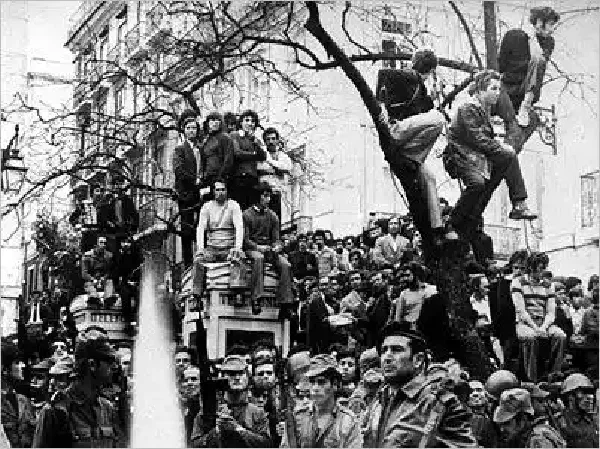
In Angola and Mozambique, the forced labour systems dismantled only in 1962. In Portugal itself, the myth of “Lusotropical harmony” (we will dissect this in Article 3) still obscures a brutal history.
📖 Epilogue: What Diogo Álvares Saw#
Back in Cochin, Diogo Álvares lived long enough to witness the empire’s first cracks. By 1525, local rajas were refusing cartazes. The Ottomans were building a rival fleet in the Red Sea. And the pepper price was collapsing because too many Portuguese ships competed with each other.
He died in 1530, a wealthy man, but also a worried one. In his last letter to the king, he wrote: > We have made the sea our farm. But farms need soil, and the sea has none.
He was half-right. The sea gave Portugal global reach. But without soil—without the messy, costly work of governing real people in real places—the empire was always a house of cards.
In the next article, we will examine how that house of cards turned into a labyrinth of forced labour: the sugar mills of Brazil, the cotton fields of Mozambique, and the brutal machinery that kept the system running for four more centuries.
Continue to Article 2: The Machinery of Extraction →
Sources & Further Reading:
- Crowley, Roger. Conquerors: How Portugal Forged the First Global Empire (2015).
- Newitt, Malyn. A History of Portuguese Overseas Expansion, 1400–1668 (2004).
- Russell-Wood, A.J.R. The Portuguese Empire, 1415–1808 (1998).
Article 1 of 6. Next: How the engine of extraction moved from spices to slaves to sugar.