
Predator Taxonomy: The Behavioral Ecology of Empires
Series Overview#
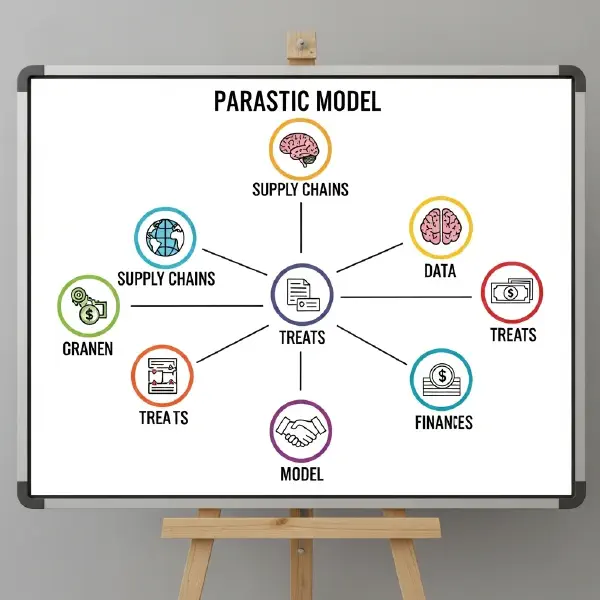
This series is a component of the larger intellectual project, “Parasitic Mechanisms as Systems for Geopolitics: The Biology of Power.” This mega-series employs biological models of parasitism as precise analytical frameworks to dissect historical and modern strategies of asymmetric control. Each core series examines a distinct parasitic “playbook,” from neurological hijack to behavioral manipulation. You are currently reading Series #9: Predator Taxonomy. The complete taxonomy includes:
- The Wasp Doctrine: Neurological Hijack and Executive Control.
- The Cordyceps Directive: Total Ideological Reprogramming.
- The Sacculina Strategy: Castration and Resource Diversion.
- The Glyptapanteles Gambit: Proxy Armies and Client States.
- The Horsehair Worm Protocol: Engineering Strategic Despair.
- The Dicrocoelium Design: Multi-Host Supply Chain Control.
- The Epomis Protocol: Deceptive Entrapment and Aggression Baiting.
- The Swarm Imperative: Decentralized Networks and Anti-Fragile Systems.
- Capstone: Predator Taxonomy: The Behavioral Ecology of Empires. Explore the full project to understand how these biological systems provide a unified theory of geopolitical power.
Key Insights#
- Imperial power is better understood through biological models of predation than traditional historical chronology.
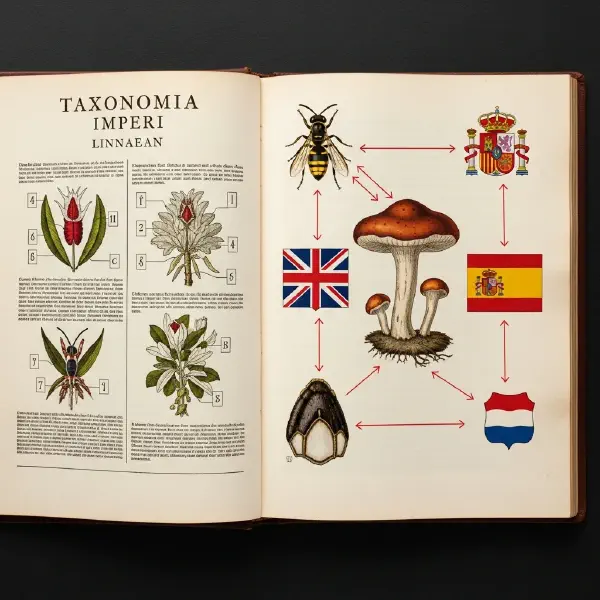
- Empires can be classified as different “species” based on their dominant parasitic strategies.
- The British Empire’s adaptability made it the most successful generalist predator.
- Specialized empires like the Dutch VOC and Spanish Habsburgs were efficient but vulnerable to change.
- Modern power dynamics continue to follow these parasitic patterns in new forms.
References#
- Darwin, J. (2008). After Tamerlane: The Global History of Empire Since 1405. Bloomsbury Press. ISBN: 978-1596916023
- Parker, G. (1996). The Military Revolution: Military Innovation and the Rise of the West, 1500-1800. Cambridge University Press. ISBN: 978-0521474262
- Abernethy, D. B. (2000). The Dynamics of Global Dominance: European Overseas Empires, 1415-1980. Yale University Press. ISBN: 978-0300093148
- Ferguson, N. (2003). Empire: How Britain Made the Modern World. Penguin Books. ISBN: 978-0141007540
- Betts, R. F. (2005). Assimilation and Association in French Colonial Theory, 1890-1914. University of Nebraska Press.
- Subrahmanyam, S. (1993). The Portuguese Empire in Asia, 1500-1700: A Political and Economic History. Longman. ISBN: 978-0582050687
- Barkawi, T. (2017). Soldiers of Empire: Indian and British Armies in World War II. Cambridge University Press.
- Mazower, M. (2009). No Enchanted Palace: The End of Empire and the Ideological Origins of the United Nations. Princeton University Press.
- Nye, J. S. (2004). Soft Power: The Means to Success in World Politics. PublicAffairs. ISBN: 978-1586483067
- Milanović, B. (2019). Capitalism, Alone: The Future of the System That Rules the World. Harvard University Press. ISBN: 978-0674987593 (For modern economic “imperial” structures).