The Dicrocoelium Design: Multi-Host Supply Chain Control
Series Overview#
This series is a component of the larger intellectual project, “Parasitic Mechanisms as Systems for Geopolitics: The Biology of Power.” This mega-series employs biological models of parasitism as precise analytical frameworks to dissect historical and modern strategies of asymmetric control. Each core series examines a distinct parasitic “playbook,” from neurological hijack to behavioral manipulation. You are currently reading Series #6: The Dicrocoelium Design. The complete taxonomy includes:
- The Wasp Doctrine: Neurological Hijack and Executive Control.
- The Cordyceps Directive: Total Ideological Reprogramming.
- The Sacculina Strategy: Castration and Resource Diversion.
- The Glyptapanteles Gambit: Proxy Armies and Client States.
- The Horsehair Worm Protocol: Engineering Strategic Despair.
- The Dicrocoelium Design: Multi-Host Supply Chain Control.
- The Epomis Protocol: Deceptive Entrapment and Aggression Baiting.
- The Swarm Imperative: Decentralized Networks and Anti-Fragile Systems.
- Capstone: Predator Taxonomy: The Behavioral Ecology of Empires. Explore the full project to understand how these biological systems provide a unified theory of geopolitical power.
Key Insights#
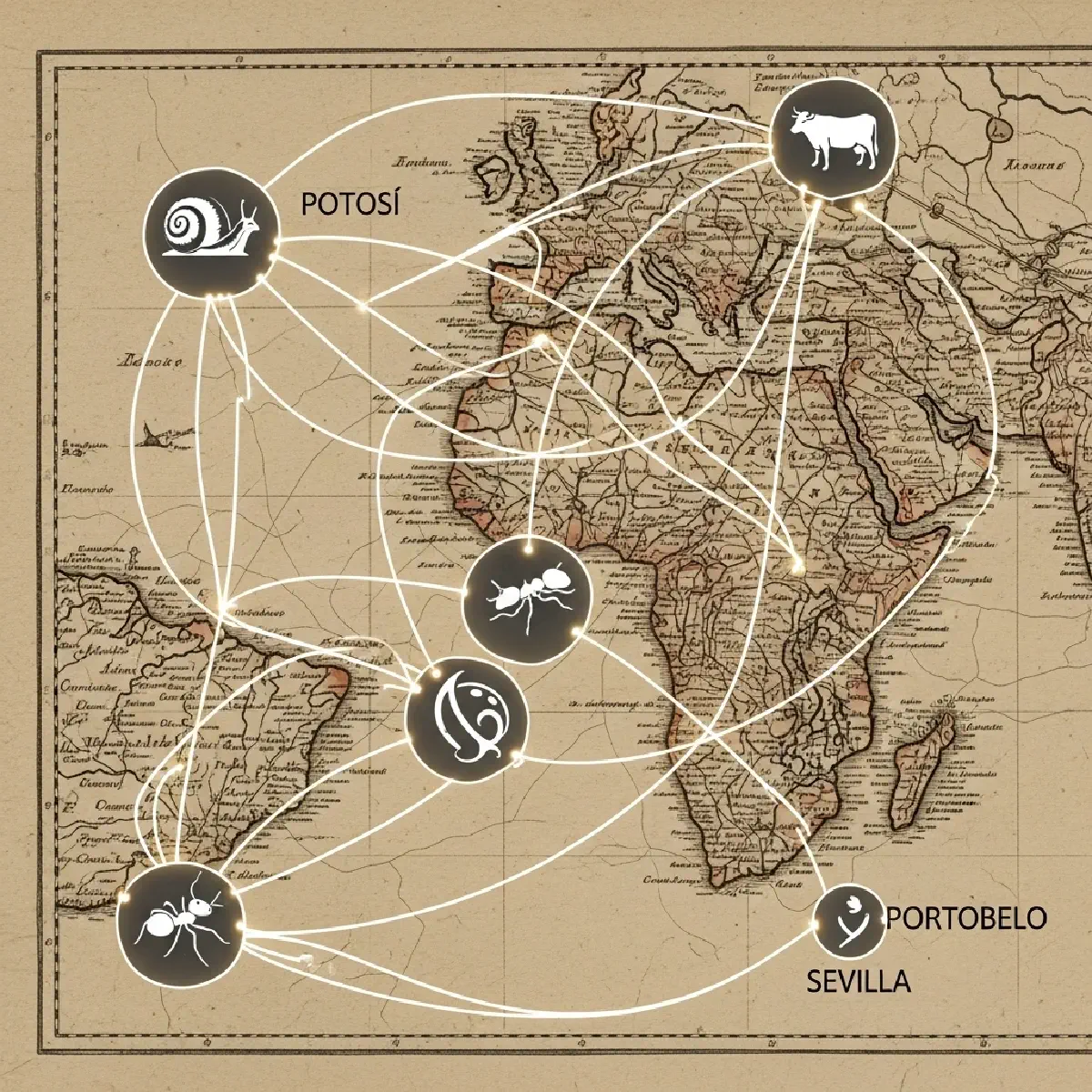
- The Dicrocoelium parasite uses multiple hosts in a supply chain to reach its final destination, illustrating how empires can control complex resource flows through intermediaries.
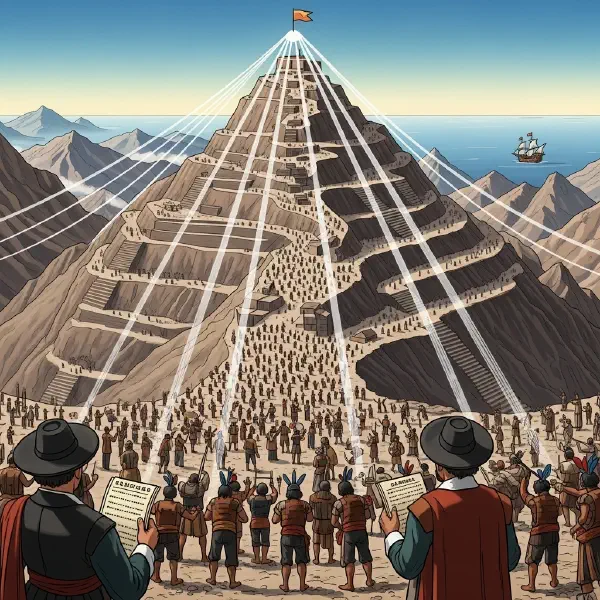
- Spain’s silver extraction system mirrored this by reprogramming Andean labor, regimenting galleon convoys, and feeding European financial networks.
- Rigid supply chains are brittle, vulnerable to shocks like piracy, depletion, and inflation, leading to systemic failures.
- Modern global supply chains and digital economies continue this logic, with similar risks of brittleness and exploitation.
References#
- Marichal, C. (2007). Bankruptcy of Empire: Mexican Silver and the Wars Between Spain, Britain, and France, 1760-1810. Cambridge University Press. ISBN: 978-0521879641
- Stein, S. J., & Stein, B. H. (2000). Silver, Trade, and War: Spain and America in the Making of Early Modern Europe. Johns Hopkins University Press. ISBN: 978-0801861352
- Lane, K. (2019). Potosí: The Silver City That Changed the World. University of California Press. ISBN: 978-0520303072
- Tutino, J. (2011). Making a New World: Founding Capitalism in the Bajío and Spanish North America. Duke University Press. ISBN: 978-0822349898
- Flynn, D. O., & Giráldez, A. (1995). “Born with a ‘Silver Spoon’: The Origin of World Trade in 1571.” Journal of World History, 6(2), 201-221.
- Grafe, R., & Irigoin, A. (2012). “A Stakeholder Empire: The Political Economy of Spanish Imperial Rule in America.” The Economic History Review, 65(2), 609-651.
- Baskes, J. (2000). Indians, Merchants, and Markets: A Reinterpretation of the Repartimiento and Spanish-Indian Economic Relations in Colonial Oaxaca, 1750-1821. Stanford University Press.
- Arrighi, G. (1994). The Long Twentieth Century: Money, Power, and the Origins of Our Times. Verso. ISBN: 978-1859840153 (For world-systems analysis of capital flows).
- Cowen, D. (2014). The Deadly Life of Logistics: Mapping Violence in Global Trade. University of Minnesota Press. ISBN: 978-0816680870 (For modern supply chain analysis).
- Patel, R., & Moore, J. W. (2017). A History of the World in Seven Cheap Things: A Guide to Capitalism, Nature, and the Future of the Planet. University of California Press. ISBN: 978-0520299937