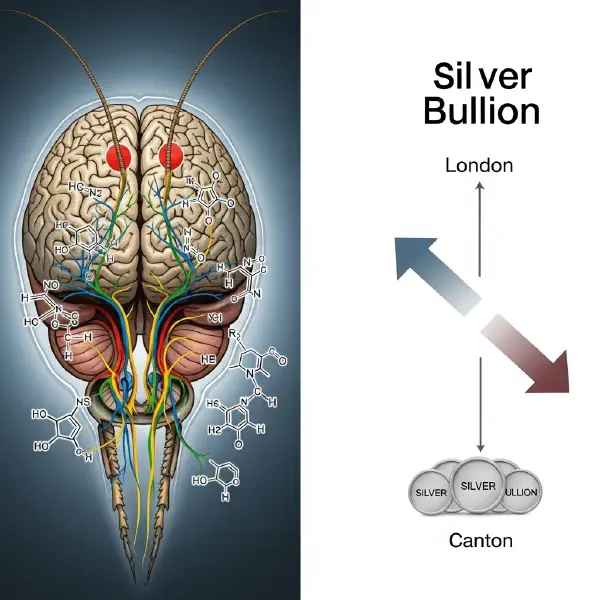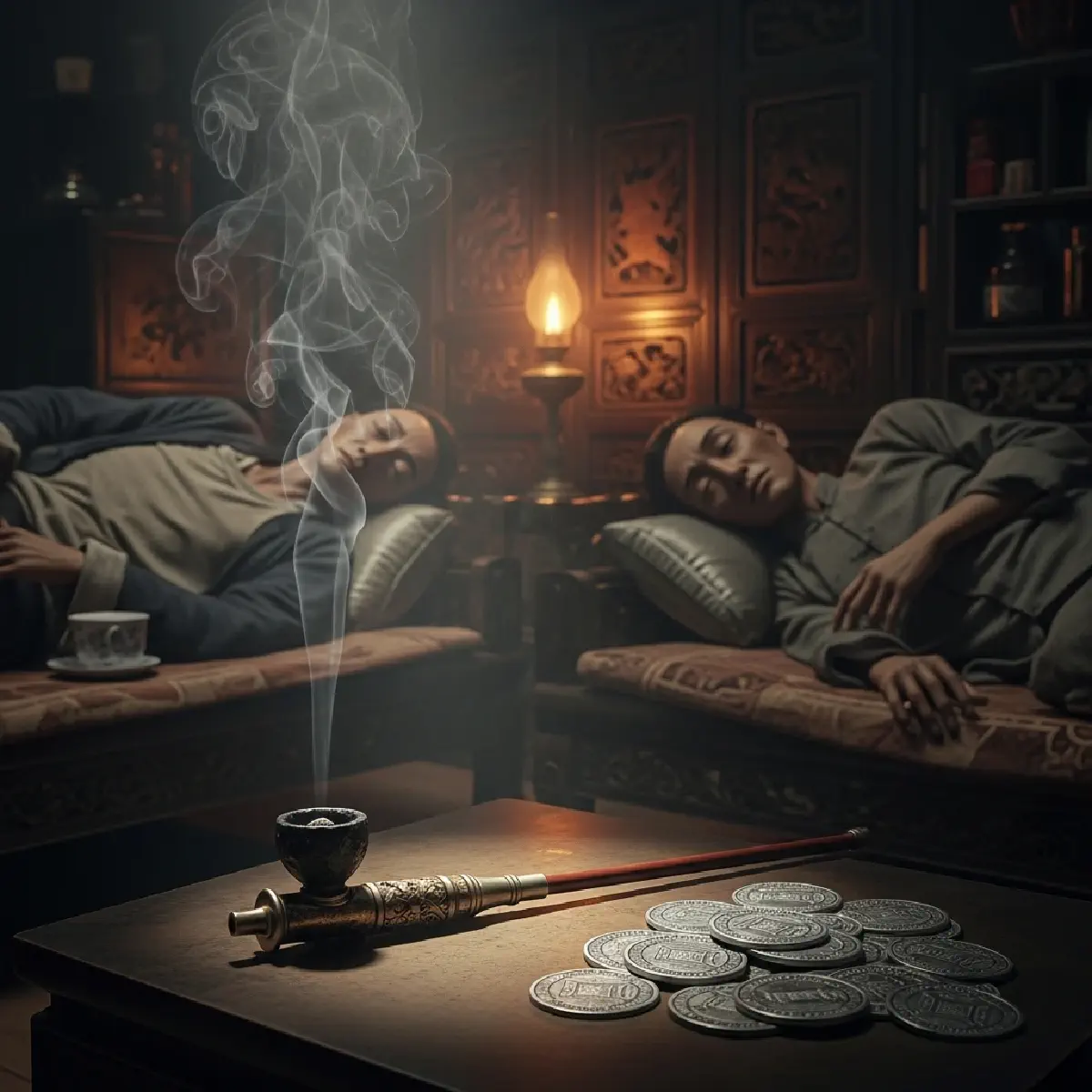
In the port of Canton in the 1830s, the calculus of global trade was being inverted not in ledgers, but in the neurons of millions of Chinese. A British trader from Jardine, Matheson & Co. oversees the unloading of chests of Indian opium, a contraband more valuable than silver. His actions are the geopolitical equivalent of the horsehair worm secreting its neurotransmitters. He is not selling a mere product; he is deploying a psychoactive weapon system designed to hack the motivational circuitry of a civilization. The Qing Dynasty, ruling over what was likely the world’s largest economy, possessed immense natural defenses: a sophisticated bureaucracy, a cultural suspicion of foreign goods, and strict prohibitions on opium dating to 1729. Britain’s challenge was to bypass these defenses and implant a compulsive need. They succeeded by weaponizing addiction, turning a society’s own appetite into the engine of its subjugation.
In the port of Canton in the 1830s, the calculus of global trade was being inverted not in ledgers, but in the neurons of millions of Chinese. A British trader from Jardine, Matheson & Co. oversees the unloading of chests of Indian opium, a contraband more valuable than silver. His actions are the geopolitical equivalent of the horsehair worm secreting its neurotransmitters. He is not selling a mere product; he is deploying a psychoactive weapon system designed to hack the motivational circuitry of a civilization. The Qing Dynasty, ruling over what was likely the world’s largest economy, possessed immense natural defenses: a sophisticated bureaucracy, a cultural suspicion of foreign goods, and strict prohibitions on opium dating to 1729. Britain’s challenge was to bypass these defenses and implant a compulsive need. They succeeded by weaponizing addiction, turning a society’s own appetite into the engine of its subjugation.
The Strategic Deficit and the Search for a Vector#
The British East India Company (EIC) faced a systemic problem. Consumer demand in Britain for Chinese tea, silk, and porcelain was insatiable, but China had little interest in British wool or manufactured goods. The result was a relentless drain of silver bullion from London to Canton. To the mercantilist mind, this was a national security threat. The solution required a commodity the Chinese did not produce but would desperately crave—a “perfect” vector to reverse the flow.
Opium, grown in EIC-controlled Bengal and later Malwa, was the answer. It was compact, high-value, and, crucially, addictive. Addiction creates its own demand, bypassing rational market considerations like price or utility. As historian Carl A. Trocki outlines, opium transformed from a medicinal luxury into a recreational epidemic, creating a self-sustaining and expanding market. The EIC and private “country traders” became the suppliers of a neurochemical agent that would rewire Chinese demand itself.
The Delivery System: Smuggling, Corruption, and Networked Complicity#
Delivering the vector required bypassing the Qing state’s immune response. The Canton System confined European trade to a single port under strict supervision. The British response was a corruption-based smuggling network. They anchored opium receiving ships (receiving ships) off the coast, beyond Qing jurisdiction. Chinese smugglers in fast boats would collect the chests and distribute them through a vast network involving local gentry, corrupt officials, and secret societies.
This system was crucial. It meant the addictive agent spread through the host body (China) via its own compromised circulatory systems—its coastal defenses and provincial bureaucracies. The Qing state’s attempts to clamp down were foiled by the very officials meant to enforce the law, whose incomes now depended on the illicit trade. The parasite was using the host’s own cells as distribution points for the manipulative compound.
Rewiring Society: From the Individual to the Imperial Treasury#
The effects of the vector operated at every level of the host system.
- Individual Neurological Hijack: For the user, opium provided escape from hardship but created a physical dependency that prioritized the drug over family, work, and health. The individual’s will was subordinated to the chemical imperative.
- Household Economic Drain: Addicts sold land, possessions, and family heirlooms to fund their habit. Silver, the lifeblood of the economy, flowed from rural households to urban opium dens and ultimately to foreign traders.
- National Fiscal Crisis: The macro-effect was catastrophic. By the 1830s, China was exporting over 30 million silver taels annually to pay for opium, causing severe deflation. As silver grew scarce, the real tax burden on peasants paying in copper coins skyrocketed, fueling social unrest.
The Qing state was trapped. Its people were being behaviorally reprogrammed to value opium above stability. Its silver, the lifeblood of its monetary system, was hemorrhaging. Its own officials were part of the distribution network. The host was compulsively seeking the “water” of the drug, even as it sensed it was drowning. The stage was set for a violent, desperate immune response that would play perfectly into the parasite’s final maneuver.