
The Glyptapanteles Gambit: Proxy Armies and Client States
Series Overview#
This series is a component of the larger intellectual project, “Parasitic Mechanisms as Systems for Geopolitics: The Biology of Power.” This mega-series employs biological models of parasitism as precise analytical frameworks to dissect historical and modern strategies of asymmetric control. Each core series examines a distinct parasitic “playbook,” from neurological hijack to behavioral manipulation. You are currently reading Series #4: The Glyptapanteles Gambit. The complete taxonomy includes:
- The Wasp Doctrine: Neurological Hijack and Executive Control.
- The Cordyceps Directive: Total Ideological Reprogramming.
- The Sacculina Strategy: Castration and Resource Diversion.
- The Glyptapanteles Gambit: Proxy Armies and Client States.
- The Horsehair Worm Protocol: Engineering Strategic Despair.
- The Dicrocoelium Design: Multi-Host Supply Chain Control.
- The Epomis Protocol: Deceptive Entrapment and Aggression Baiting.
- The Swarm Imperative: Decentralized Networks and Anti-Fragile Systems.
- Capstone: Predator Taxonomy: The Behavioral Ecology of Empires. Explore the full project to understand how these biological systems provide a unified theory of geopolitical power.
Key Insights#
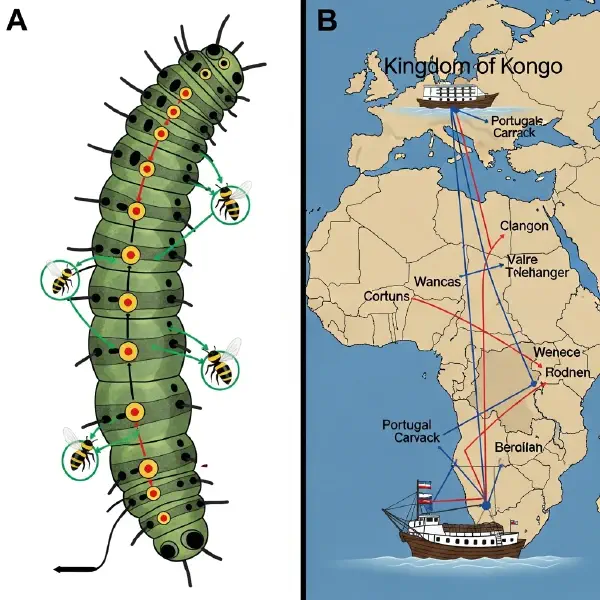
- The Glyptapanteles wasp manipulates caterpillars to guard its offspring, illustrating how external powers can hijack internal factions for protection.
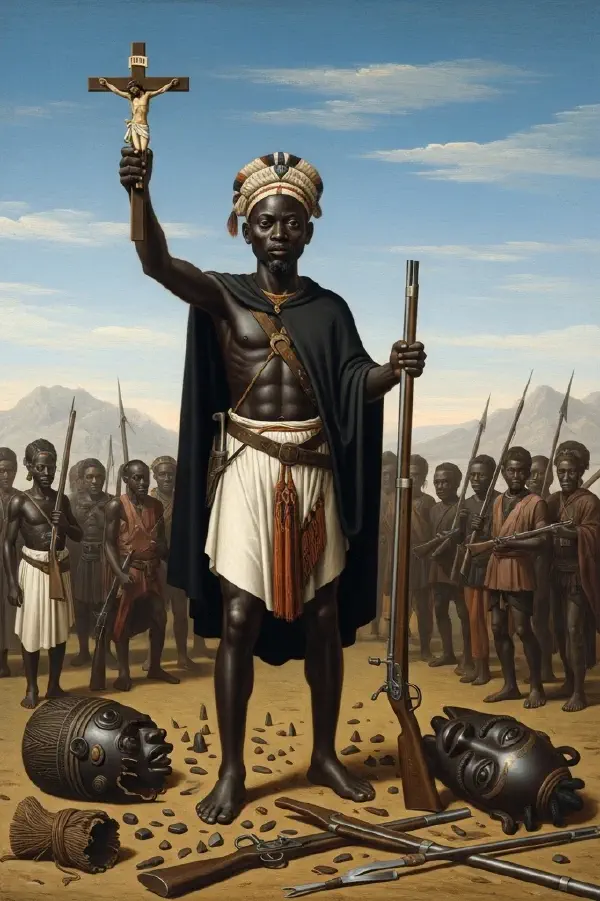
- In the Kingdom of Kongo, Portuguese introduction of muskets and Christianity created dependent factions that defended the slave trade.
- Proxy warfare creates feedback loops of destruction, consuming the host society’s resources and sovereignty.
- Modern applications in Cold War proxy conflicts and privatized warfare show the enduring risks of this strategy.
References#
- Thornton, J. K. (1983). The Kingdom of Kongo: Civil War and Transition, 1641-1718. University of Wisconsin Press. ISBN: 978-0299092900
- Heywood, L. M. (2009). Central Africans and Cultural Transformations in the American Diaspora. Cambridge University Press.
- Miller, J. C. (1988). Way of Death: Merchant Capitalism and the Angolan Slave Trade, 1730-1830. University of Wisconsin Press. ISBN: 978-0299115544
- Hilton, A. (1985). The Kingdom of Kongo. Clarendon Press. ISBN: 978-0198227199
- Fromont, C. (2014). The Art of Conversion: Christian Visual Culture in the Kingdom of Kongo. University of North Carolina Press. ISBN: 978-1469618732
- Birmingham, D. (1966). Trade and Conflict in Angola: The Mbundu and Their Neighbours under the Influence of the Portuguese, 1483-1790. Clarendon Press.
- Anderson, D. M. (2015). Worlds of the Portuguese and the Spanish, 1500-1800. Routledge. (For comparative imperial context).
- Reno, W. (1999). Warlord Politics and African States. Lynne Rienner Publishers. ISBN: 978-1555879100 (For modern proxy/warlord dynamics).
- Ron, J. (2003). Frontiers and Ghettos: State Violence in Serbia and Israel. University of California Press. (For analysis of surrogate warfare and paramilitaries).
- McFate, S. (2019). The New Rules of War: Victory in the Age of Durable Disorder. William Morrow. ISBN: 978-0062562744 (For modern analysis of privatized conflict and proxy warfare).