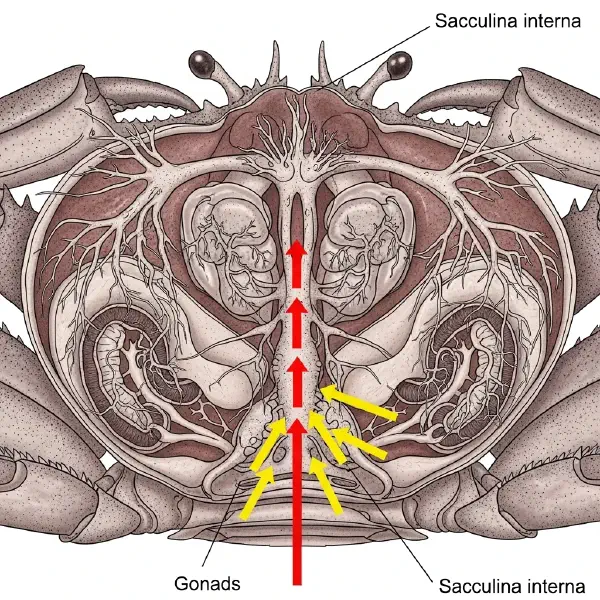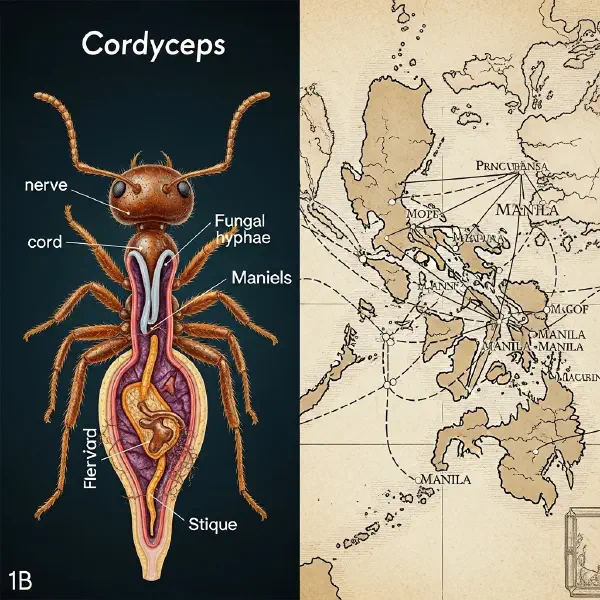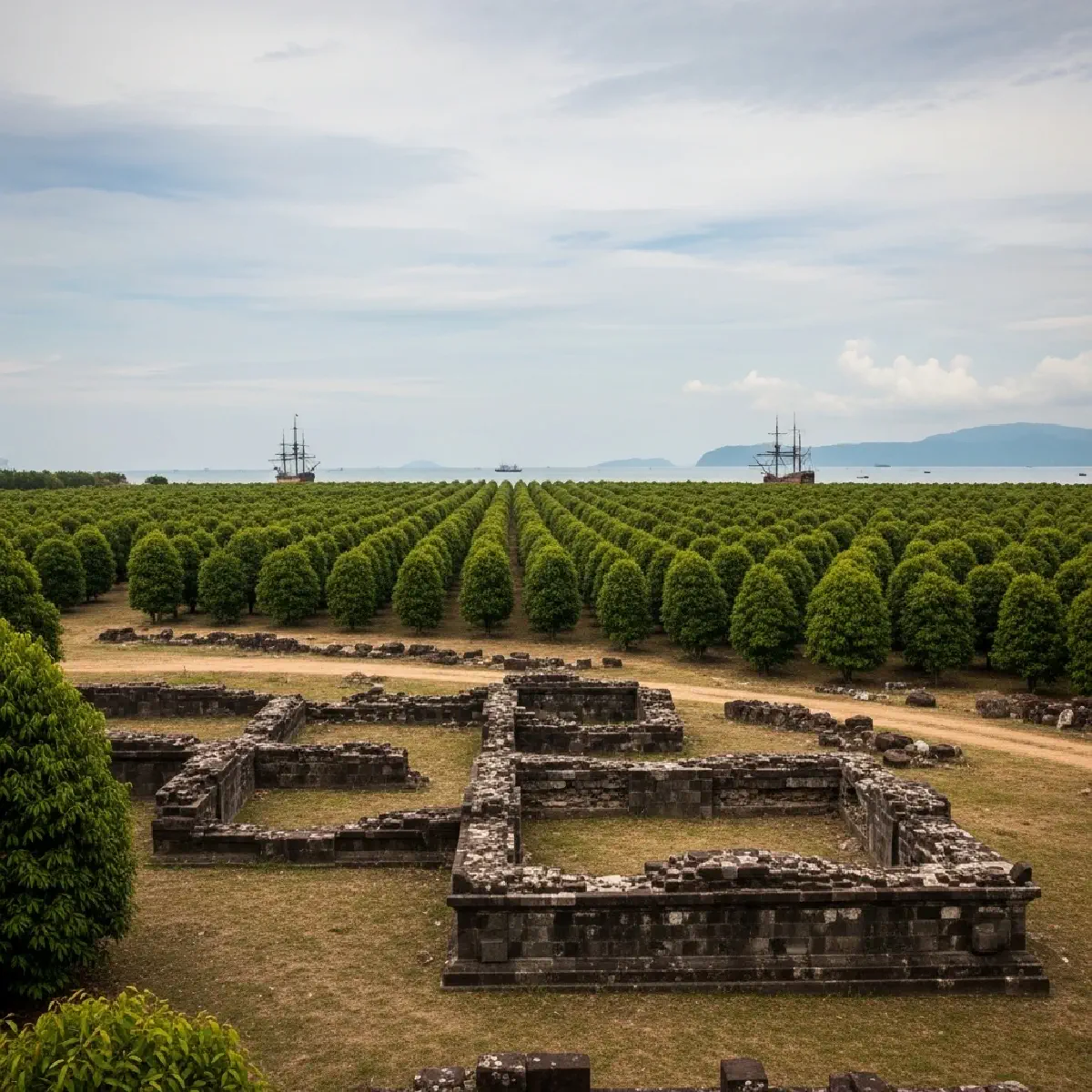
In 1621, the fleet of VOC Governor-General Jan Pieterszoon Coen arrived at the nutmeg-rich island of Lonthor. The Bandanese, expecting yet another round of coercive negotiations, were met with something categorically different: a protocol of eradication. Coen’s forces systematically hunted down the population. Thousands were killed outright. Others were starved into submission or enslaved and deported to Batavia. The remaining few hundred fled into permanent exile. The verdant, terraced nutmeg gardens that had sustained a civilization for centuries now stood empty. This was not a conquest; it was an extirpation. The VOC was not replacing one ruler with another; it was removing the host organism entirely to implant its own system. This was the Sacculina Strategy executed at a societal level: the castration of a people’s future to create the perfect, passive host for a corporate monoculture.
The Bandanese were the “crab”—a thriving, autonomous entity in control of a precious resource. The VOC’s infection began with earlier, failed attempts at coercive treaties, the corporate equivalent of Sacculina’s seeking larva. But when the host proved resistant, the VOC moved to the next phase of the protocol with brutal finality. The goal was clear: to eliminate every element of Bandanese society that did not serve the single function of nutmeg production.
In 1621, the fleet of VOC Governor-General Jan Pieterszoon Coen arrived at the nutmeg-rich island of Lonthor. The Bandanese, expecting yet another round of coercive negotiations, were met with something categorically different: a protocol of eradication. Coen’s forces systematically hunted down the population. Thousands were killed outright. Others were starved into submission or enslaved and deported to Batavia. The remaining few hundred fled into permanent exile. The verdant, terraced nutmeg gardens that had sustained a civilization for centuries now stood empty. This was not a conquest; it was an extirpation. The VOC was not replacing one ruler with another; it was removing the host organism entirely to implant its own system. This was the Sacculina Strategy executed at a societal level: the castration of a people’s future to create the perfect, passive host for a corporate monoculture.
The Bandanese were the “crab”—a thriving, autonomous entity in control of a precious resource. The VOC’s infection began with earlier, failed attempts at coercive treaties, the corporate equivalent of Sacculina’s seeking larva. But when the host proved resistant, the VOC moved to the next phase of the protocol with brutal finality. The goal was clear: to eliminate every element of Bandanese society that did not serve the single function of nutmeg production.
The Surgical Strike: Genocide as Social Castration#
Coen’s campaign was a deliberate act of social neutering. The Bandanese were not just defeated; their very existence as a cohesive, sovereign society was terminated. Historian Adam Clulow describes this as an attempt to “sever the connection between the land and its original inhabitants.” This mirrors Sacculina’s chemical castration. The VOC destroyed the social and cultural “gonads” of Bandanese society—its leadership, its kinship structures, its maritime trade networks, its very connection to the land as ancestral homeland. By killing, exiling, and enslaving the population, the VOC rendered the host incapable of self-reproduction. There would be no next generation of Bandanese to reclaim the islands or contest the monopoly.
With the host’s autonomous future eliminated, the VOC could proceed with the resource diversion phase. The land was surveyed, parceled into lots called perken, and allotted to Dutch planters (perkeniers). These planters were not owners; they were contractors bound by draconian VOC regulations on planting, output, and sale. The nutmeg trees were now the sole legal crop. The islands’ entire ecology was redirected toward a single export.
The Creation of the Nursemaid Class: Slave Labor and the Perkenier System#
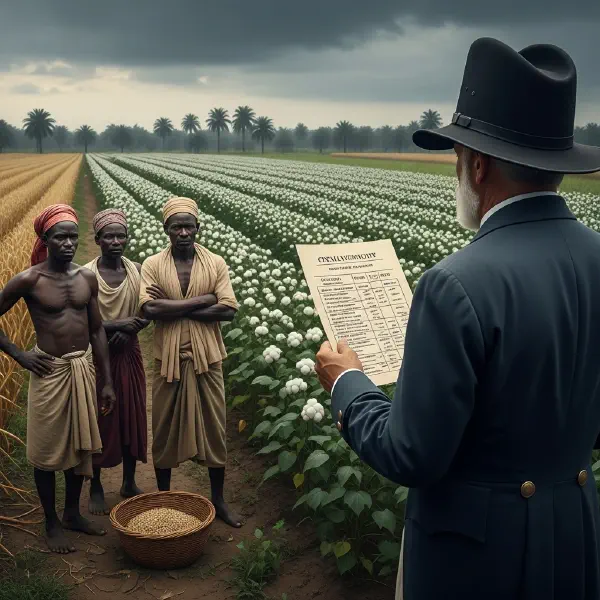
A castrated host still requires energy input. The VOC solved this by creating a new, controlled labor force—the equivalent of the crab’s repurposed brooding instinct. Enslaved peoples from across Asia (especially Java, Bali, and the Indian subcontinent) and later Africa were imported to work the plantations. This population had no historical ties to the land, no shared identity, and no avenue for resistance beyond individual acts of defiance or escape. They were biological machinery, their labor entirely diverted to nourishing the VOC’s profit.
The Dutch perkeniers occupied a bizarre, intermediate role. They were the on-site managers of the parasite’s reproductive organ, but they themselves were tightly controlled by the VOC. They were forbidden from trading with anyone else, charged exorbitant fees for supplies from the Company, and often lived in debt and isolation. They were, in effect, a sub-parasitic class—a middle-managerial layer that tended the system but derived little lasting benefit from it. Their presence ensured the nutmeg “eggs” were produced and collected, but all strategic control and profit flowed to the Heeren XVII (the Lords Seventeen) in Amsterdam.
The Architecture of Total Control: The VOC as External Nervous System#
The redesign of the Banda Islands was total. Forts (like Fort Belgica) were built on strategic hilltops, not just for defense against other Europeans, but as panopticons overlooking the plantations and harbor. The VOC dictated all aspects of life: what was grown, how it was processed, when it was shipped. It maintained a policy of extirpation—actively destroying nutmeg trees on other islands to preserve the artificial scarcity and total control of the Bandas.
The host society had been replaced. In the original Bandanese complex system of trade gardens, kinship, and seasonal rituals, the VOC substituted a simplified, linear production model: slave labor + perkenier oversight + VOC logistics = nutmeg for Amsterdam auctions. The society’s complexity, the very thing that gave it resilience and identity, was identified as a threat and surgically removed. What remained was a hollowed-out production site, a “body” whose only sign of life was the seasonal harvest of spice, meticulously guarded and shipped by its parasitic controller.