
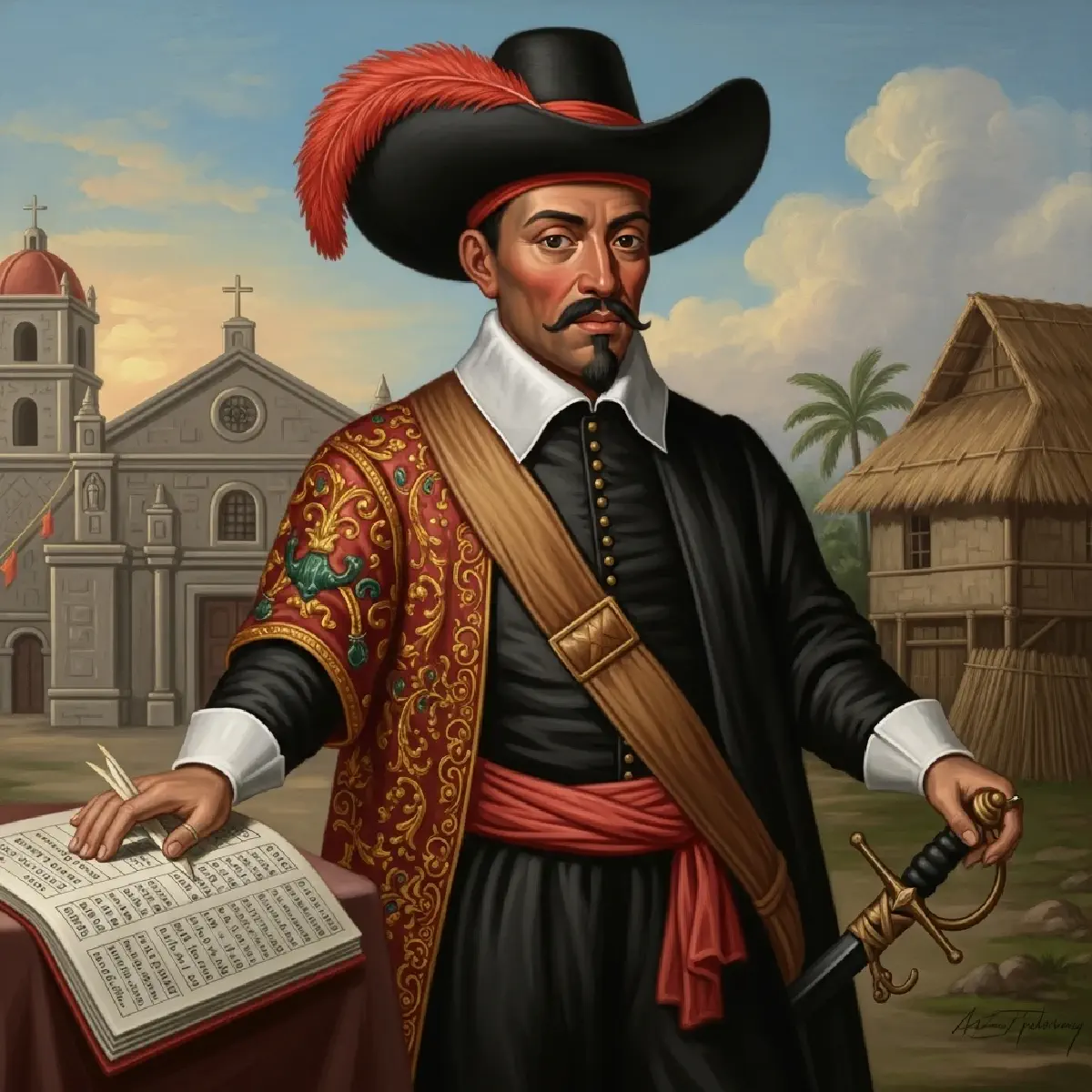
The Cordyceps fungus does not treat all ants equally. It targets specific individuals within the colony—those with the right size, behavior, and position—to maximize its reproductive success. Similarly, the Spanish colonial system in the Philippines did not attempt to reprogram every individual equally. It focused on cultivating a host elite: a class of Filipinos who would serve as privileged vectors for the colonial ideology. This elite, known as the principalia, was the fungal mycelium of the empire—deeply embedded in the host society, connecting the Spanish center to the indigenous periphery, and ensuring the stability of the colonial system.
The creation of the principalia was a sophisticated strategy of selective cultivation. It combined ideological reprogramming with economic incentives, social prestige, and political power. The result was a class that was both loyal to the Spanish Crown and deeply rooted in Philippine society—a bridge between colonizer and colonized that would sustain the empire for centuries.
The Cordyceps fungus does not treat all ants equally. It targets specific individuals within the colony—those with the right size, behavior, and position—to maximize its reproductive success. Similarly, the Spanish colonial system in the Philippines did not attempt to reprogram every individual equally. It focused on cultivating a host elite: a class of Filipinos who would serve as privileged vectors for the colonial ideology. This elite, known as the principalia, was the fungal mycelium of the empire—deeply embedded in the host society, connecting the Spanish center to the indigenous periphery, and ensuring the stability of the colonial system.
The creation of the principalia was a sophisticated strategy of selective cultivation. It combined ideological reprogramming with economic incentives, social prestige, and political power. The result was a class that was both loyal to the Spanish Crown and deeply rooted in Philippine society—a bridge between colonizer and colonized that would sustain the empire for centuries.
The Principalia: Definition and Function#
The principalia emerged as a distinct social class during the 17th and 18th centuries, though its roots can be traced to the earliest days of Spanish colonization. It consisted of Filipino elites who held official positions in the colonial administration: gobernadorcillos (mayors), tenientes (lieutenants), jueces (judges), and other local officials. These positions were elected annually from among the “best families” of each town, creating a rotating leadership that prevented any single individual from becoming too powerful.
The principalia served multiple functions in the Cordyceps Directive:
Ideological Vectors: As baptized Christians and Spanish subjects, they propagated Catholic doctrine and Spanish values within their communities. They organized religious festivals, enforced church attendance, and mediated between the friars and the common people.
Administrative Vectors: They collected tribute, organized labor for public works, and maintained order in the pueblos. They were the local face of Spanish authority, implementing policies that might have provoked resistance if imposed directly by foreigners.
Economic Vectors: They facilitated the integration of local economies into the colonial system, organizing the production of cash crops and the payment of taxes.
Social Vectors: They bridged the cultural gap between Spanish and Filipino societies, translating not just languages but also worldviews.
The principalia was not a static class; it evolved over time. In the early colonial period, it often included traditional leaders who had been co-opted into the system. Later, it became more of a meritocratic elite, with education and service to the Crown as pathways for advancement.
The Economics of Conversion: Incentives for Elite Cultivation#
The Spanish did not rely solely on ideological persuasion to create the principalia; they used a sophisticated system of economic incentives. This was the “selective pressure” that shaped the evolution of the host elite.
Tribute Exemptions and Privileges: Principalia families were often exempt from the polo y servicios (forced labor) and received preferential treatment in land distribution. They could own property, engage in trade, and accumulate wealth in ways denied to common Filipinos.
Access to Education: The principalia had access to Spanish education, learning to read, write, and speak Spanish. This created a bilingual elite that could serve as intermediaries between the colonial administration and the local population.
Marriage Alliances: Intermarriage between Spanish officials and principalia families created a mixed-race elite (mestizos) that was culturally Spanish but ethnically Filipino. This “creole” class became particularly important in the later colonial period.
Economic Opportunities: The principalia benefited from the colonial economy. They could engage in trade with the Manila Galleon, invest in agriculture, and serve as moneylenders. Some accumulated significant wealth, building large houses and maintaining retinues of servants.
These incentives created a powerful motivation for conversion and cooperation. Families that embraced the colonial system prospered; those that resisted were marginalized. This economic Darwinism ensured that the most “fit” individuals—those best adapted to the colonial environment—rose to positions of power.
The Double-Edged Sword: Loyalty and Resistance#
The cultivation of the principalia was a brilliant strategy, but it contained inherent contradictions. The principalia was designed to be loyal vectors of the colonial system, but their deep roots in Philippine society made them potential sources of resistance.
Loyalty Mechanisms: The Spanish used several mechanisms to ensure principalia loyalty:
- Oath of Allegiance: Officials swore loyalty to the King and the Church.
- Hostage System: Family members were sometimes held as surety for good behavior.
- Surveillance: Friars and Spanish officials closely monitored principalia activities.
- Divide and Rule: The annual rotation of offices prevented the formation of stable power blocs.
Despite these controls, the principalia often pursued their own interests. They used their positions to protect their communities from excessive exploitation, negotiated better terms for tribute payment, and sometimes resisted unpopular policies. In some cases, they became advocates for reform, pushing for greater Filipino representation in the colonial administration.
The principalia also played a crucial role in the propagation of the colonial ideology. As educated elites, they internalized Spanish values and transmitted them to their families and communities. They organized fiestas, built churches, and promoted Catholic education. In this sense, they were successful vectors—actively spreading the fungal network throughout Philippine society.
The Principalia’s Legacy: Vectors of Continuity and Change#
The principalia survived the Spanish colonial period and played important roles in the American colonial era and the early Republic. They formed the backbone of the ilustrado movement that pushed for reforms in the late 19th century, and many became leaders in the Philippine Revolution and the early independence government.
The creation of the principalia illustrates the complexity of the Cordyceps Directive. It was not a simple process of domination and submission; it involved the active cultivation of intermediaries who both served the colonial system and shaped it. The principalia was a hybrid class—Spanish in culture, Filipino in identity—that ensured the survival of the colonial project while laying the groundwork for its eventual transformation.
The success of the principalia as vectors depended on maintaining a delicate balance. They had to be sufficiently loyal to sustain the system, but sufficiently rooted in their communities to be effective. When this balance broke down—when the colonial system became too exploitative or when nationalist sentiments grew too strong—the principalia could become agents of change rather than continuity.
In the final post, we will examine what happened when the Cordyceps Directive failed—when the host’s immune system mounted an effective response, leading to syncretic mutations and eventual rejection of the colonial parasite.