
The Cordyceps Directive: Total Ideological Reprogramming
Series Overview#
This series is a component of the larger intellectual project, “Parasitic Mechanisms as Systems for Geopolitics: The Biology of Power.” This mega-series employs biological models of parasitism as precise analytical frameworks to dissect historical and modern strategies of asymmetric control. Each core series examines a distinct parasitic “playbook,” from neurological hijack to behavioral manipulation. You are currently reading Series #2: The Cordyceps Directive. The complete taxonomy includes:
- The Wasp Doctrine: Neurological Hijack and Executive Control.
- The Cordyceps Directive: Total Ideological Reprogramming.
- The Sacculina Strategy: Castration and Resource Diversion.
- The Glyptapanteles Gambit: Proxy Armies and Client States.
- The Horsehair Worm Protocol: Engineering Strategic Despair.
- The Dicrocoelium Design: Multi-Host Supply Chain Control.
- The Epomis Protocol: Deceptive Entrapment and Aggression Baiting.
- The Swarm Imperative: Decentralized Networks and Anti-Fragile Systems.
- Capstone: Predator Taxonomy: The Behavioral Ecology of Empires. Explore the full project to understand how these biological systems provide a unified theory of geopolitical power.
Key Insights#
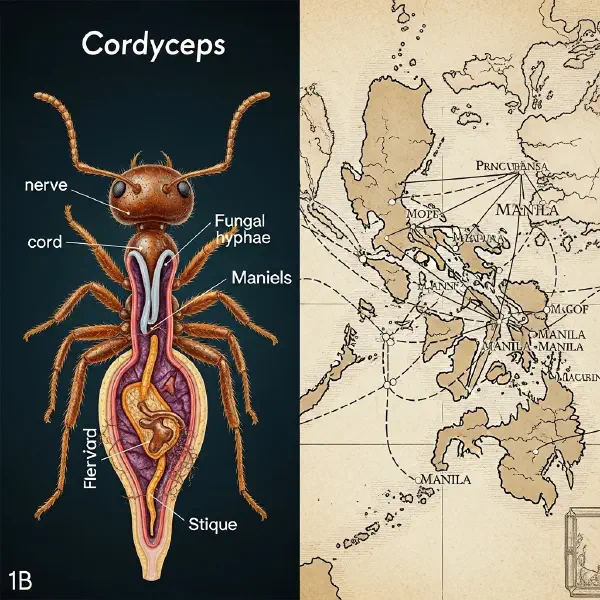
- Fungal Blueprint: The Cordyceps fungus demonstrates a three-phase strategy of infiltration, neural hijack, and vector conversion, providing a biological model for ideological control.
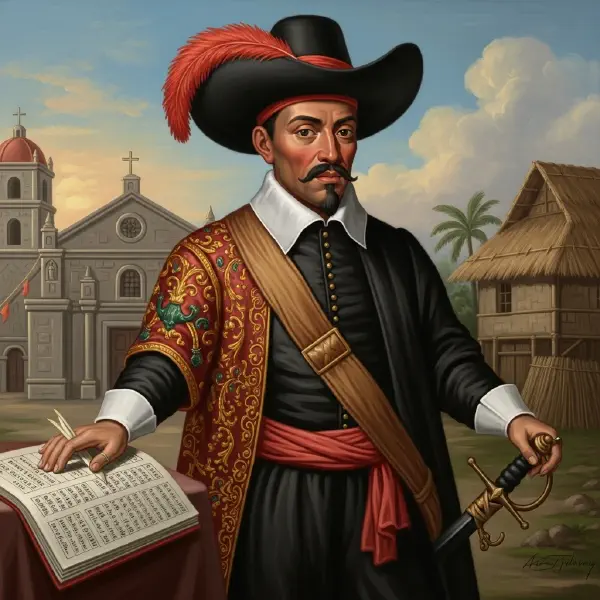
- Spiritual Vector: Spanish colonization used translation, baptism, and the reducción system to rewire Filipino cultural and social structures through religious and spatial engineering.
- Host Elite Cultivation: The principalia class was co-opted as intermediaries, creating a vested interest in colonial rule while externalizing exploitation.
- Syncretic Mutations: Indigenous culture persisted through syncretism and immune responses, ultimately leading to nationalist movements that used colonial tools against the system.
References#
- Rafael, V. L. (1993). Contracting Colonialism: Translation and Christian Conversion in Tagalog Society Under Early Spanish Rule. Duke University Press. ISBN: 978-0822313417
- Phelan, J. L. (1959). The Hispanization of the Philippines: Spanish Aims and Filipino Responses, 1565-1700. University of Wisconsin Press.
- Ileto, R. C. (1979). Pasyon and Revolution: Popular Movements in the Philippines, 1840–1910. Ateneo de Manila University Press. ISBN: 978-9715502320
- Brewer, C. (2004). Shamanism, Catholicism, and Gender Relations in Colonial Philippines, 1521-1685. Ashgate Publishing. ISBN: 978-0754634379
- Abinales, P. N., & Amoroso, D. J. (2005). State and Society in the Philippines. Rowman & Littlefield Publishers. ISBN: 978-0742510241
- Scott, W. H. (1994). Barangay: Sixteenth-Century Philippine Culture and Society. Ateneo de Manila University Press. ISBN: 978-9715501354
- Majul, C. A. (1967). The Political and Constitutional Ideas of the Philippine Revolution. University of the Philippines Press.
- Schumacher, J. N. (1991). The Making of a Nation: Essays on Nineteenth-Century Filipino Nationalism. Ateneo de Manila University Press. ISBN: 978-9715500197
- Cushner, N. P. (1971). Spain in the Philippines: From Conquest to Revolution. Ateneo de Manila University Press.
- Fast, J., & Richardson, J. (1979). Roots of Dependency: Political and Economic Revolution in 19th Century Philippines. Foundation for Nationalist Studies.