The Paradox of a System That Survived Its Own Crisis#
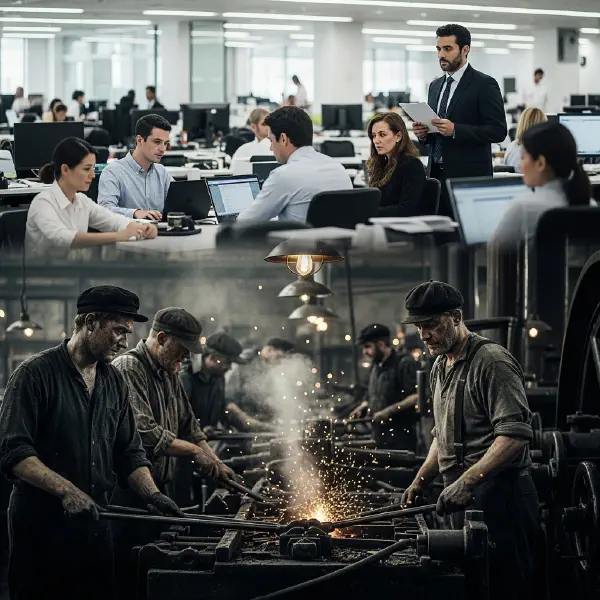
By the early twentieth century, capitalism faced a credibility problem. The contradictions identified in The Communist Manifesto had not softened; they had intensified. Industrial productivity soared, yet labor unrest escalated. Urban poverty coexisted with unprecedented wealth. Political radicalism gained mass appeal. From an internal perspective, the system appeared unsustainable.
Yet capitalism did not collapse. It adapted.
The key to its survival was not moral reform or ideological concession, but structural reconfiguration. Instead of resolving its internal tensions, capitalism learned to displace them—geographically, socially, and temporally. The result was a system that looked more humane at the center while becoming more extractive at the periphery.
The Mechanism That Changed Everything#
The stabilization of capitalism followed a clear pattern: reduce visible conflict where political pressure is strongest, and relocate costs to domains with weaker resistance. This was not coordinated conspiracy. It was an emergent response to incentives, constraints, and power asymmetries.
By mid-century, this adaptation had produced the illusion of resolution.
How Cost Displacement Works#
Labor Became Mobile Before Capital Did#
When unions gained leverage and wages rose in industrialized economies, capital responded by moving production rather than surrendering margins. Manufacturing shifted first to lower-wage regions, then to jurisdictions with minimal labor protections.
Workers in the Global North gained stability. Workers elsewhere absorbed precarity.
This spatial reallocation preserved profitability while muting class conflict at home. The struggle did not disappear; it moved.
Environmental Damage Followed the Same Logic#
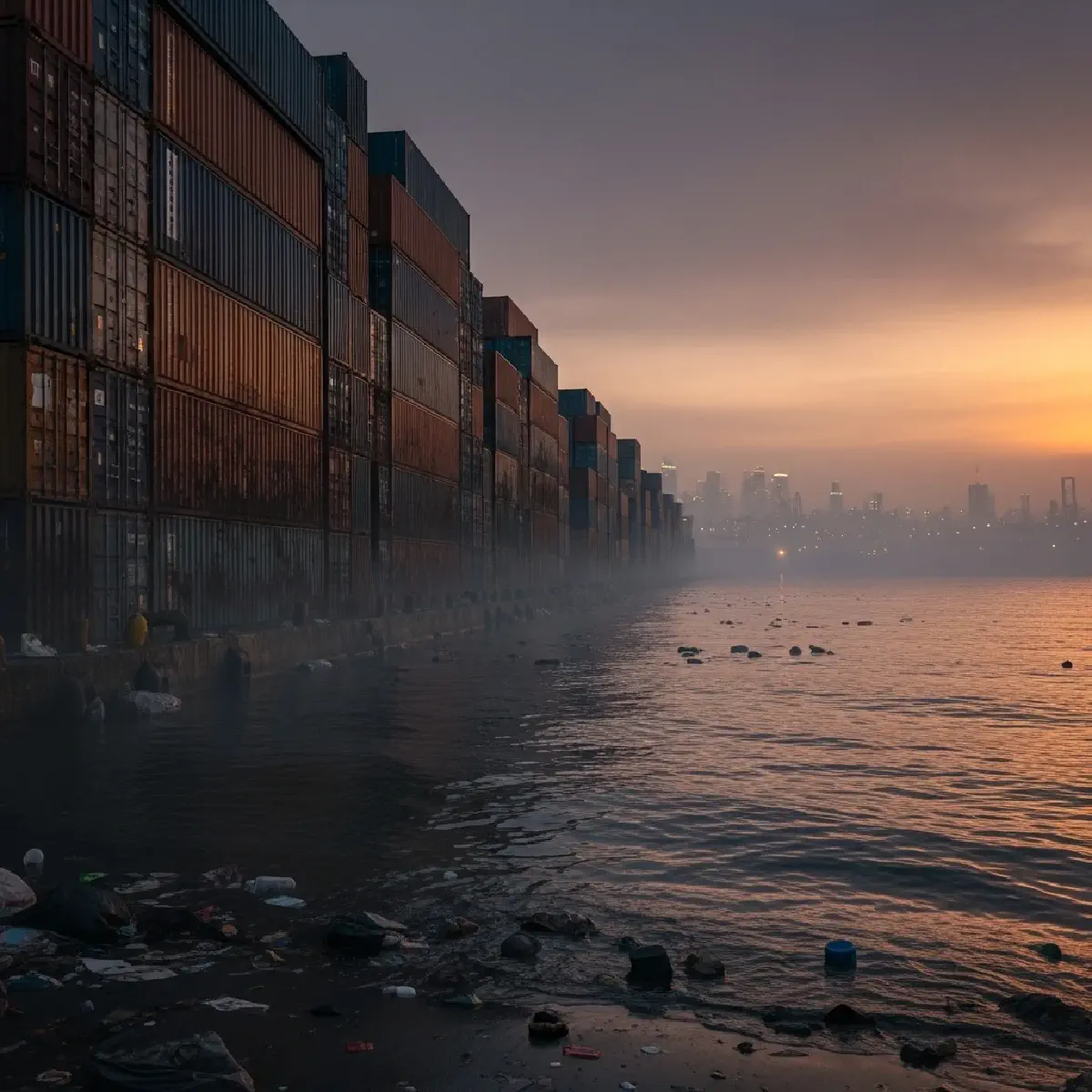
Pollution-intensive processes migrated to regions with lax enforcement and limited political voice. Toxic waste, extractive mining, and energy-intensive manufacturing clustered where resistance was weakest.
Consumption remained concentrated in wealthy economies. Environmental degradation did not.
The system externalized ecological costs as efficiently as labor costs.
Risk Was Pushed Down the Supply Chain#
Just-in-time logistics, subcontracting, and platform-mediated labor fragmented responsibility. Firms retained upside while transferring volatility to suppliers, contractors, and informal workers.
This architecture insulated core firms from shocks while amplifying fragility downstream.
Why This Reduced Visible Class Conflict#
Welfare States as Shock Absorbers#
In advanced economies, redistribution mechanisms softened inequality without altering ownership structures. Social insurance reduced desperation. Public services stabilized consumption. Political legitimacy improved.
These measures treated symptoms, not causes—but they worked locally.
Consumption as a Substitute for Power#
Rising living standards and consumer choice diluted class identity. Material comfort replaced political agency for many. Inequality persisted, but it felt less urgent.
This psychological shift was as important as economic policy.
Distance Weakens Accountability#
When exploitation occurs out of sight, moral pressure dissipates. Consumers rarely experience the labor or environmental conditions embedded in global supply chains. Political systems respond to voters, not distant producers.
Distance became a governance tool.
The Limits of Displacement#
Inequality Did Not Shrink; It Globalized#
While income gaps narrowed within some nations, they widened globally. The system traded domestic stability for international divergence. This created a two-tier world economy with structurally different life chances.
The aggregate numbers looked acceptable. The distribution did not.
Externalized Costs Accumulate#
Environmental damage compounds. Supply chains stretch. Political instability in peripheral regions feeds back through migration, conflict, and price volatility.
Displacement delays reckoning; it does not prevent it.
Moral Narratives Lose Credibility#
Claims of fairness weaken when prosperity depends on invisible exploitation. As information spreads, legitimacy erodes. The system’s ethical justification becomes harder to sustain.
This erosion fuels both populism and nihilism.
What This Reveals About Capitalism’s Resilience#
Capitalism’s strength lies in its adaptability, not its justice. It survived by rerouting pressure rather than resolving contradiction. This adaptability explains its longevity—and its fragility.
The system remains dependent on asymmetries:
- Between regions
- Between firms and workers
- Between present benefit and future cost
As long as these gradients exist, the system can rebalance itself. When they narrow, tension returns.
The Approaching Constraint#
Technological change is compressing the very gradients capitalism relied on. Automation reduces labor arbitrage. Environmental limits constrain displacement. Information erodes distance.
The mechanisms that stabilized the system are weakening.
The next post will address a common response to this realization: the belief that abolishing private property can finally resolve the problem. History suggests otherwise.