The “UN-ian” Identity Crisis#
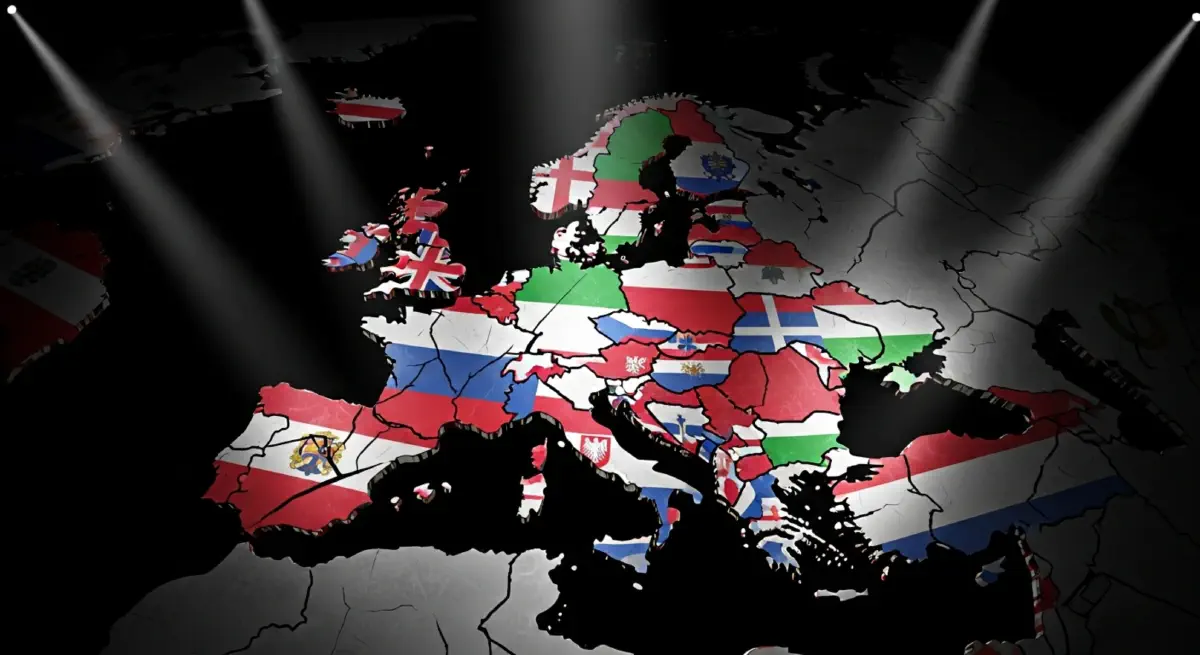
In the European Parliament, Hugo the intern watches as Eastern and Western countries “argue” over “net transfers” of 2% to 4% of GDP. The Western “donors” feel “generous,” while the Eastern countries feel they have been put in a state of “economic subordination”. This friction is the death knell for the “Social-Federalist” dream of a “European Assembly” that could adopt a “common tax” on carbon and corporate profits. The proposal to coordinate a “global progressive tax” on capital is, in the words of Piketty himself, an “illusory character”—a “Federal Mirage” that ignores the “social-nativist trap”.
The Thesis of the Coordination Failure#
The central claim is that “participatory socialism” is impossible on a global or even regional scale because of “tax competition” and the “unanimity rule”. Critics argue that the “naive” hope for a “Social-Federalist Europe” underestimates the “identity politics” of leaders like Viktor Orbán or Donald Trump, who use “national identity” to “throw out foreigners” and protect “nativist” interests over “shared” ones.
The Mechanics of the Fiscal Gridlock#
The Mechanism of the Unattainable Unanimity#
The European Union operates under a “precarious compromise” where the “most important” decisions—like taxation—require “unanimity”. This means states like Ireland or Luxembourg, which act as “tax havens” for “skittish” capital, can simply say “I’m against” to any attempt to harmonize rates. The “Federal Mirage” suggests we can create a “real European Assembly” of “national deputies,” but this assumes that these deputies would vote against their own national interest to support a “joint investment budget”.
The Crucible of the East-West Divide#
The coordination failure is further complicated by the “East-West divide”. Western investors own 1/4 of the capital in Eastern Europe, siphoning off “private profits” equivalent to 4% to 7% of Eastern GDP. When the “Brahmin Left” proposes a “federal budget” to reduce these inequalities, it is viewed in the West as “unfair” to “donors” and in the East as “not enough” to compensate for “outgoing flows”. This resentment fuels “Social-Nativism”—the “retreat to identity politics”—which makes any “shared” fiscal policy “unattainable”.
Tracing the Cascade of the “Race to the Bottom”#
The ripple effect of this gridlock is a “race to the bottom” where corporate tax rates have fallen from 49% to 30%. Multinational “multinationals” and “private individuals” use “Panama Papers” shell companies to avoid “declaring their income”. Even with “automatic exchange of information,” banks often limit themselves to “financial income” and “do not transmit information on the assets”. The “cascade” is $427 billion in “lost taxes” every year—enough to pay the salary of 34 million nurses—yet the “Federal Mirage” has no “sentinel” state to guard these “shared” rights.
The Sovereignty of the “Citizen”#
The “Federal Mirage” assumes that people will eventually “feel they are members of the same political community”. But as “Leave” winning in the UK (Brexit) showed, there is a “complete split between the working classes and Europe”. The “less fortunate” voted “Leave” because they felt “wronged” by a globalization that only benefited the “top 1%”.
So what? The naivety of the “Social-Federalist” model is the belief that “simple and transparent measures” of justice can overcome centuries of “military superiority” and “national rivalry”. We are living in an era of “hardening identity cleavages,” where “giving France back to the French” is a more powerful story than “sharing corporate profits with Germany”. The “useful utopia” of a global tax is “impossible” as long as the “sentinel” of the state remains purely national.